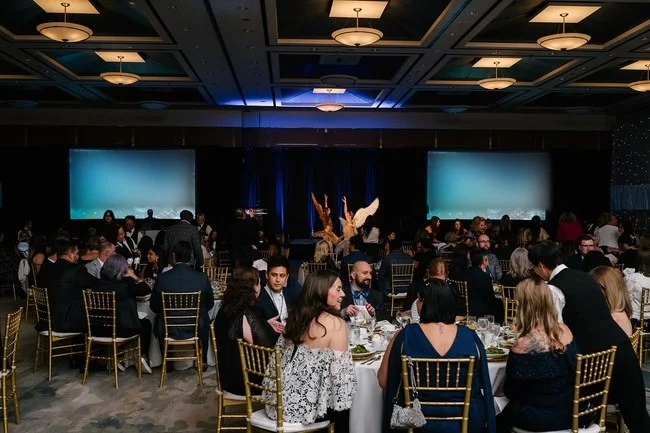
How to Plan a Corporate Gala in Toronto: The 2026 Guide
Read More


Corporate event budgets in Canada are bigger than they have been in years, and how companies spend them has changed completely. Here is what the best-run organizations are prioritizing in 2026 and what it means for anyone planning events this year.
Canadian companies are moving event budget out of static décor and into experience and programming, the parts of an event people do rather than look at. The appetite is there to fund it: 95% of meeting professionals in North America expect their overall meetings and events spend to rise in 2026, according to the Amex Global Business Travel 2026 Global Meetings and Events Forecast, and improving the attendee experience with more memorable events is the single biggest budget priority for the year.
The era of safe, templated corporate events is over. It is not because companies stopped caring about cost. It is because they started caring more about outcomes. The question driving corporate event planning conversations in 2026 is no longer "what can we afford?" It is "what does this event need to do, and are we spending in the right places to make that happen?"
The shift is visible across every category. From corporate team-building events to large-scale galas to multi-day retreats, Canadian companies are making sharper decisions about where budget goes, who they trust to execute it, and what success looks like when the evening ends.
For most of the last decade, corporate events were planned around convenience. Pick a venue. Fill the agenda. Book a caterer. That model is being replaced fast. The companies leading the shift treat events the way they treat any other business investment, with a clear objective, a defined audience, and measurable outcomes. They are asking corporate event planners the questions that used to belong in strategy sessions:
That change in conversation has changed everything downstream, including where the money goes. It is not a small market to reallocate. The global events industry is projected to reach US$2.5 trillion by 2035, growing at a 6.8% compound annual rate, per Allied Market Research.
| Budget Shift | Moving Away From | Moving Toward |
|---|---|---|
| 1. Experience over décor | Static aesthetics, florals, furniture | Interactive activations and live experiences |
| 2. Entertainment as strategy | The first line item cut | A deliberate trust-building tool |
| 3. Vendor consolidation | Ten separate suppliers | One accountable partner |
| 4. Outcome-driven team building | Trust falls and trivia | Activities matched to a team dynamic |
| 5. Retreats as infrastructure | Perks | Performance investment |

The line item growing fastest is not florals or furniture. It is programming. Companies are reallocating budget from static aesthetics toward dynamic experiences, the things people do rather than look at. Interactive activations, competitive formats, live entertainment, and immersive digital environments are consistently outcompeting traditional décor spend right now.
The data tracks the trend. 74% of Fortune 1000 marketers planned to increase experiential marketing spend in 2025, per EventTrack 2025. And the experiences pay off: 64% of attendees rank immersive experiences as the top factor that positively shapes how they feel about an event, according to the Freeman Trends Report. A beautiful room gets photographed once. An experience gets talked about for weeks.

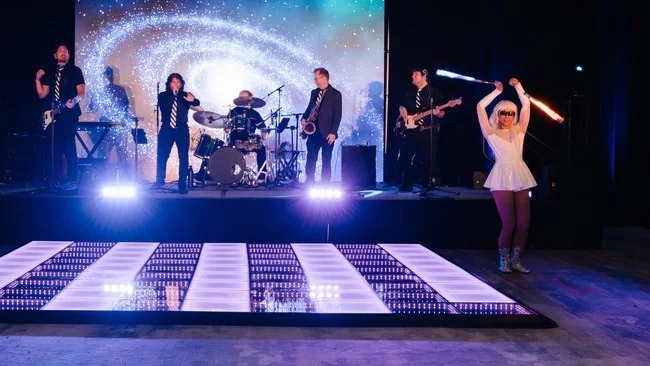
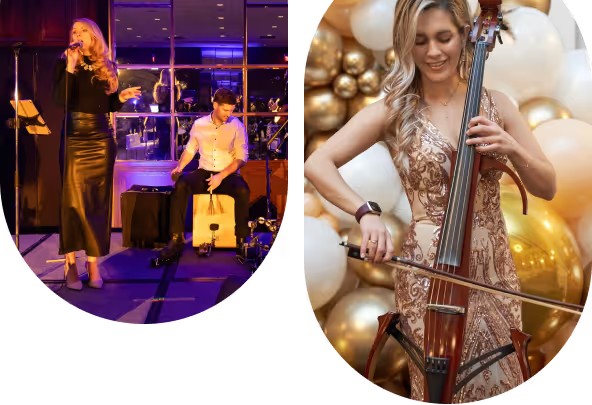
Corporate entertainment used to be the last thing confirmed and the first thing cut. That is no longer true for companies that understand what great entertainment does. When it is chosen intentionally, matched to the audience, the event arc, and the outcome, it becomes the most powerful trust-building tool in the program. The effect is measurable: 66% of attendees say they feel more positive about a brand after interacting with it at a live event, per EventTrack 2025.
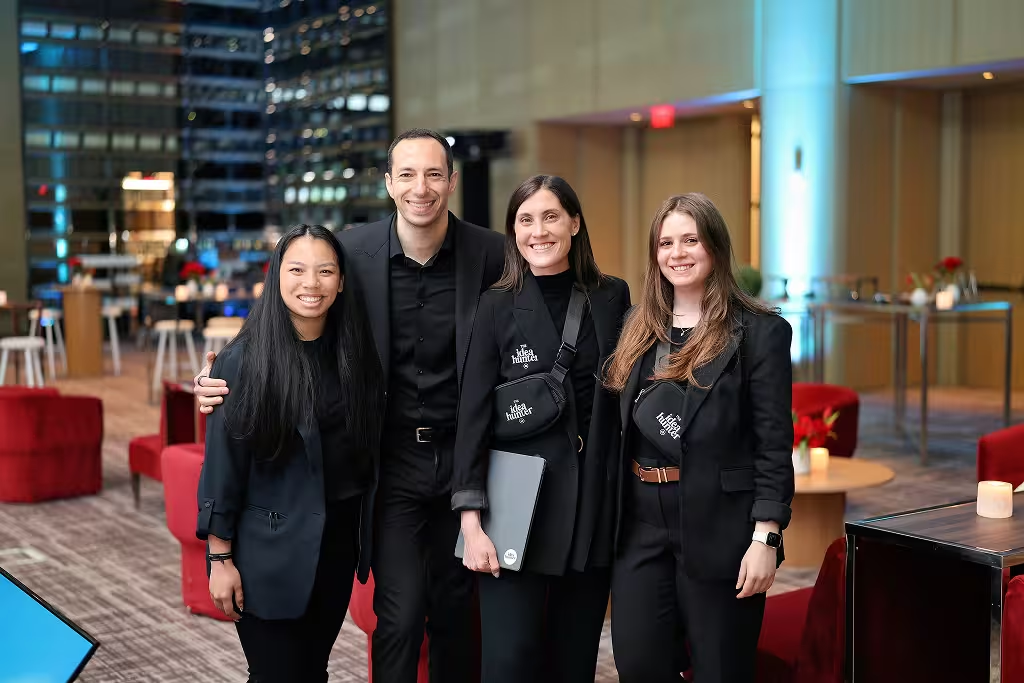
One of the clearest budget trends in corporate event planning is vendor consolidation. A mid-size corporate event, roughly 50 to 200 guests, puts six vendor categories in play: venue, catering, AV and lighting, entertainment, event décor, and logistics. You can hire and manage all six yourself, or bring them under one partner accountable for the full experience. Companies are moving toward the second model for practical reasons:
This is exactly the model The Idea Hunter operates on: creative direction, entertainment, vendor management, décor, and on-site execution under one contract. It is why our clients do not spend event week managing logistics. They spend it with their people.

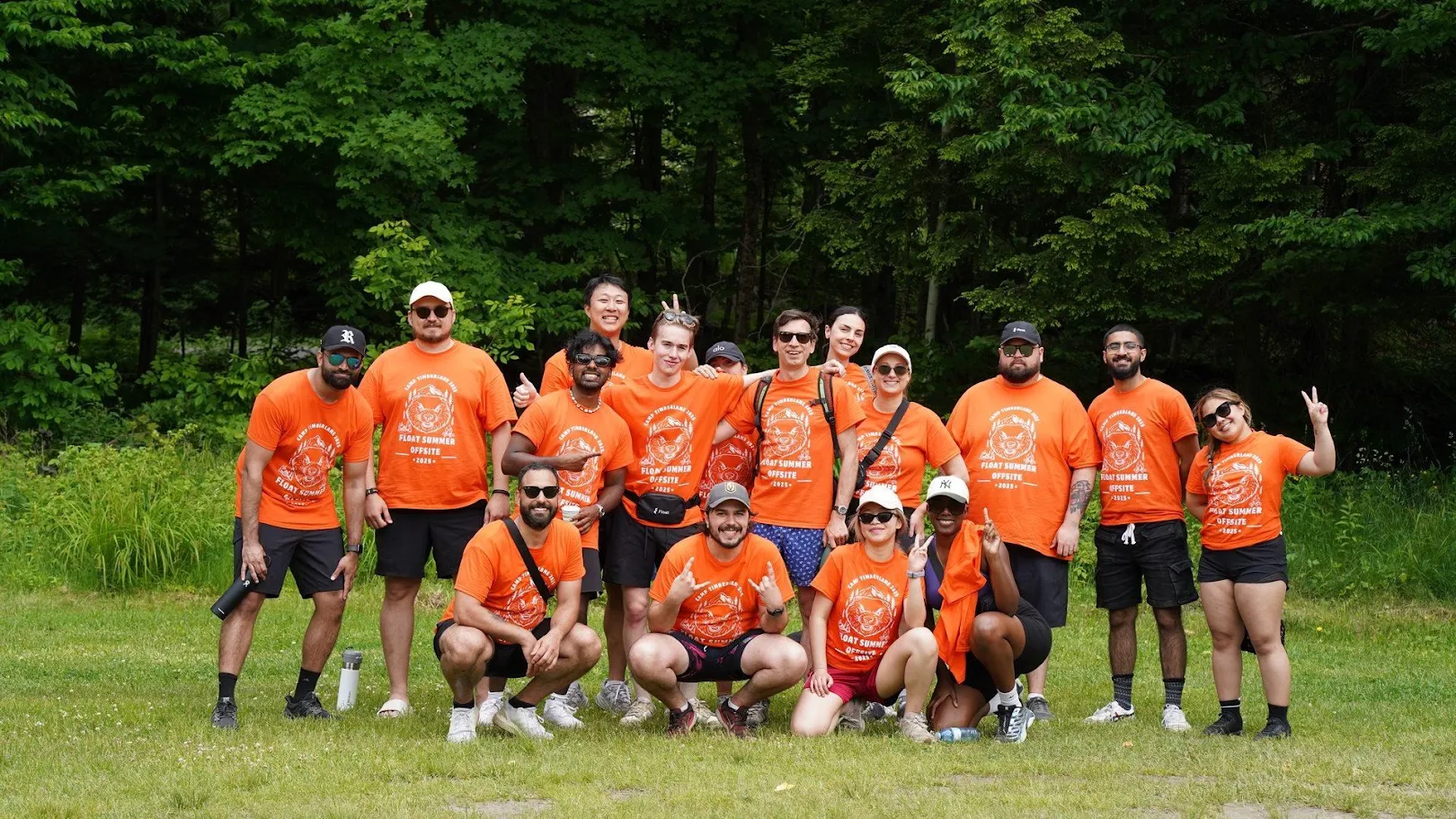
Corporate team-building activities have undergone the same shift as entertainment, from obligatory to intentional. The formats earning serious budget in 2026 are interactive experiences designed around specific team dynamics: communication gaps, post-restructure cohesion, cross-functional silos, leadership alignment. The activity serves the outcome, not the other way around.
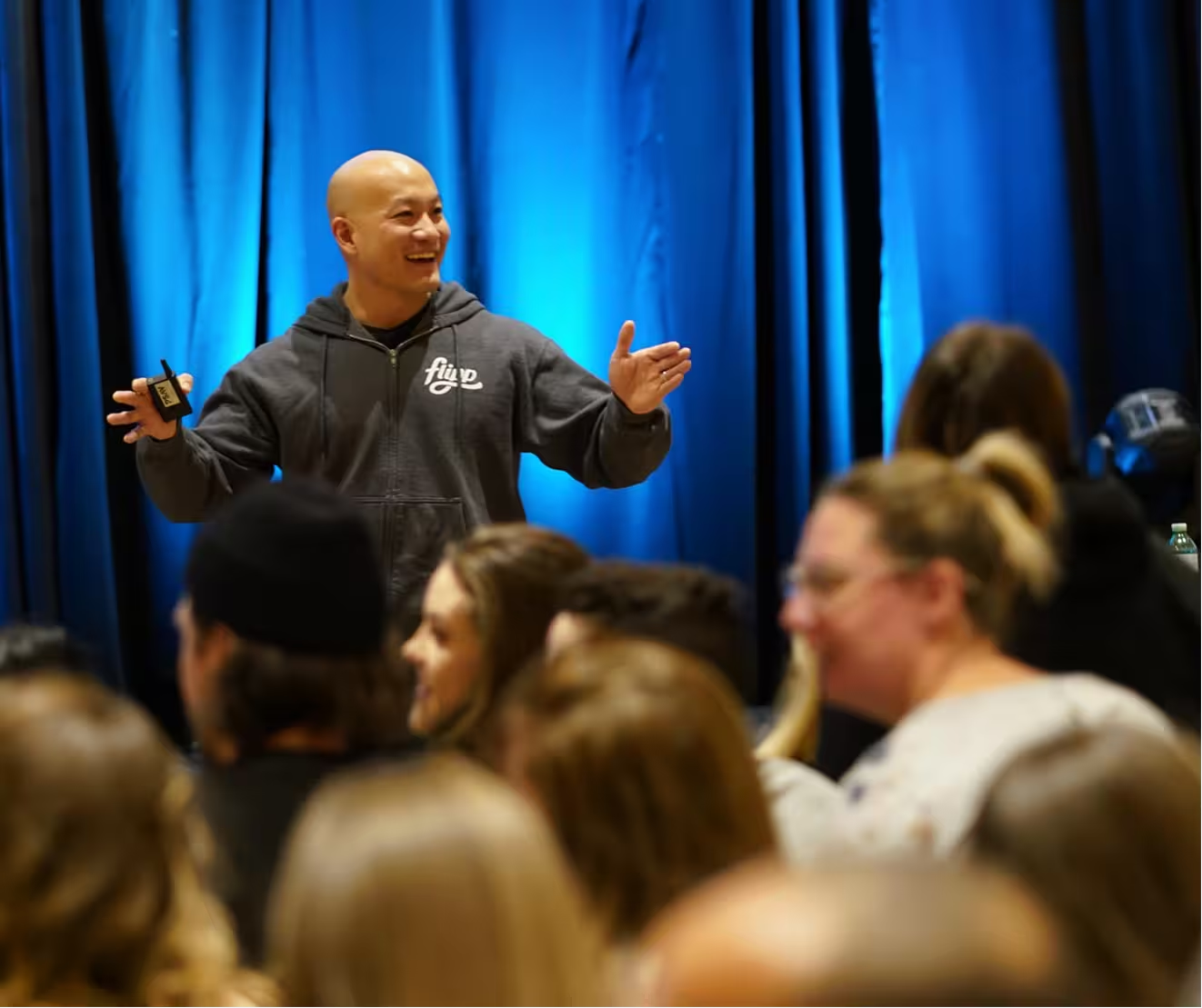
Corporate retreats are no longer treated as perks. They are budgeted as performance infrastructure. The companies getting the most return work with experienced corporate retreat planners who design the program around a specific outcome rather than a scenic location. A mid-tier venue with exceptional programming consistently outperforms a five-star property with a generic agenda.
"The companies getting the most from their event budgets in 2026 stopped asking what they could afford and started asking what the event needed to do. Spend follows the outcome. That one shift is the difference between an event people attend and one they remember."
— Fadi Dawood, President, The Idea Hunter
Measure a corporate event the way you measure any investment: define the outcome before you spend, then track that outcome afterward. The common mistake is reaching for attendance counts and satisfaction scores. Those tell you the room was full, not whether anything changed.
Set one or two primary outcomes in advance, pipeline influenced, retention, cross-functional collaboration, message recall, or employee engagement. Give each a baseline, then measure the same metric 30 to 90 days later. Tie the soft signals to hard ones: an engagement lift that shows up in lower turnover, a sales kickoff that shows up in pipeline velocity.
The case for in-person spend is strong on the numbers. 80% of people say in-person events are the most trustworthy source of information, per the Freeman Trends Report, and 78% of organizers call in-person their most impactful marketing channel, according to Bizzabo's 2025 benchmarks. The return comes from designing the experience around the outcome, not from spending more.
The questions separating sophisticated event buyers from everyone else in 2026 are not about logistics. They are about thinking. Before signing with any corporate event planner in Toronto or across Canada, the companies getting the best outcomes ask:
These are not difficult questions for a partner who knows what they are doing. At The Idea Hunter, these are the questions that start every client relationship, because how we answer them tells you more about how we work than any proposal document could.
Spending more does not produce better events. Spending better does. There is room for both: 71% of meeting professionals expect cost per attendee to rise in 2026, per Amex GBT, which makes where you direct each dollar matter more, not less.
The companies seeing the strongest return start with the outcome, not the occasion. They choose partners on process over portfolio. And they treat every element of the event, entertainment, programming, environment, and timing, as a tool for achieving something specific. That is a different conversation than "how many tables do we need?" It is the right one.
Over 23 years. 10,000+ events. A roster of 750+ vetted acts. And a 97% client retention rate that reflects the standard we hold ourselves to every time.
We do not sell packages. We build experiences around your brief, whether that is a full-scale corporate event in Toronto, a team-building event for a cross-functional group, or a multi-day retreat that needs to shift how a team works together. One team. One contract. One clear line of accountability from the first conversation to the last moment of the evening.
If you are planning your 2026 events and want a partner who starts with your outcome, let's build the next big idea together. For a worked example of a multi-day programme budgeted and produced end to end, see our case study for Insulate America.
Corporate event planning is the end-to-end process of designing and producing a business event, from defining the objective and audience through venue, programming, entertainment, logistics, and on-site execution. In 2026, the best planning starts with the outcome the event needs to produce, not the format.
Begin with the objective: the behaviour or feeling the event needs to create. Define the audience, set the budget against that outcome, then build the program to serve it. Single-partner accountability keeps the pieces coherent from first conversation to load-out.
Protect the spend that drives the outcome and cut the spend that does not. On a tight budget, that usually means holding firm on the experience and programming people remember, and trimming static décor and venue prestige. A mid-tier venue with one strong experience beats a five-star room with a generic agenda almost every time.
A mid-size event, roughly 50 to 200 guests, typically involves six categories: venue, catering, AV and lighting, entertainment, décor, and logistics. You can manage all six separately or bring them under one partner accountable for the whole experience, which removes the coordination gaps that cause most day-of problems.
The shift is from décor and logistics toward experience and programming. 95% of North American meeting professionals expect higher event spend in 2026, and improving the attendee experience is the top budget priority, per Amex GBT.
Experience, range, and accountability. We have produced 10,000+ events across every format and industry over 23 years. Our 97% client retention rate exists because we treat every event as a performance outcome, not a booking, and we own all of it under one contract.



The Idea Hunter stands as an award-winning, premier source for corporate entertainment, interactive experiences and event management.