What Types of Corporate Entertainment Work Best for Large Company Events
Read More


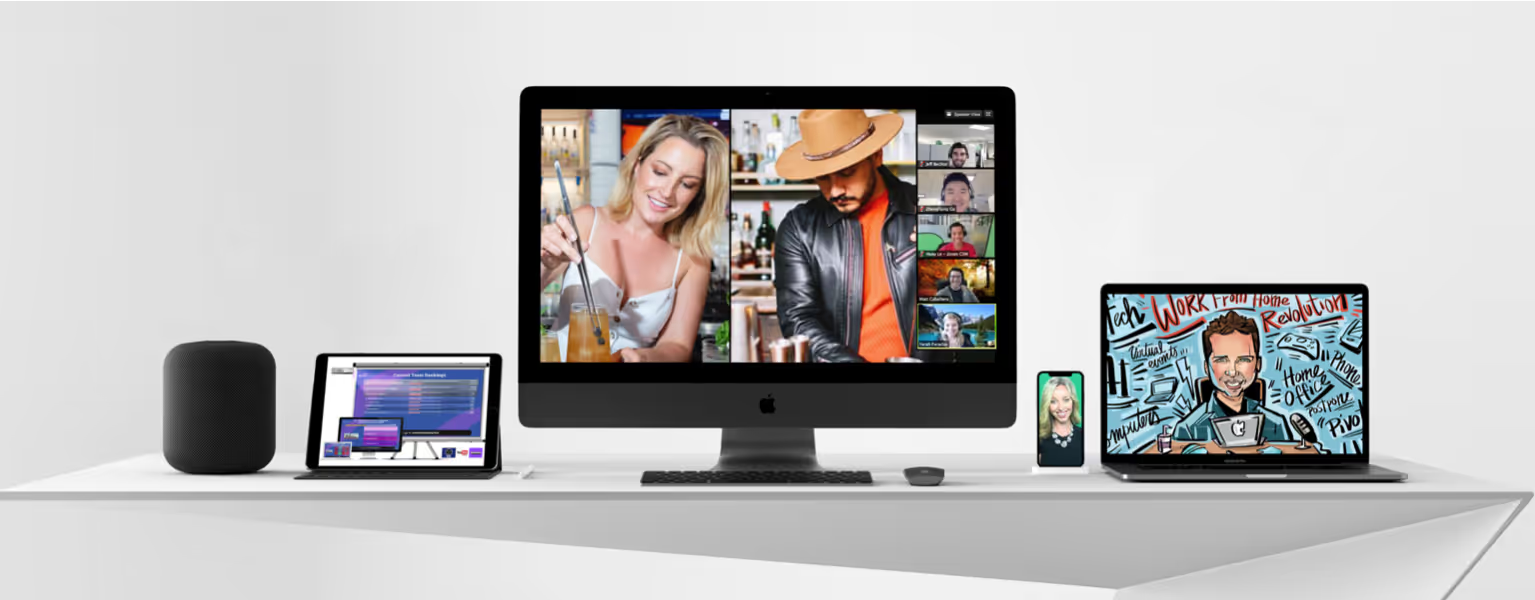
At The Idea Hunter, we work on a wide range of virtual events — and our role is custom-tailored to every client, whether we're delivering an entertainment break, an interactive workshop, or overseeing the full experience.
Across every project, we lean on the same core principles. In my experience, a successful virtual event comes down to three things: talented professionals, well-thought-out execution, and a handful of powerful yet simple ideas.
Many of these principles begin with truly understanding your guests. Once you know who they are, you gain the power to shape their experience in any direction you choose. Sometimes the simplest idea is the one that takes your event from good to great.
Picture yourself arriving at a friend's home for dinner — only to find the door wide open and no one there to greet you.
Questions flood in: Should I walk right in? Should I say hello? Have they left me alone with a pot roast? That sense of unease is exactly what you don't want your virtual, live, or hybrid event guests to feel.
This experience comes up in every client conversation — because it's a universal truth. That awkward, unwelcoming moment is uncomfortable for everyone, and no event should start that way.
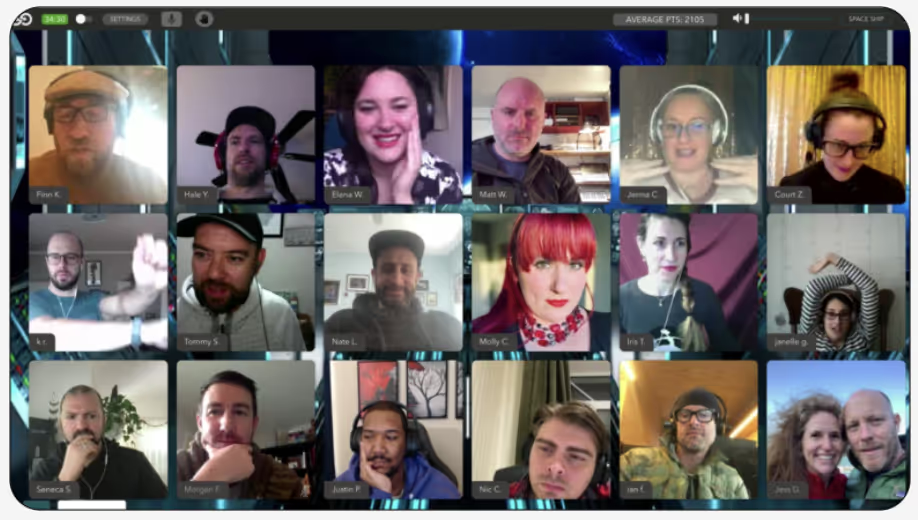
That's why our virtual event planning begins right at the door. On Zoom, we let the waiting room fill before guests are admitted, and you'll hear our team cue: 'Doors open in 2 minutes.' It's the same discipline we've always applied to live events.
From the moment guests join, they know we're prepared and in control. This is our house — and we take the responsibility of bringing people into it seriously.
Upon entry, we have created a very turn key solution that anyone reading this blog can do on their own. Take your clients logo, event branding, or graphic and put it into a video editing software like iMovie. Then you can layer on a countdown timer and music. This visual communication allows guests to see what is happening and ensures we give people enough time to join the event. The music sets the tone and helps to create that warm welcome. Everyone is relaxed and we have full control of the experience from the second they join.

.png)
.png)
When you plan someone a surprise party, you have pre-programmed an emotion. Your actions, if executed well, should result in the recipient feeling overwhelmed by happiness and excitement. If you create a slide show for your father on Father’s Day, you have programmed emotion so he feels appreciated and connected (he may even shed a tear, but thats probably what you were hoping for!). If you are capable of all the above, then you are capable of programming emotion into your virtual events. The challenge is that we become so logistics focused, we forget that we have this power. So add “emotion programming” to your next pre-event meeting and discuss it with your team. Find the cracks in your event where opportunity may lie for an impactful moment.
When we work with our clients, one of the questions we ask is - How do you want your guests to feel? Celebrated, appreciated, acknowledged, informed? This helps guide our emotional programming.
Many clients choose our virtual mixology experience for milestone celebrations — and for good reason. Raising a glass is a universal ritual, and it naturally amplifies the celebratory mood.
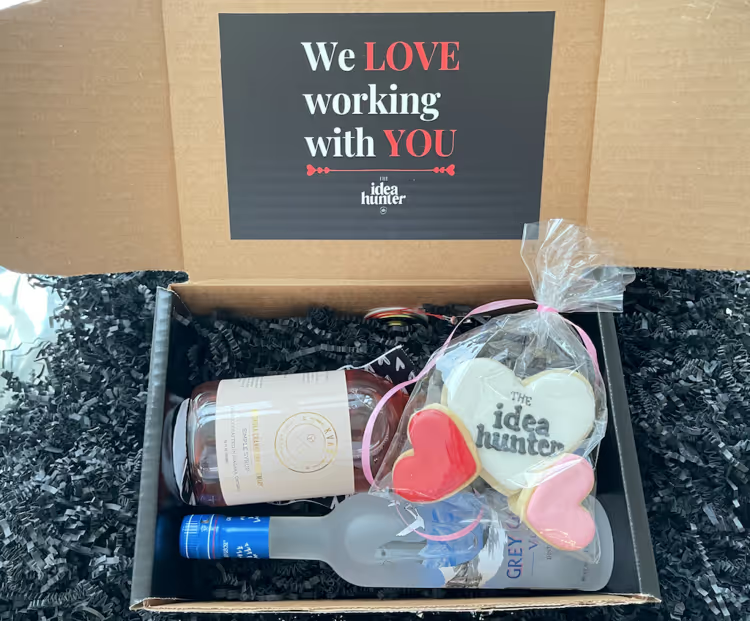
But we like to go further. In one recent project, we designed mixology gift boxes for a retiring executive. Inside each kit, we tucked in a light-activated sound card programmed to play 'Celebration' the moment the box was opened.
Before a single word was spoken, the party had already started. Guests were surprised, delighted, and instantly connected — a mini surprise party, delivered in a box.
There are many more ways that we program in emotion. But the easiest way to do this when planning your own events is to first identify how you want people to feel and then think to yourself - What moments in my own life have made me feel that way? You would be amazed at how much you can pull from your own experience and translate into a great idea.
In principle #2 we discussed programming emotion. With Principle #3 we are getting down to the significance of the experience and connecting meaning to things that commonly get overlooked as opportunities. The more meaning something has, the more we pay attention to it. The same way, we hold on to some things from our past and discard/donate others or we take photos of certain experiences and not others. It is our goal to create significance in as many components of our experiences as possible.
Idea # 1: We recently ran a trivia game for approximately 100 players raising money for the Princess Margaret Cancer Foundation.
With groups that size, we know that 5–15 strong players will dominate the leaderboard — and without intervention, the rest start to disengage. That's why we build random prize draws into the game, keeping every player invested regardless of their ranking.
For this event, we used PMCF facts to select the draw winners. One fact noted 72 surgeons on the foundation's team — so we awarded Player 72 with a prize. Simple, meaningful, and a seamless way to educate guests while keeping the energy high.
Idea #2: Our client called us and asked us for ideas on a gift box for sales award winners. From the stories I have shared above, you may start picking up on the fact that many of my ideas stem from my own life experience and values. I have always loved the saying, “you are who you surround yourself with.” That saying came to mind when I thought about these top performers. Top performers want to be the best, have the best, connect with the best and be around the BEST! It was this insight, that sparked my idea to create an award winning gift box. Every item we selected to go into the box was a Gold Award winning product. We did not settle for silver or bronze - it had to be Gold. From the champagne we chose, down to the chocolate - everything was the very BEST and told a story that resonated with the recipients.
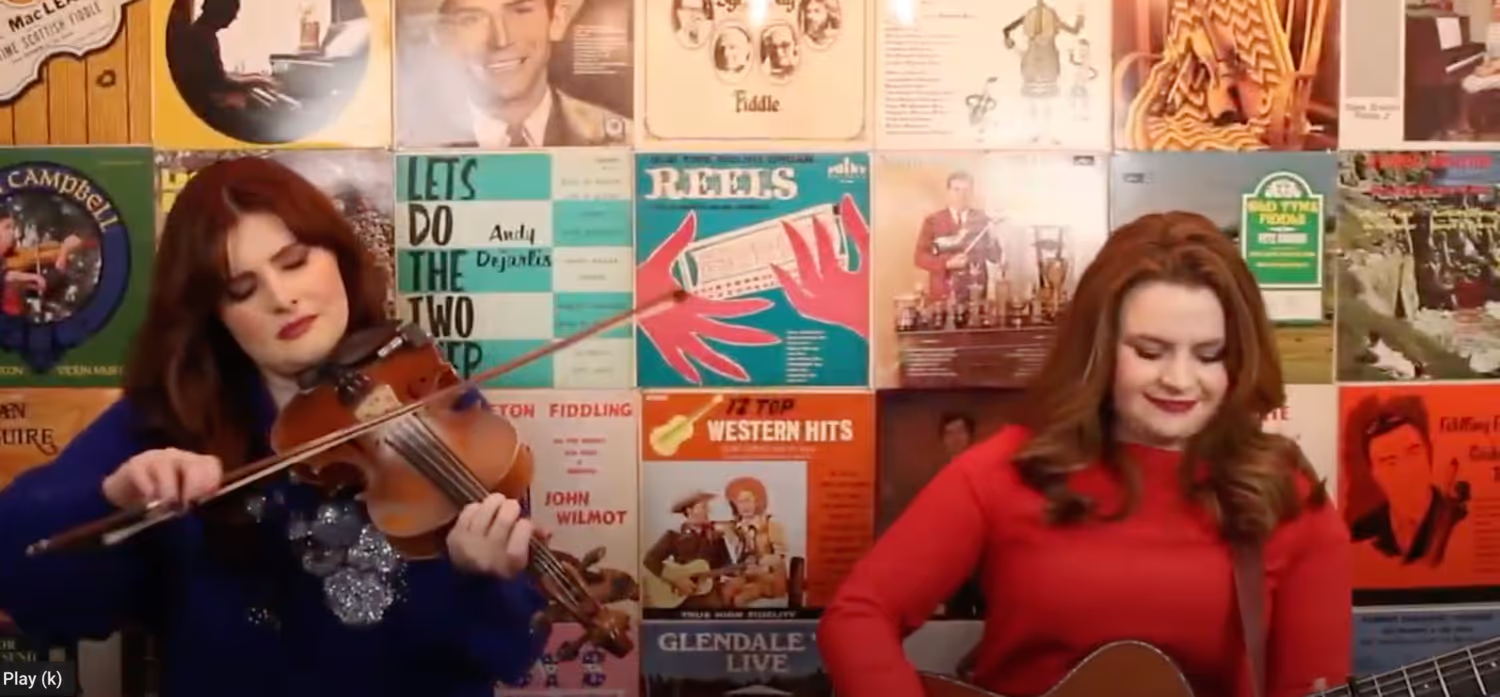
This principle is critically important with virtual events. People will stay to engage with a virtual event if it feels personalized to them. Whenever we can add in personalization, we do! If you have been following our blog, you will have seen some recent activations that leveraged the personalization principle in a major way. Check out the custom concert we did for a client, who was announcing their 2022 conference destination. Our artists toured Halifax and showed guests all the major attractions in between their musical sets. Talk about a personalized experience!
It's been nearly a year since we fully immersed ourselves in the world of virtual events — and the growth across our industry has been remarkable.
My two rules for 2020 were simple: try everything possible, and be okay with failing. I called it the learning year — and I made the most of it, even when it meant falling down a few times. 2021 is the implementation year.
I hope these principles help shape your next virtual event. More than anything, I hope you see how simple ideas — stacked on top of each other — can create real impact. No idea is too small. Explore it, test it, and build on it.
The Idea Hunter produces virtual corporate events for teams across North America, and brings the same programming into live rooms through our live entertainment service.



The Idea Hunter stands as an award-winning, premier source for corporate entertainment, interactive experiences and event management.







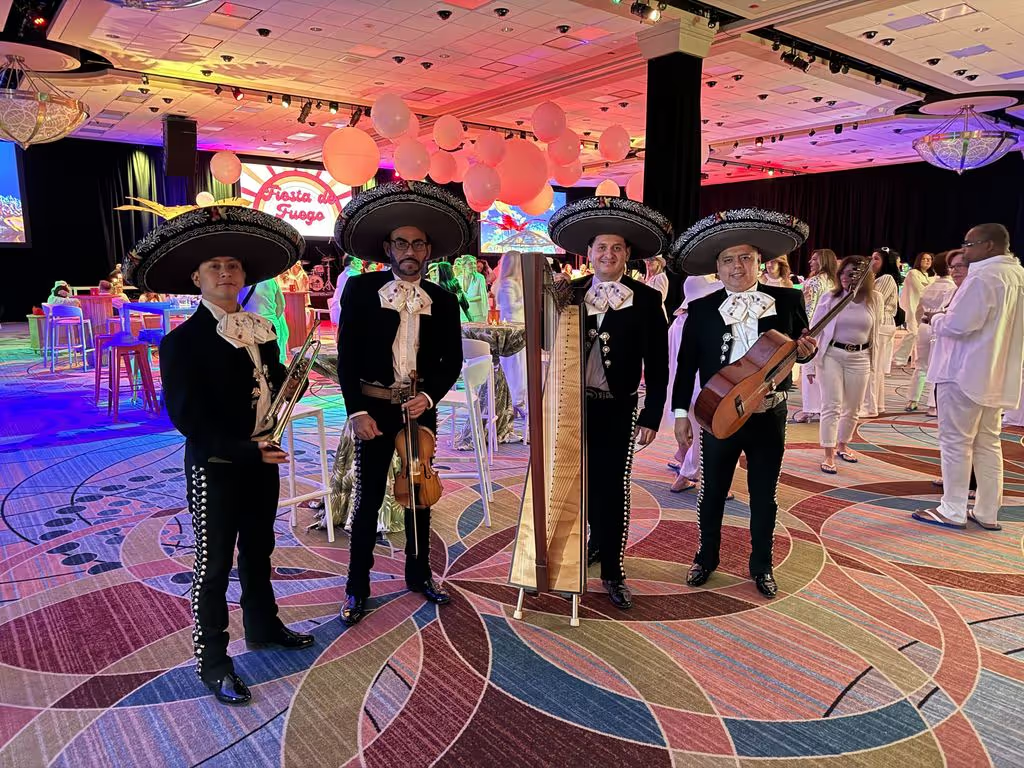


![Feast Your Eyes: 10 Food Entertainment Ideas [2025 Edition]](https://cdn.prod.website-files.com/669532db0a7004d9853610a3/684c645bb66e8dfe014b7137_Screenshot%202025-06-13%20134253.avif)
![Top 20 Corporate Event Venues in Toronto [2025 Edition]](https://cdn.prod.website-files.com/669532db0a7004d9853610a3/67c9c1f60babbed9463c77cf_Trading%20floor%202.avif)

.avif)
.avif)
.avif)


.avif)