Hailey Dawood in International Business Times: What AI Means for the Future of Human Gatherings
Read More


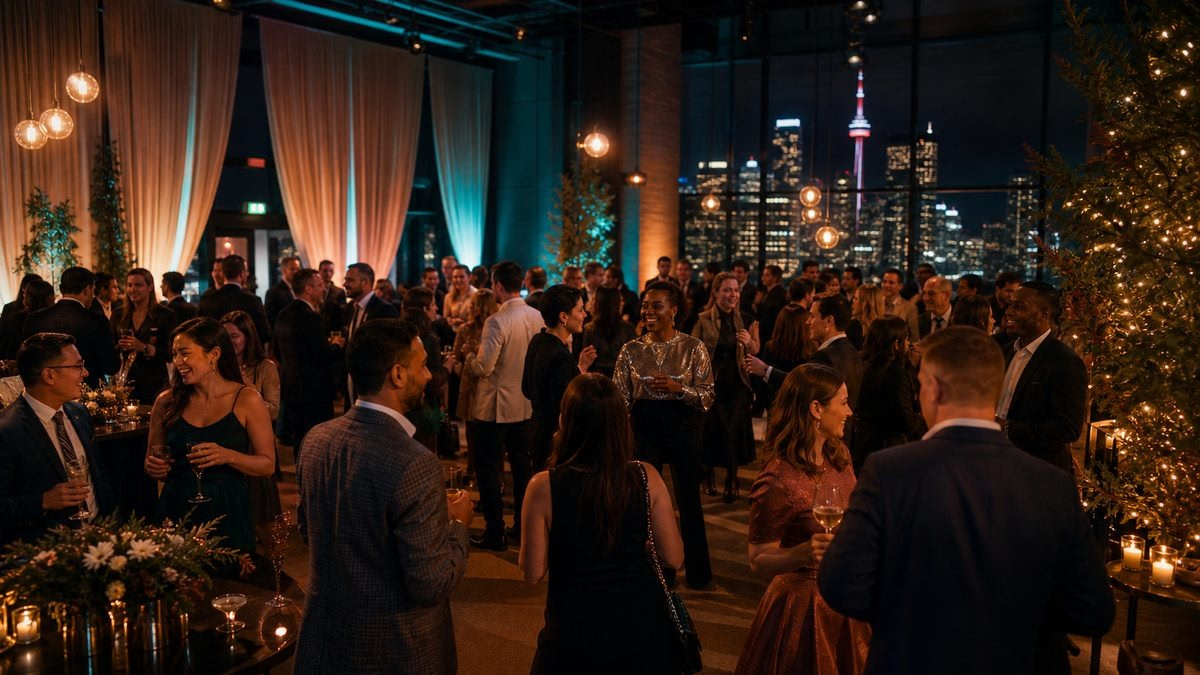
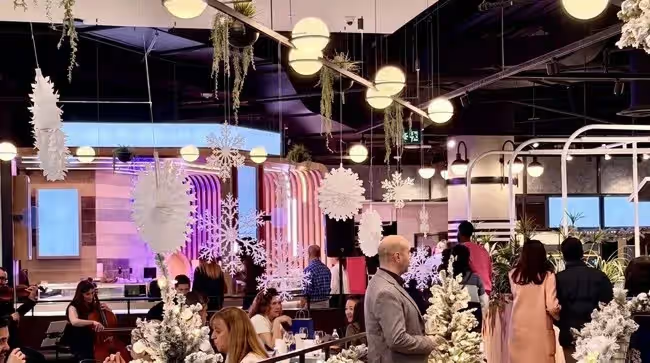
The room at full flow. Everything below is about the decisions that get you there.
For a corporate Christmas party in Toronto, book the venue by August and the entertainment by September. Adding entertainment starts at $5,000 in the December season, a single production category at $15,000, and full multi-category production at $30,000 and up. For 150 to 300 guests, plan two or three formats: one arrival moment, one mid-evening feature and one that runs all night.
Plan an office Christmas party in Toronto five to six months out, decide what you want people to feel before you look at a single format, and confirm the venue's ceiling height, power and load-in before you fall in love with an idea. Those three decisions determine most of the outcome.
Toronto's event calendar is more congested than most planners assume. Destination Toronto reported a record 28.2 million visitors in 2025 and 74 major meetings drawing roughly 378,000 delegates, a 51 percent year-over-year increase worth an estimated $982 million in economic impact. That demand lands on the same venues, the same production crews and the same load-in docks you need in December.
The constraints are more physical than most planners expect. Across the parties we produce, an aerial rig runs a 15 to 17 foot square footprint and configures at 20, 16 or 12 feet of performance height. One caricature artist clears roughly eight guests per hour. A collective photo mosaic needs 10 feet by 10 feet and dedicated power. Those numbers decide your shortlist long before budget does.
This guide covers the planning timeline, more than 50 formats we actually produce with the specs each one needs, where every format belongs in the evening, and the venue constraints that kill good ideas before they reach the floor. If you want the format menu on its own rather than the planning process, start with our corporate holiday event ideas.
Five to six months ahead for a mid-size event, which means starting in June or July for a December party.
Toronto's corporate event season runs October through December, and the best event venues in Toronto commit by August. Entertainment talent at the level Toronto audiences now expect books earlier still. Teams that treat the Christmas party as a December problem end up selecting from what remains, which is a different category of event entirely.
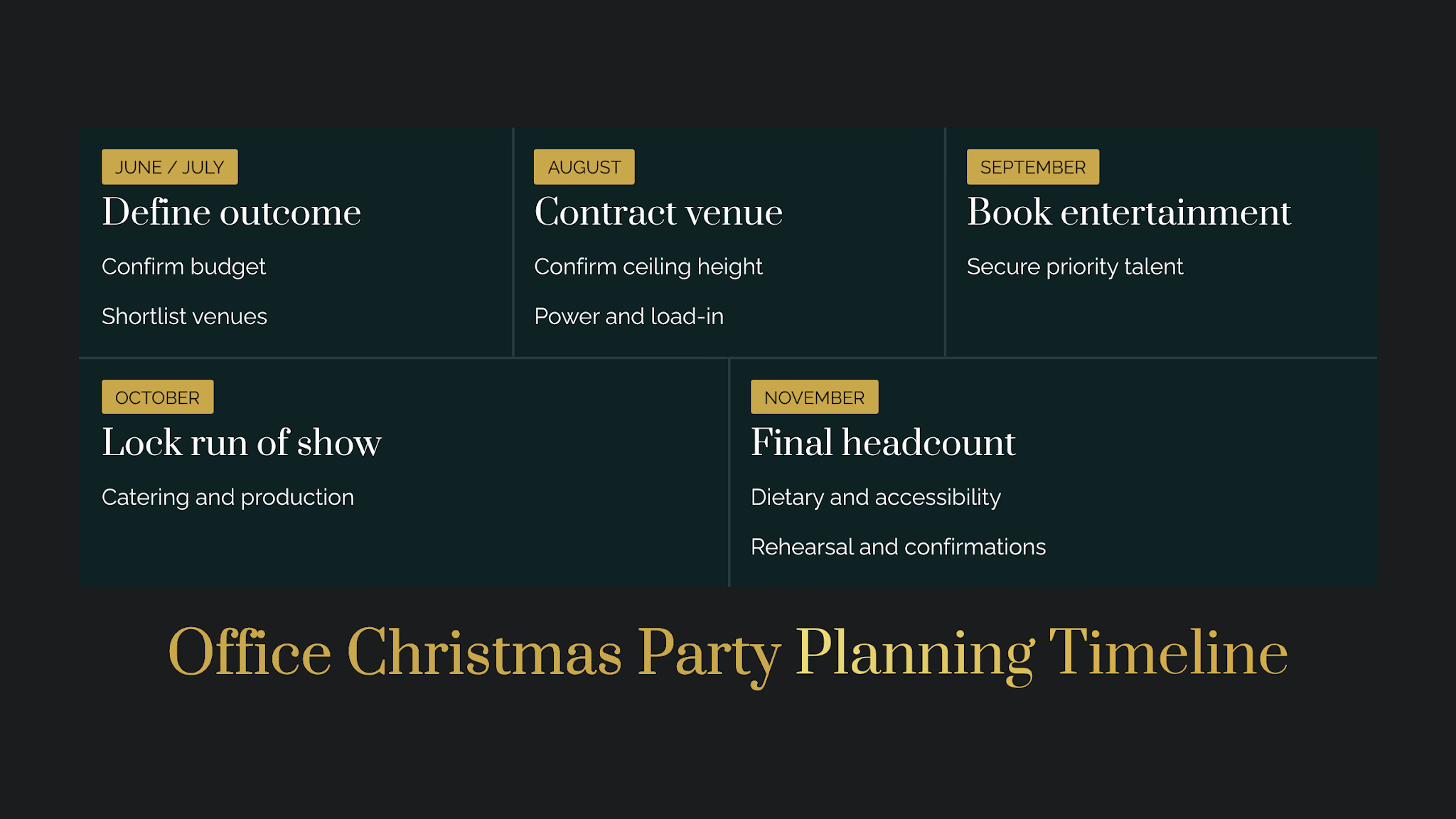
A working backward schedule for a December event:
Starting in October is not fatal. It does mean the format follows the availability rather than the brief, which is the wrong order.
The two clocks run at different speeds. Venues and headline acts are the long lead. Most individual activations are not: a portrait artist, a craft station, carolers or a photo activation can often be added two to four weeks out, and several need nothing from the building at all. If you are reading this in November, you have fewer venue options and roughly the same entertainment options.
Scope drives the number more than headcount does. These are the starting points we work from.
| What you are booking | Starts at |
|---|---|
| Entertainment added to a party you are already hosting | $5,000 in the December season |
| One production category, such as entertainment with AV, or decor | $15,000 |
| Full-service production across several categories | $30,000 and up |
Where you land inside those ranges comes down to whether the venue is turnkey or raw, and when you book. Define the outcome first. The budget follows the brief. If the budget is tight, the section on getting a good party on a tight budget below sets out where the money goes furthest.
The party gets planned around logistics rather than around people.
Venue selected for availability. Catering chosen by default. Entertainment added at the end. The result is an evening that technically happened and that nobody brings up in January.
Three patterns produce this outcome consistently:
The fix for all three is the same. Start with the outcome, not the occasion.
Three inputs, in this order.
A defined emotional objective. Celebration is not an objective. "We want people to leave feeling recognized and proud of what we built this year" is. The programming that follows from those two briefs is not remotely the same.
An event arc that earns each moment. The best corporate events are designed like a story. Arrival formats that convert awkwardness into energy. A mid-evening moment that acknowledges the year. A close that keeps people in the room rather than signalling that it is time to leave.
Entertainment matched to the room, not borrowed from a template. The brief determines the format. A format chosen before the brief is written is the most common and most expensive mistake in corporate event planning.
"A party fails on the brief, not on the budget. When a client tells me what they want people to feel walking out, I can build that at almost any scale. When they hand me a format list and a date, I am guessing."– Fadi Dawood, President, The Idea Hunter
The decisions above are made before a single act is booked. What follows is the format set itself, sorted by the job each one does in the room, with the specs each needs from your venue. For the full range, see our live entertainment roster.
The first thirty minutes set the room's temperature for the rest of the evening. Most venues handle this with a drinks reception. The better approach gives people something to do.
Throughput is the number that matters at arrival, not novelty. For 200 guests you are adding stations, not adding time.
One artist clears about eight guests per hour over a three-hour set. For 200 guests you add artists, not time.
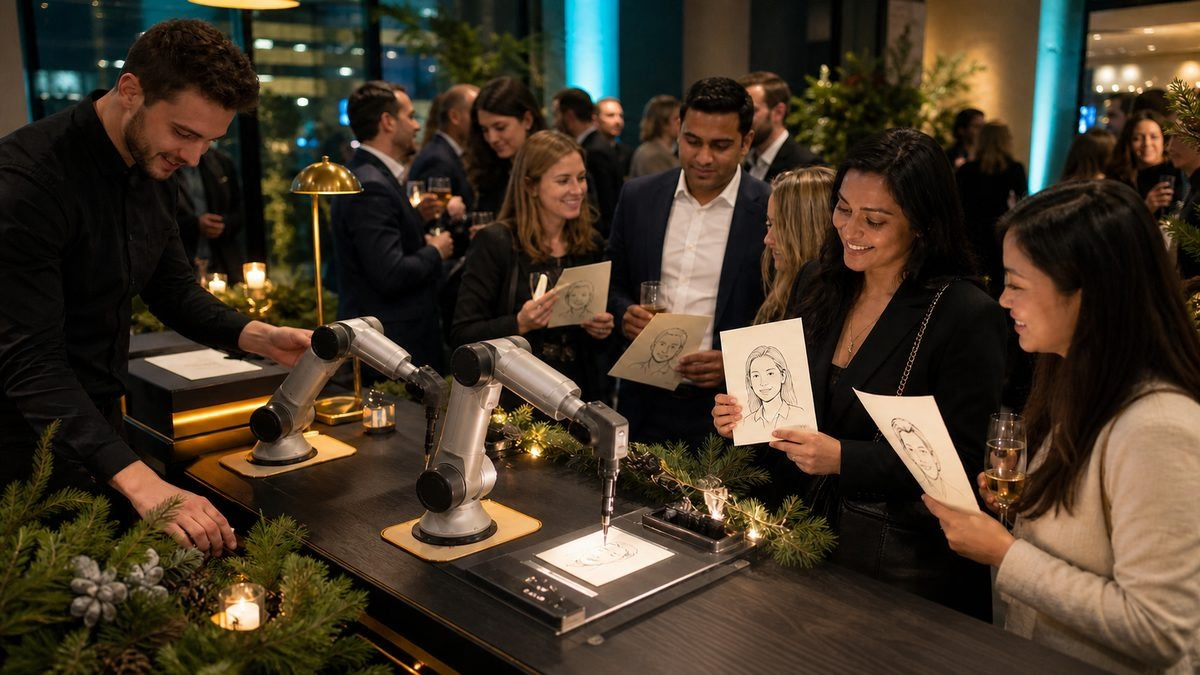
Where these fail: any arrival format needs at least 45 minutes to run properly. Compressed arrival windows produce crowding, not connection.
This is the moment the party either becomes something or stays ordinary. These need the room's attention, so they belong in the programme rather than beside it.
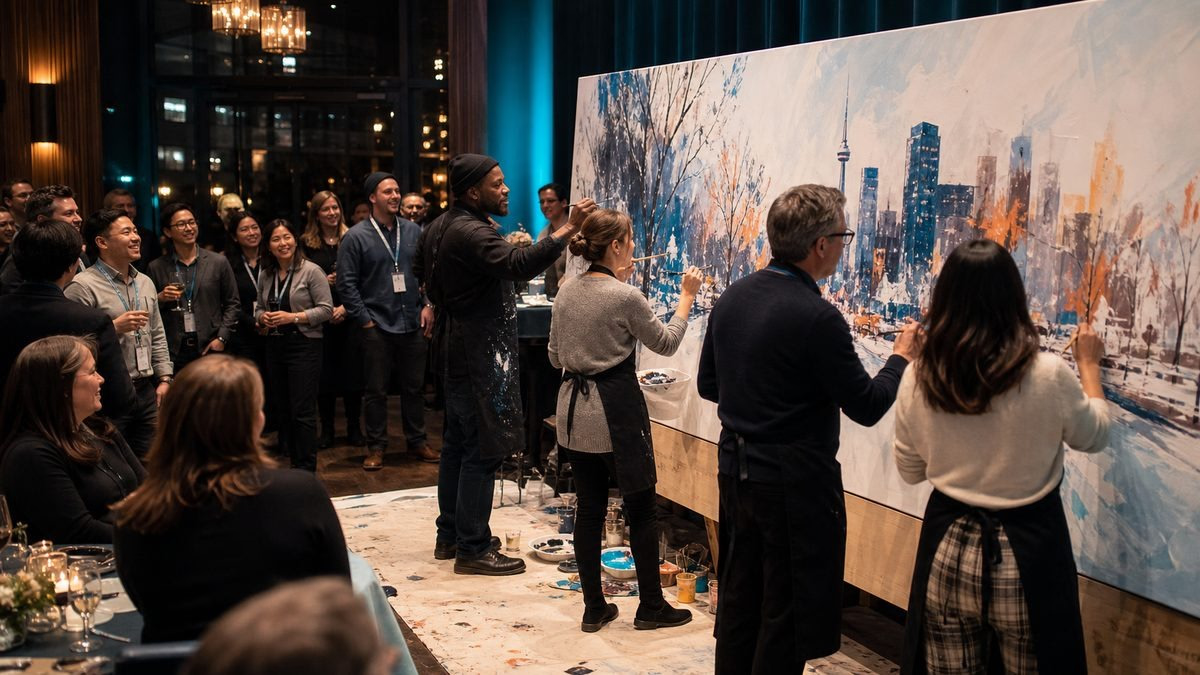
A live mural runs all evening and leaves an artifact behind. Participation stays optional, which is why it scales across group sizes.
Best placed: as the main programme. These formats need the room's full attention, and scheduling them against dinner service wastes them.
The close determines what people carry home. A room that ends well stays an extra hour. A room that ends poorly empties thirty minutes early.
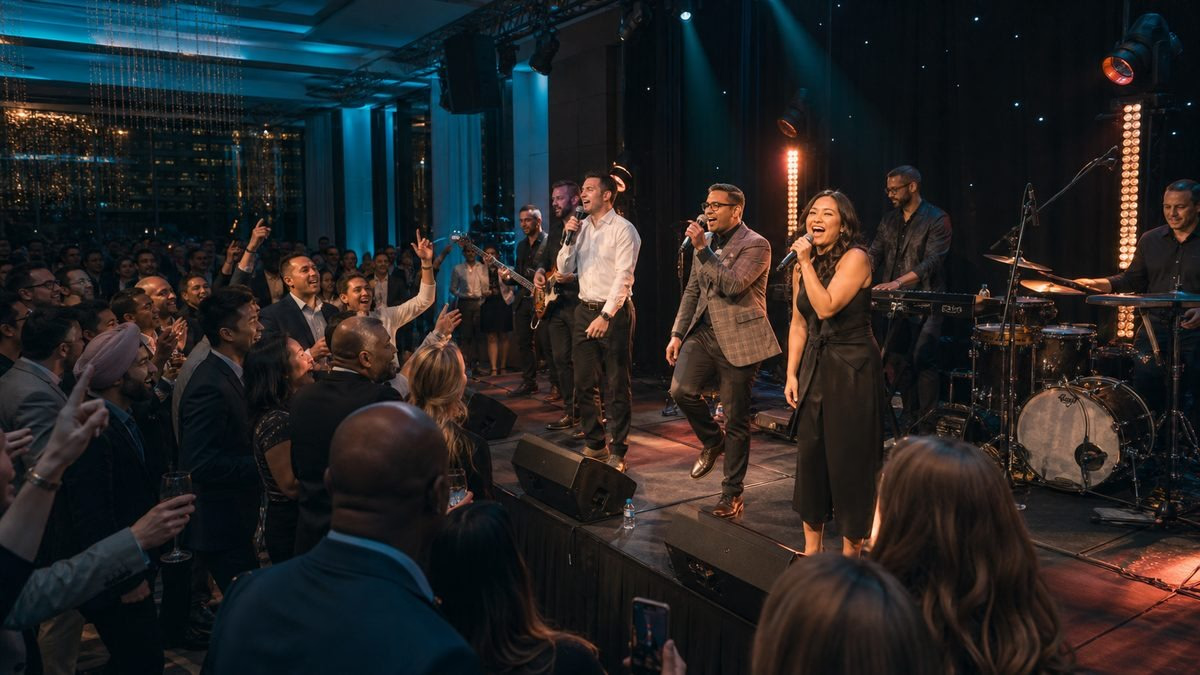
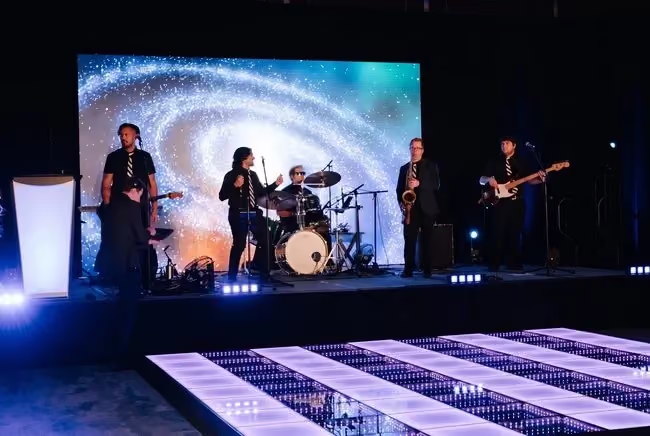
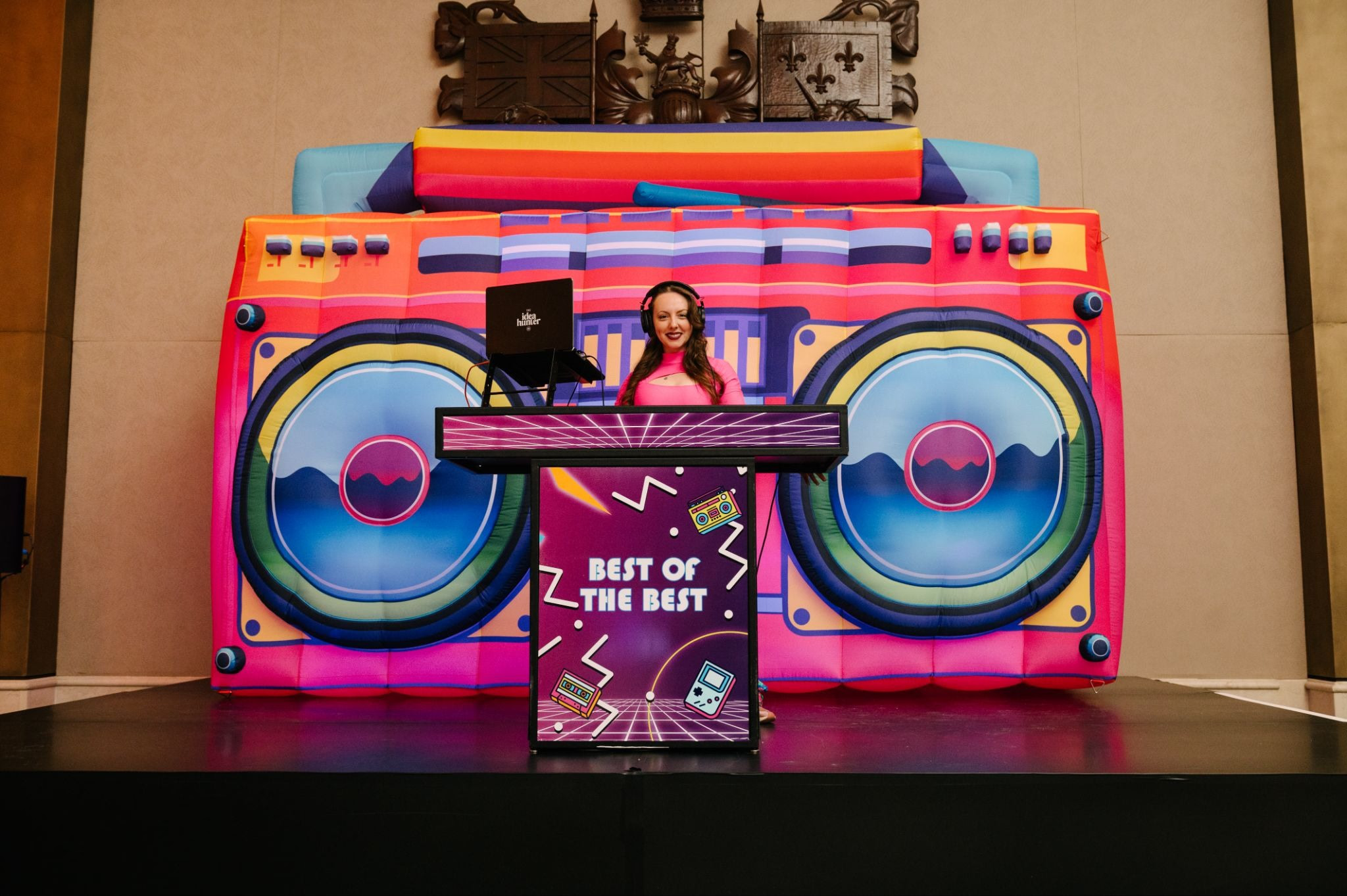
Dedicated power and rigging points for lighting. The production wrapped around the DJ is what keeps a seated dinner crowd in the room.
What the room keeps: the close is what people describe to someone else afterward. It earns its budget when it is chosen with that in mind.
A theme works when guests can dress into it. A theme they only look at changes the photographs. A theme they can wear changes the room. Our corporate event themes for 2026 goes deeper on the concepts, and winter decor concepts covers the seasonal builds.
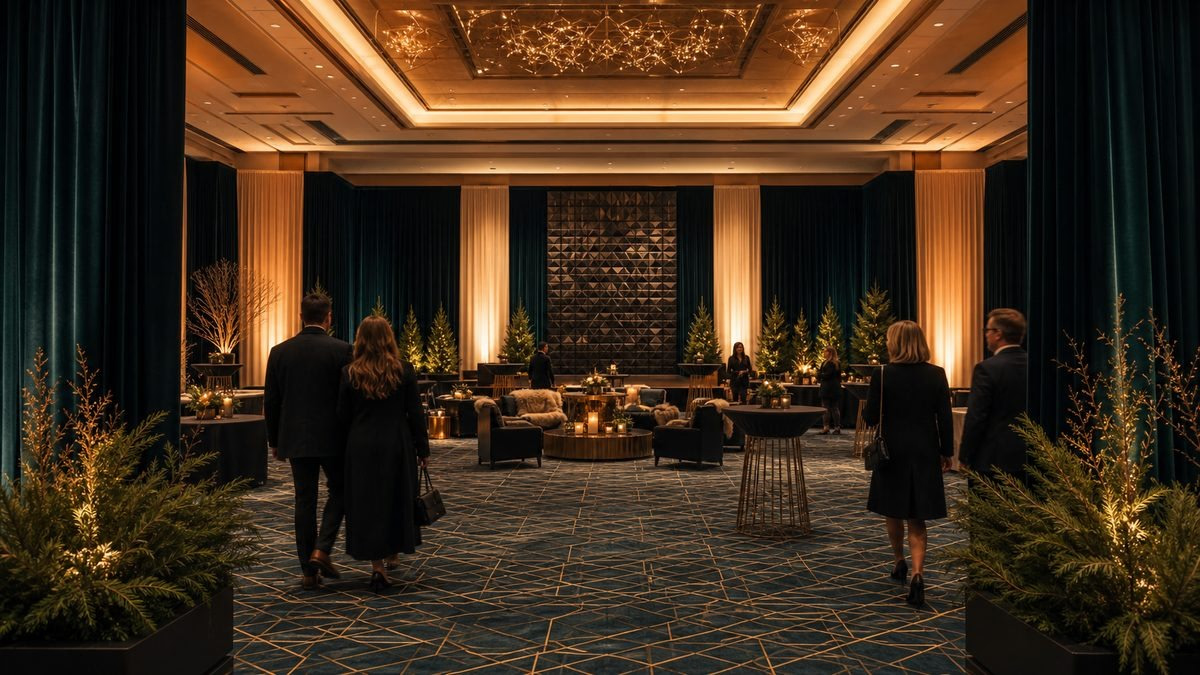
There are two decisions inside a theme. The dress code, which costs nothing, and the physical build, which is where the budget goes.
Uplighting and draping change a room more than any single rented object, and they are the cheapest way to make a plain ballroom look deliberate.
Themes guests can dress into. Ugly sweater is the lowest-effort, highest-participation option because everyone already knows the assignment. A decade theme gives a DJ or band an obvious lane and spans a multi-generational room. Black and gold reads premium without asking anyone to wear a costume, which is usually the right call for a client-facing night. Winter lodge and apres-ski suit a crowd that wants warmth over glamour. Set the dress code in the invitation rather than the reminder, and put a prize on it. A theme announced late gets ignored.
What the build actually involves. Decor and production is where a theme stops being a word and becomes physical, and the specs matter as much as they do for entertainment. At a 600-guest awards dinner and holiday party we produced, the theme spanned three decades, with era-authentic furniture as the design anchor and costumed greeters at the door.
Where themes fail: committing before confirming the venue's rules on open flame, haze and rigging. Haze needs clearing with the building's fire system before you design a lighting look around it.
Treat food as programming rather than catering and it does double duty, feeding people and moving them around the room. More options in our food entertainment ideas.
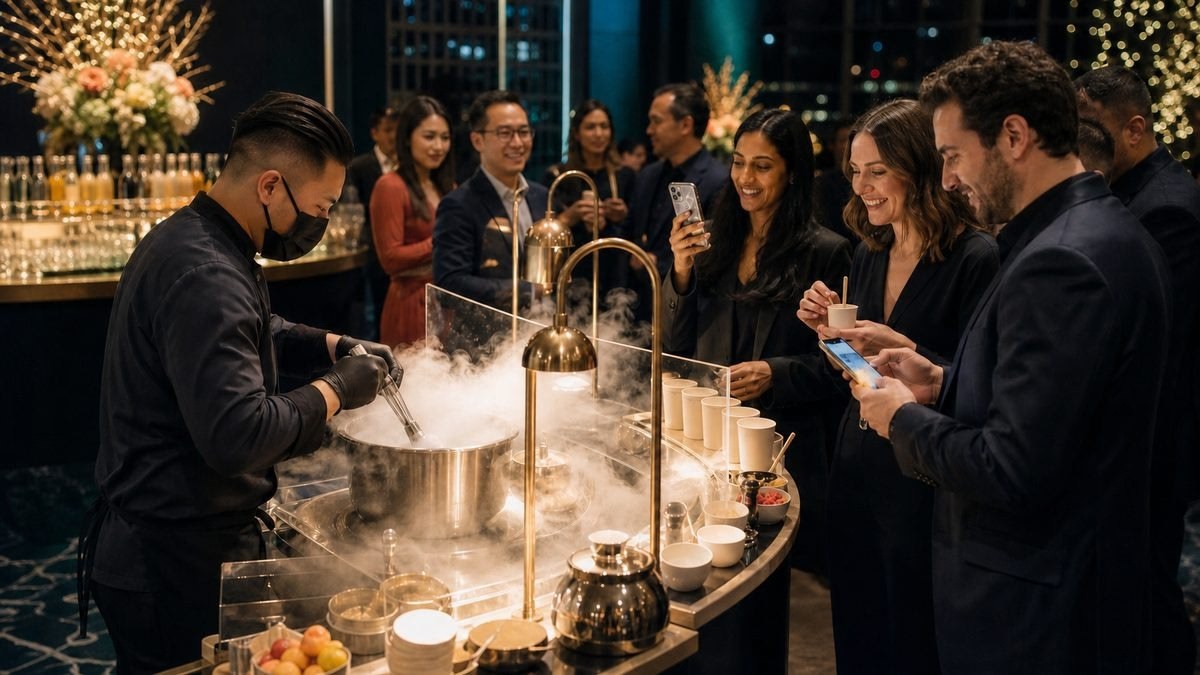
The take-home item is the part of the night people still have in February. It is also the part most often left out of the brief entirely.
On gift exchanges. Secret Santa and white elephant still work, and they cost nothing to run. Set the price cap low and the rules clear in the invitation, and run the draw with an online tool so hybrid and remote teammates are included automatically rather than as an afterthought.
Recognition fails when it is a list read aloud. It works when it is short, specific and staged like part of the entertainment rather than an interruption to it.
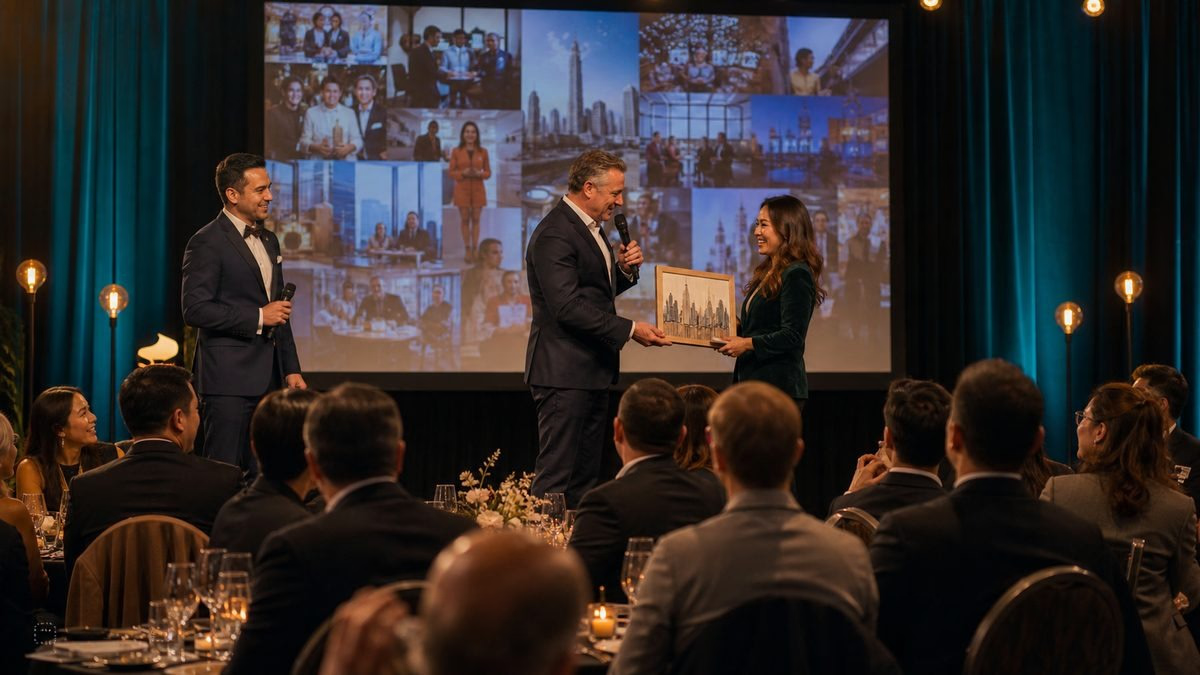
It is also the part of the night with the clearest business case. Gallup's State of the Global Workplace 2026 report put global employee engagement at 20 percent in 2025, and the cost of low engagement at $10 trillion in lost productivity, roughly 9 percent of global GDP. Recognition is one of the conditions Gallup measures directly, through whether an employee has received praise for good work in the last seven days. The holiday party is one of the few moments in the year when a company controls that entirely.
Pair the give-back with the entertainment rather than bolting it onto a speech. The activity is what people remember, not the announcement.
A children's party is a different event with different constraints, not a scaled-down adult one. Sessions need to be shorter, continuous and forgiving of kids arriving and leaving at random.
One thing to confirm early. We do not carry a Santa on our own roster, so a Santa appearance is sourced specifically for your event and needs more lead time than the rest of this list. Ask for it in the brief rather than assuming it is standard.
A lunch or afternoon party costs less, avoids the December evening venue crunch, and often draws better attendance from people with families or long commutes.
Keep a daytime event to a few hours with one strong activity. Daytime energy fades faster than an evening event, so front-load the thing you most want people to remember.
Give remote staff their own programming rather than a camera pointed at the room. A wide shot of a party they are not at is worse than no stream at all. Our virtual events team runs these, and interactive virtual team events covers the formats that hold a remote room.
Build non-participation into every activation as a genuine option rather than an afterthought, and treat inclusion as a design constraint instead of a compliance step.
The venue decides which entertainment is possible, so choose it against your shortlist rather than before it. For seasonal options specifically, see Toronto venues that turn into winter wonderlands.
| Venue type | Best for | What it gives you | What you bring in |
|---|---|---|---|
| Your own office | 30 to 150 | Lowest cost, full date flexibility | Lighting, bar, and everything with a power draw. Formats needing no loading dock matter here |
| Hotel or convention ballroom | 200+ | Power, staging, load-in support, catering, rigging points | Design and entertainment only |
| Restaurant buyout | 20 to 80 | Food and atmosphere with almost no production lift | Limited. Confirm amplified music is permitted |
| Loft or warehouse | 100 to 600 | A blank canvas and full creative control | Power distribution, climate control, coat check, all production |
| Gallery or landmark venue | 100+ prestige events | The location is the entertainment | Everything, inside strict rules on flame, catering and volume |
Two-room layouts are worth the coordination when you have the space. Splitting dinner from dancing lets energy build as guests physically move, and it hides the dance floor setup during the meal.
The questions that kill an entertainment plan are almost never budget questions. They are physical ones, and in December they are compounded by a building running events every night of the week.
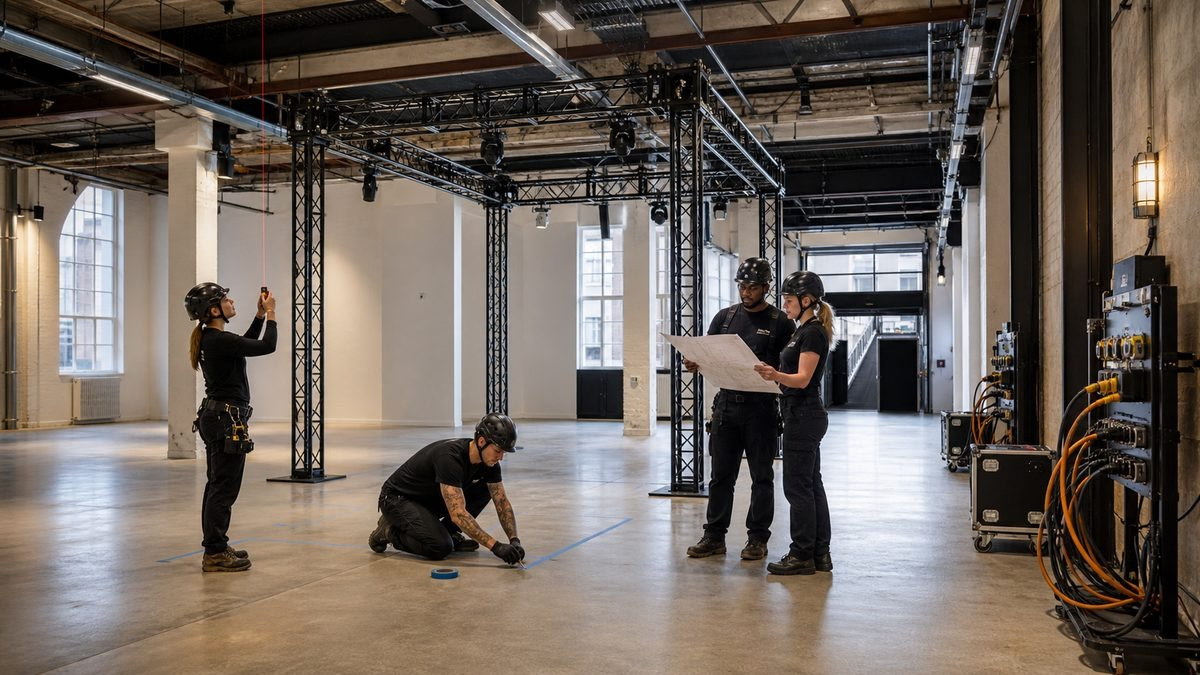
"The questions that kill an entertainment plan are almost never budget questions. They are ceiling height, power and load-in. We confirm those three before we shortlist anything."– Fadi Dawood, President, The Idea Hunter
Confirming these in August is the difference between a shortlist you can book and one you have to rebuild in October.
We confirm the permit position on every file before the bar is designed, because it changes what the bar can be.
The Alcohol and Gaming Commission of Ontario treats a company's own boardroom as a private place, and the permit requirement turns on whether alcohol is being sold rather than served. In practice that means a hosted bar in your own office and a cash bar in the same room are two different situations. If you are at a licensed venue, its own licence usually covers the event, and we confirm that in writing as part of venue contracting rather than leaving it to assumption.
Where a specific set-up raises a licensing question, we work it through with the venue and, where warranted, your own counsel. What we will not do is design a bar around an assumption nobody checked.
Four inputs, in this order.
Outcome first. What do you want people to feel when they leave? Energized and celebrated calls for different programming than connected and recognized. Decide this before looking at formats.
Audience second. Who is in the room? Seniority range, cultural mix and whether plus-ones are included all change what the room can absorb. Toronto team-building activities that flatten hierarchy work brilliantly in some rooms and fall completely flat in others.
Moment third. Every format works better at one point in the evening than another. A mixology challenge is a highlight at 7pm and a distraction at 9:30pm. Sequencing matters as much as selection.
If you are weighing agencies rather than formats, our guide on how to choose a corporate event planner sets out what to ask.
Layering fourth. The most memorable corporate events in Toronto do not rely on a single format. They layer. A live artist during arrival, a competitive activation over dinner, a DJ closing the evening. Each element builds on the last.
For larger rooms you add stations, not time. Use this as a starting point, then check it against your venue.
| Guests | Venues that fit | How to size the entertainment |
|---|---|---|
| 20 to 80 | Restaurant buyout (20 to 80) or your own office (30 to 150) | One strong format. A guided cocktail and craft beer pairing works to about 80 guests before it splits into two rotations. Carolers need nothing from the building. |
| 80 to 150 | Your own office (30 to 150), a loft or warehouse (100 to 600), or a gallery or landmark venue (100+) | Two formats. One caricature artist clears about eight guests an hour, so add artists as the room grows. A seated mixology class works up to about 100. Past that, run it as a rotating station. |
| 150 to 300 | Hotel or convention ballroom (200+) or a loft or warehouse (100 to 600) | Two or three formats: one arrival moment, one mid-evening feature, one that runs all night. A roaming photo and treat station serves up to 100 guests an hour, about 60 when it stays in one place. Tea blending is built for groups from 150. |
| 300 and up | Hotel or convention ballroom (200+) or a loft or warehouse (up to 600) | Scale stations, not time. A mixology station for 300 people needs three stations and a rotation. Plan one hot chocolate station per 75 guests in an arrival window. VR runs about 15 guests per headset per hour. |
Spend on one thing that people will remember and keep everything else simple. Spreading a small budget evenly across decor, catering and entertainment produces a night with no peak. For wider benchmarks, see how Canadian companies are spending their 2026 event budgets.
Over 23 years. 10,000+ corporate events since 2003. A roster of 750+ vetted acts and partners nationwide. A 97% client retention rate that reflects what happens when the brief is taken seriously from the first conversation.
We handle creative direction, live entertainment, vendor management and on-site execution under one contract. The people who design the creative are the people who deliver it on the night. That accountability is what prevents the gap between what was planned and what the room actually experiences.
If you are planning a corporate holiday party in Toronto and want it to land, start with your brief here.
Five to six months ahead for mid-size events, which means June or July for a December date. Premium venues in Toronto commit by August and the strongest entertainment talent books earlier. Individual activations move faster, and many can be added two to four weeks out.
Formats that equalize the room regardless of title. Mixology challenges, portrait artists, chocolate build competitions and live mural activations all work because nobody enters with an obvious advantage. A corporate entertainment partner with experience across seniority ranges will prioritize this when building the brief.
Often, yes. Where a venue has no certified rigging points, a self-standing rig occupying a 15 to 17 foot square footprint can be configured at 20, 16 or 12 feet of performance height, so an 18-foot ceiling is workable. Floor-based aerial and acrobatic formats need no rigging height at all. Confirm the venue's clear height and rigging points before ruling the category out.
More than most teams expect. Cookie decorating, live custom swag, chair massage, carolers, balloon twisting, poets and roaming musicians all run from a table or nothing at all. The constraint in an office tower is usually dock and elevator access, so prioritize formats that need no loading dock.
The ones people can dress into. Ugly sweater gets the highest participation because everyone already knows the assignment. A decade theme gives the music an obvious lane. Black and gold reads premium without asking anyone to wear a costume, which suits a client-facing night. Announce the dress code in the invitation, not the reminder.
Give them their own programming rather than a camera pointed at the room. Virtual cooking and mixology classes run with kits sent ahead so remote teammates build the same thing at the same time. Run the gift exchange draw online, give the remote group its own host, and stream only the year-in-review and awards rather than the whole night.
Build non-participation into every activation as a genuine option rather than an afterthought. Programme a considered non-alcoholic offer alongside the bar. December also carries Hanukkah, Bodhi Day, the Winter Solstice, Boxing Day and Kwanzaa, so a global-traditions concept lets a diverse team see itself in the night. Confirm dietary requirements early and check venue accessibility before signing.
Scope drives the number more than headcount does. Adding entertainment to a party you are already hosting starts at $5,000 in the December season. A single production category such as entertainment with AV or decor starts at $15,000. Full-service multi-category production generally runs $30,000 and up. Where you land inside those ranges comes down to whether the venue is turnkey or raw, and when you book. Define the outcome first. The budget follows the brief.
It is worth considering. Daytime rates run below prime December evening pricing, dates are easier to secure, and attendance often improves for teams with families or long commutes. Keep it to a few hours with one strong activity, because daytime energy fades faster than an evening event.
Range and accountability. A roster of 750+ vetted acts and partners, 23 years of production experience, and one team accountable from concept to close. We shortlist against your brief on the first call because we have already produced every format on this list across every group size and industry.



The Idea Hunter stands as an award-winning, premier source for corporate entertainment, interactive experiences and event management.