How to Plan a Corporate Gala in Toronto: The 2026 Guide
Read More


QUICK ANSWER
The 16 most distinctive team building activities in Toronto for 2026 include live mural creation, immersive digital art with projection mapping, dragon boat racing on the harbour, chef-judged culinary competitions, axe throwing and archery, and branded game shows. À la carte formats start around $5,000 and full-production team building experiences with venue, food, and creative direction reach $50,000 and above. According to Eventbrite’s 2025 experience economy research, 78% of millennial and Gen Z professionals would rather invest in experiences than material rewards, and Freeman’s 2024 EventTrack benchmark found events with interactive components drive 47% higher attendee satisfaction than passive formats. The activity you pick has to match the outcome you are after, not the line item on the agenda.
Most team building events in Toronto look exactly the same.
A rented room. A facilitator with a flip chart. Activities that feel like homework dressed up as fun. And employees who smile through it, then forget it by the weekend.
Here is the real problem. Forgettable team building is not just a waste of budget. It signals to your people that leadership does not know them, that the investment in culture is surface-level, and that signal lands harder than most leaders realize. As Skift Meetings has reported repeatedly through 2025 and 2026, corporate audiences now arrive with consumer-grade expectations for live experience, and the gap between average and excellent has widened.
The bar has shifted. Team building activities in Toronto in 2026 are built around immersion, creative risk, and experiences that feel nothing like work, even when they are achieving exactly what work needs: connection, communication, and trust.
This list is for companies that want something different.
“Corporate events are not logistics problems. They are strategic communication. The moment a leader treats a team building day as a checkbox, the room can tell, and the budget gets spent twice.”— Fadi Dawood, President, The Idea Hunter
The reason most corporate team building activities underdeliver is not budget. It is intent. Events get planned around convenience: what is easy to book, what fills the agenda, what someone read on a listicle three years ago. The outcome gets treated as an afterthought.
Industry data backs this up. PCMA Convene’s 2025 reporting on attendee engagement found that the strongest predictor of post-event satisfaction is not budget or venue prestige, but whether the program was designed around a specific behavioural outcome. Events that started with “what do we want people to do differently on Monday” outperformed events that started with “what should we book” across every measured KPI.
Great team building events for corporate groups start from the opposite direction. What do you want people to walk away feeling? What dynamic do you want to shift? What story do you want your team telling on the way home?
Answer that first. Then pick the activity.
The activities below are organized as a working menu. A quick-reference comparison table appears immediately after the list. Each item names the format, why it works, and the team dynamic it tends to shift.
A professional artist guides your team in co-creating a large-scale mural in real time. No artistic experience required. The result is something your office can actually keep. It is one of the most talked-about team building experiences in Toronto because it is tactile, collaborative, and genuinely surprising. Best for: cross-functional teams of 20 to 150 who need a low-pressure way to create something together.
The Idea Hunter runs several versions of this in Toronto. Glow Mural looks like an ordinary wall under normal light and transforms completely when the room shifts to UV, which makes it a reveal moment rather than a craft table. Interactive Spray Painting uses large-scale canvases that assemble into a single mural, so a 150-person room ends up with one artifact instead of forty. Disruptive is a breakdancer who paints the canvas while dancing on it and needs a 10 by 10 foot floor space cleared. Sand Sculpture works at any scale, from a 0.6 metre tabletop piece at 100 kilograms up to a 1.6 metre sandbox build.
Most versions need good lighting and a cruiser table beside the canvas. Nothing else.

Teams design, name, and pitch a signature cocktail or mocktail. Judged on taste, presentation, and the story behind it. Culinary activations consistently rank among the highest-engagement corporate team building events because they remove hierarchy instantly. Everyone is equally bad at first. Best for: sales, marketing, and revenue teams who already trade on storytelling.
Four formats, depending on how hands-on the room should be. Flair Bartending is a show more than a workshop, run by bartenders who have competed internationally. The Global Mixologist is the opposite, a spirits educator who teaches technique. Interactive Cocktail and Mocktail Class runs 30 minutes hands-on plus 15 minutes of Q&A and needs workspace for every participant. Beer Sommelier brings a Prud'homme Master Beer Sommelier who builds a custom tasting menu around the event theme.
Glassware and base ingredients usually come from the venue. Every one of these has a full alcohol-free version.

Not the off-the-shelf version. A custom-designed scenario built around your company, your industry, or a real challenge your team is facing. Experienced corporate event planners in Toronto can build one from scratch. It is pressure-tested problem-solving, with a lot of laughter. Best for: leadership teams running a strategy offsite or product teams stuck in patterns.
Your team walks into a blank 8 by 8 foot mural, custom-designed to your brief and printed on vinyl before the event. Over the course of the day, people fill it in. It starts as a wall and ends as a record of who was in the room.
It works the way graphic recording is supposed to work, except the artifact is finished and hanging rather than rolled up in a tube. The design, the vinyl print, a wall rental if your venue has no usable surface, and installation are all included. It needs a cruiser table with a bowl of markers beside it and nothing else.
Paint By Numbers is the higher-volume version of the same idea, shipping with the vinyl, numbered paint shelf, paints, brushes, jars, aprons and drop cloth. Best for: planning days, all-hands, and offsites where you want the day to leave something behind.
Teams compete to build the tallest freestanding sculpture out of nothing but chocolate. Short briefing, then the clock runs. The whole thing fits a 60-minute event flow.
It does what improv is meant to do and does it faster. Status disappears about ninety seconds in, because nobody in the room has done this before and seniority is no help. Communication under time pressure is the actual test, and the failures are funny rather than exposing.
It needs tables, chairs and power. Donut Decorating and Nitrogen Ice Cream are the lighter-touch versions if you want the same energy without the competition. Nitrogen needs two dedicated outlets and a water source. Best for: new teams, post-restructure groups, and any room where the hierarchy is doing too much work.
Teams are given the same ingredients and forty-five minutes. A professional chef judges the results. It works across seniority levels, across departments, and across personality types. The stakes feel real. The payoff is delicious. Best for: department merges, post-acquisition integrations, and recognition events where food and fun need to share the room.
Two formats, and the difference is where it happens. Interactive Cooking Class runs from a fully equipped Vaughan studio, pops up at your venue, or runs virtual for distributed teams. Interactive Cooking Experience is hosted in a West Toronto kitchen or brought to you, with the team cooking a full meal together under a chef. For something closer to a show than a class, a projection-mapped table experience animates the surface in front of each guest and builds the food service around it.
Using projection mapping and augmented reality, your team moves through an environment that reacts to their presence. It sounds abstract until you are standing in it. Digital immersion is generating the most post-event conversation across the Toronto corporate event market right now. Best for: brand events, customer activations, and innovation teams who need a creative reset.
Digital Canvas puts an artist on a tablet feeding a live screen, so the room watches a piece build in real time. Digital Canvas + DJ pairs that with a DJ scoring the same session, and the custom art piece and the edited track both go home with you. Interactive Robotics brings displays that respond to face and body gestures. Robot Portraits runs two art bots and an image capture kiosk over five hours and produces 75 to 100 branded sketch cards. LED Performance Troupe is the show version, and it needs rehearsal time on site before doors.

“We do not start with a venue list or an activity menu. We start with a conversation about what the client wants their people to feel walking out the door. That conversation dictates the creative direction. Everything else is logistics.”
— Hailey Dawood, Chief Huntress, The Idea Hunter
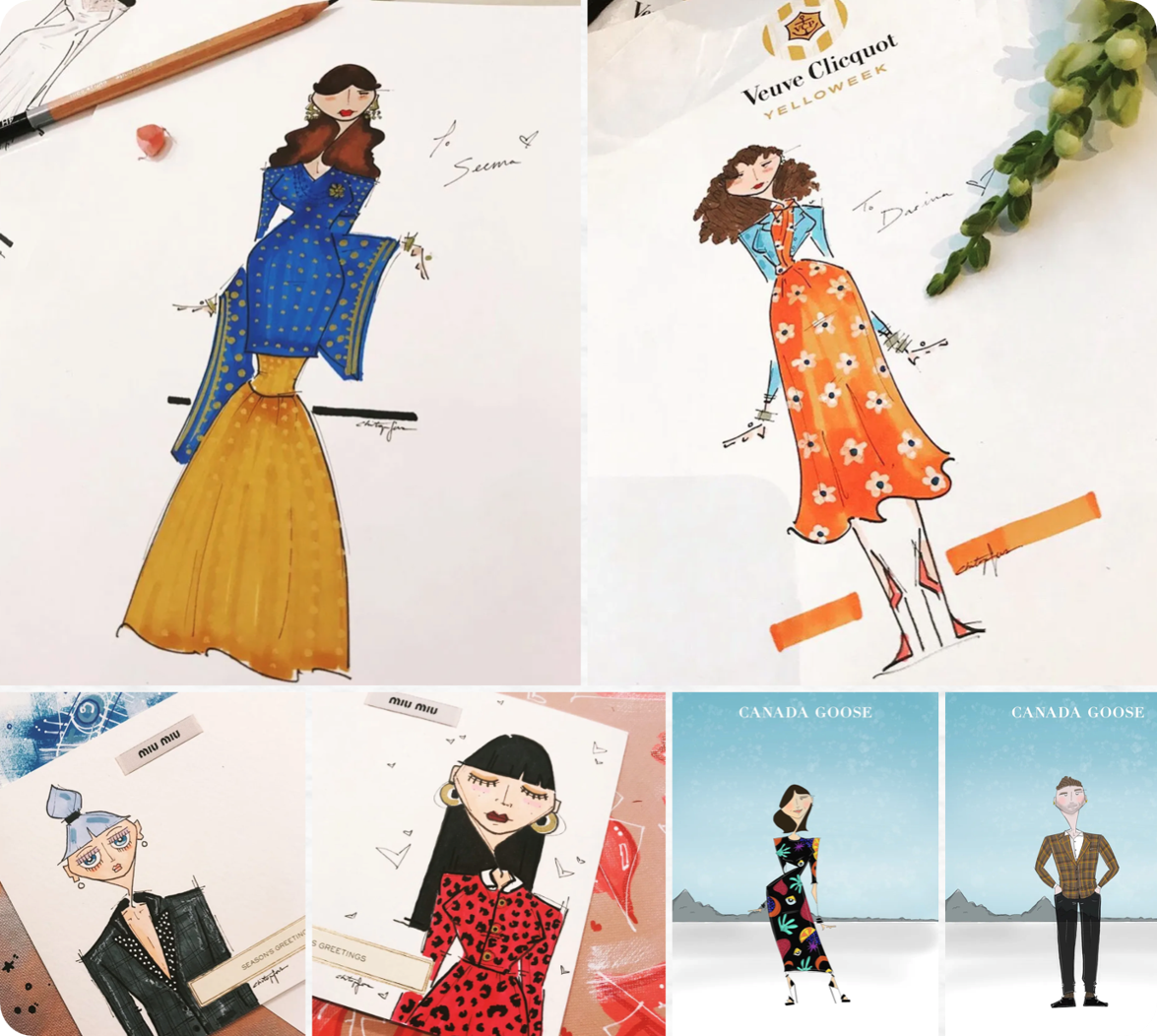
A live portrait artist sketches individual team members while they talk, connect, and watch. It creates natural conversation, slows the room down in the best way, and produces something each person takes home. Understated. Memorable. Different from anything most teams have done before. Best for: leadership retreats, recognition dinners, and senior teams who are tired of high-energy formats.
Throughput is the number that matters here, because it decides whether the queue is part of the experience or a problem. Digital Caricature runs one artist for three hours at roughly eight guests per hour. Live Sketch Portraits works to the same three-hour block at a slower, more finished pace. Robot Portraits is the high-volume option at 75 to 100 cards over five hours.
For a 60-person room, one artist covers about half of it in three hours. Plan two, or plan the format as a feature rather than a guarantee. Each needs a table, two chairs and good lighting.
Custom trivia built around your company history, industry, and team culture. Not a pub quiz template. A purpose-built experience that rewards people who know things others do not, and levels the playing field in a room full of specialists. Best for: anniversary events, milestone recognition, and any team that has acquired or merged in the last 18 months.
The version The Idea Hunter runs most is a hosted survey-style game show, rebuilt with questions written from your company, your history, and the things only your team would know. A live host runs the room. It needs a tech rider and works from about 30 people up to a few hundred.
A quick note before the second half of the list. The activity itself is rarely the variable that decides whether a team building day lands or flops. The variable is how the activity gets matched to the team’s actual condition. A new leadership team needs something that strips status. A burnt-out team needs something that gives back energy. A team that just delivered a hard quarter needs recognition, not training. This is the work behind The Idea Hunter’s team building service — the next six activities are powerful only when they meet the right room. Read them with your team in mind, not the abstract idea of a “corporate event.”
Inspired by Yoko Ono's Wish Tree and the love-lock bridge at the Pont des Arts, this builds trees inside your event space. Each person handwrites a note on seed paper, and every note planted becomes a real tree.
The reason it outperforms a standard build-and-donate day is the follow-through. Materials, staging, setup and teardown, on-site facilitation, donation management and delivery are all handled, and you get post-event impact reporting afterward. The team sees what their afternoon actually produced, which is the part most volunteer formats skip.
It needs loading dock access. For a giving format built around a keepsake instead, the Plush Toy Donation Build has teams assemble custom stuffed animals that get donated. Best for: ESG-driven organizations and teams that want a day with downstream impact.
A professional DJ teaches your team to mix, layer, and produce a short track together. High energy. Surprising skill ceiling. By the end, everyone has contributed to something they can actually hear. Best for: marketing, creative, and product teams who want the event to feel like a launch, not a meeting.
The DJs on this format come out of live event production rather than club work, which matters when the set has to sit inside a run of show rather than replace it. A live beatbox host is the variant that builds soundscapes around speakers instead of playing between them, and includes a prep call to walk the show flow.
The most participatory version is the African Diasporic Drum and Percussion Workshop, where the whole room plays. It needs 21 chairs, because the drums are played seated.
An intimate multi-course dinner designed around conversation. Curated seating. Paired wines or non-alcoholic alternatives. A menu revealed in stages. The format strips away devices and agendas and replaces them with actual connection. Best for: executive teams, board dinners, and 12-to-30 person groups where the goal is depth, not breadth.
Interactive Cooking Experience runs this out of a West Toronto kitchen for smaller groups. A beer sommelier or mixologist can build a pairing programme across the courses. A projection-mapped table experience turns the surface itself into the entertainment for groups that want a show alongside the meal.

A poet runs the team through guided writing exercises, and the session ends with a coffeehouse-style open mic where people read what they wrote.
It sounds like the softest thing on this list and it is consistently the one people talk about afterward. Writing something true about your own work is harder than presenting about it, and hearing a colleague read theirs changes how the room sees them. The skill it builds is the one every pitch depends on, which is saying a real thing in your own voice.
One poet covers a three-hour block. It needs a green room, one table and two chairs. Best for: sales teams, customer-facing roles, and any function that lives or dies on the quality of the pitch.
Not a basic app-based version. A fully designed experience that uses Toronto’s neighbourhoods, landmarks, and culture as the backdrop. Teams navigate challenges, collect clues, and compete across the city. The city itself is the venue, which is what makes it land. Best for: in-town summits, larger group offsites of 50 to 200, and teams flying in from out of province.
Axe throwing, knife throwing and digital archery run together with professional guides on every station. Two portable targets come to your venue, or the group travels to one of several locations around and outside the GTA.
This is the format the Toronto market asks for most and the one most corporate lists get wrong, because they book a bar and call it team building. Run properly, coaching is the point. People arrive certain they will be bad at it and leave having hit something, and that arc is why the format works on mixed-seniority rooms.
All equipment, setup and coaching are included. The mobile version means you are not moving 60 people across the city mid-afternoon. Best for: mixed-seniority groups, sales kickoffs, and teams who have sat through too many facilitated sessions.
Teams of 15 to 20 take a dragon boat onto the water with a coach and a steerer each. It starts with land-based instruction on technique, timing and calls, then moves onto the harbour for real racing.
Nothing else on this list synchronises a team as literally. A boat with twenty people paddling out of time goes nowhere, and everyone in it knows within about thirty seconds. The correction is collective and immediate, which is the whole lesson delivered without a facilitator saying a word.
The format is a two-hour team builder for up to 100 people, and includes one coach and one steerer per team, paddles, life jackets, all dragon boat accessories, and operations and safety staff on the water. It runs in the warm months, so it books out early for summer programmes. Best for: large groups, summer offsites, and in-town summits that need one anchor moment everyone remembers.
| Activity | Best For | Group Size | Energy | Indoor / Outdoor |
|---|---|---|---|---|
| Live Mural Creation | Cross-functional teams | 20–150 | Medium | Indoor |
| Mixology Challenge | Sales, marketing | 15–80 | Medium-High | Indoor |
| Custom Escape Room | Leadership teams | 8–40 | Medium-High | Indoor |
| The Big Idea | Strategy days, all-hands | 20–500 | Low | Indoor |
| The Chocolate Challenge | New or post-restructure teams | 10–60 | High | Indoor |
| Culinary Competition | Department merges | 20–80 | High | Indoor |
| Immersive Digital Art | Brand and innovation teams | 30–300 | Medium | Indoor |
| Portrait Artist | Senior leadership | 10–50 | Low | Indoor |
| Branded Trivia | Anniversaries, mergers | 30–200 | Medium-High | Indoor |
| Tree of Hope | ESG-aligned orgs | 25–150 | Medium | Indoor |
| DJ / Music Production | Creative, marketing | 15–80 | High | Indoor |
| Private Chef’s Table | Exec teams, boards | 12–30 | Low | Indoor |
| Team Poetry | Sales, customer-facing | 15–60 | Low | Indoor |
| City Scavenger Hunt | In-town summits | 50–200 | High | Outdoor |
| Axe Throwing & Archery | Mixed-seniority groups | 15–80 | High | Both |
| Dragon Boat Racing | Large groups, summer offsites | up to 100 | High | Outdoor |
For pricing benchmarks beyond team building, Northstar Meetings Group publishes regular industry benchmarks worth referencing.
Sixteen options is a lot. Here is how to narrow it down.
What is the goal? Communication, recognition, culture reset, energy-building before a tough quarter. Different objectives point to different formats. Recognition rarely benefits from competition. Energy-building rarely benefits from quiet reflection.
Who is in the room? A cross-functional group needs something that removes silos. A leadership team often needs something that strips away titles. Know your audience before you book.
What energy level do you actually need? High-energy formats work brilliantly at the right moment and fall completely flat at the wrong one. The same goes for quiet, immersive experiences. The most expensive mistake we see is the wrong energy match, not the wrong activity.
“The events that get remembered are the ones where the audience never sees the saves. By the time a guest notices a problem, you have already failed. The same logic applies to the activity choice. If you have to explain why this activity is right for this team, it probably isn’t.”
— Fadi Dawood, President, The Idea Hunter
This is exactly where working with an experienced corporate event planner in Toronto changes the outcome. Not just to book a venue and coordinate vendors, but to match the right activity to the actual behavioural shift you are trying to produce. See our 2026 buyer’s guide to corporate event planners in Canada for a full evaluation framework.
Toronto is one of the most sophisticated corporate event markets in North America. Audiences are experienced. Expectations are high. The venues range from waterfront spaces to heritage buildings to custom-built experiential environments, which means the backdrop can do as much work as the programming.
Two structural shifts are reshaping the market in 2026:
The best corporate events happening in Toronto right now are built around one principle: give people something they did not know they needed. An experience that surprises them. A moment that creates connection without manufacturing it.
The 16 activities on this list are chosen because they do exactly that. The question is which one matches your team, your moment, and the outcome you actually need.
A list is the easy part. Matching the format to the team, the moment, and the desired behavioural shift is the work that decides whether the day gets talked about for a week or for a year.
The Idea Hunter has produced over 220 corporate events per year for Canadian organizations, and the pattern is consistent: clients who start with the outcome and let the activity follow get a different result than clients who pick the activity first.
If you have a team event in the next 90 days and you want to talk through which format fits the team you actually have, schedule a discovery call with Fadi, explore our team building and corporate retreats service, or get in touch with The Idea Hunter. We will help you match the right activity to the actual outcome you need.
For deeper reading on how to evaluate a corporate event partner before you commit, see our 2026 buyer’s guide and our companion article on team building beyond icebreakers. For a worked example of that in practice, see our case study for Bayshore Healthcare.
Dragon boat racing on the harbour, live mural creation, immersive digital art with projection mapping, chef-judged chocolate sculpture competitions, and axe throwing with archery are among the most distinctive team building activities in Toronto in 2026. Each one creates a shared memory rather than just a shared afternoon.
Look for a planner with experience across multiple formats, a strong vendor network, and a process that starts with your outcome rather than a pre-built activity menu. Ask for references from teams of comparable size and ask to see how they have matched activity to objective in past events. The full evaluation framework is in our 2026 Canadian buyer’s guide.
Pricing depends heavily on group size, format, and production scope. À la carte team building activities for corporate groups start around $5,000. Full-scale, custom corporate team building experiences with venue, production, and on-site management typically range from $15,000 to $50,000 and above. Northstar Meetings Group publishes industry benchmarks worth referencing alongside any quote.
Most team building activities in Toronto run between 90 minutes and four hours of active programming. Half-day formats (3 to 4 hours) consistently produce the strongest behavioural outcomes. Multi-day retreats are appropriate when the goal is strategy alignment, leadership development, or onboarding a new team. See our corporate retreats guide for multi-day formats.
For peak season events (September through December and March through May), book 8 to 12 weeks in advance. For summer team building and any water-based format such as dragon boat racing, book 12 to 16 weeks out because vendor and venue availability tightens significantly.
When the activity is matched to the goal and executed well, yes. The key is intentional design. A mismatched format, however well-produced, will not shift culture. The right activity in the right moment can change a team dynamic within a single afternoon. The literature on this is consistent — see PCMA Convene coverage of behavioural-outcome event design through 2025 and 2026.
The right venue depends on the activity. High-energy formats need open, flexible space. Intimate experiences work better in curated, smaller rooms. Outdoor formats benefit from waterfront access or distinct neighbourhood character. The top corporate event planners in Toronto maintain venue relationships that pre-match format and space before the client ever has to ask.
Several of these run virtual or hybrid. The interactive cooking class has a virtual format where ingredients ship ahead and a chef leads the session live. Branded game shows run remotely with a host. Formats built around a physical artifact, like the mural or dragon boat racing, are in-person only. If your team is split across offices, lead with the format that travels and build the in-person moment around whoever is in the room.
Most formats on this list are seated or low-mobility by default, including the mural, portrait, poetry, trivia, culinary and digital art formats. Axe throwing and archery include seated stations and coaching adapted per person. Dragon boat racing requires the most physical participation, and every boat carries operations and safety staff. Tell your planner about mobility, dietary and sensory needs at the brief stage, not at the confirmation stage.



The Idea Hunter is an award-winning corporate event planning and production company, with the largest database of entertainment and activations in Canada.