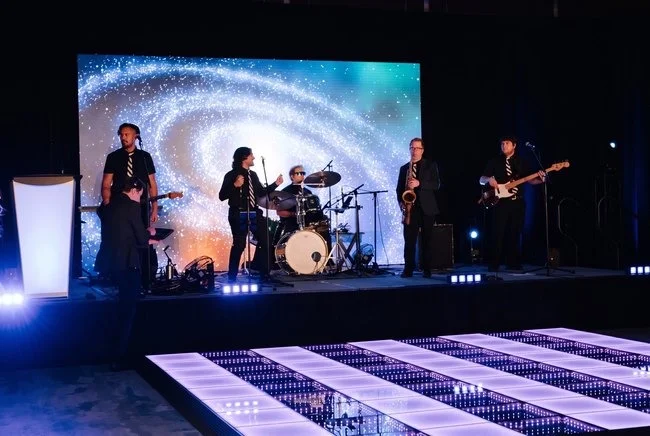
What Types of Corporate Entertainment Work Best for Large Company Events
Read More


Quick answer:
The right corporate event planner in Canada is one with proven volume (hundreds of events across formats), a vetted vendor network, demonstrable creative range, and a tested day-of execution process. Confirm fees, insurance, and client retention (industry benchmark: 70-80%; The Idea Hunter operates at 97%) before you sign. Define whether you need full-service event management or à la carte support first. The right partner starts with your outcome, not a template.
The bar for corporate events in Canada has never been higher.
Companies are spending more intentionally. Attendees expect more. Industry coverage from Skift Meetings and PCMA Convene has tracked a clear shift through 2025-2026: experience-led corporate events outperform traditional formats on engagement, recall, and post-event sentiment metrics. The options, from boutique agencies to large event management companies, are overwhelming. If you have ever Googled “corporate event planner” or “event management companies” and found yourself drowning in choices, you are not alone.
Picking the wrong partner does not just waste budget. It costs you credibility, momentum, and sometimes the trust of the very people you are trying to celebrate.
This guide is for anyone planning a corporate event who needs to choose wisely and choose fast. We will walk you through what to look for, what to ask, and what separates a great event management company from one with a polished website and not much else.
A planner who scores high on all five is rare. A planner who cannot answer questions about all five should not be on your shortlist.
A corporate event planner manages the full production of business events: venue sourcing, vendor coordination, entertainment, decor, logistics, and on-site execution. A full-service event management company acts as the single point of contact across every element, so the client can focus on guests and outcomes rather than ten supplier relationships.
The work splits into three phases:
A great corporate event planner does not just manage timelines. They think about outcomes. They ask what you want people to feel when they walk out the door. That is a fundamentally different conversation than “how many tables do we need.”
Corporate event planning is not logistics. It is strategy.
Every event sends a signal to your team, your clients, and your stakeholders. A poorly executed gala says something. So does a team-building session no one mentions on Monday morning. So does a launch event that generates buzz for weeks afterward.
“Corporate events are not logistics problems. They are strategic communication, and the moment a leader treats them as anything less, the room feels it.”— Hailey Dawood, Chief Huntress of The Idea Hunter and 10-year veteran of corporate event production
The right event management company does not just manage timelines and vendor calls. They build the experience around the outcome you are trying to create. When that thinking is missing, you feel it. When it is there, the event feels inevitable.
Full-service event management means the planner handles concept to close. À la carte support means the planner supplies specific elements (entertainment, decor, AV) into a plan you are already managing yourself. Most event management companies offer both, but the engagement model determines who is leading and who is supplying. Get this wrong and friction follows.
Side by side:
| Engagement type | Best for | Client role | Planner role |
|---|---|---|---|
| À la carte support | Plan and venue already set; need specific elements added | Lead | Specialist supplier |
| Full-service event management | End-to-end coordination needed; concept to close | Approver and decision-maker | Single point of contact across every supplier |
Hand a full-scope brief to a company that only does à la carte, or expect end-to-end management from a niche corporate entertainment provider, and you will run into gaps. Define the need first. Then find the partner that fits it.
Evaluate a corporate event planner’s experience on three axes: total event volume in the past three years, depth in your specific event type (gala, retreat, product launch, conference), and the ability to name real production challenges they have solved. A polished website tells you almost nothing. The kind of depth that matters only comes from running hundreds of events across different industries, formats, and scales.
When reviewing event management companies, ask directly:
At The Idea Hunter, we have produced 10,000+ events over 23+ years across Canada. That experience means we have seen what goes wrong. More importantly, we know how to solve it before it becomes your problem.
Longevity matters. So does specificity. A firm that has run 50 generic office parties is not the same as one that has produced immersive corporate entertainment events for Fortune 500 companies, financial institutions, and international brands.
The quality of your event is only as strong as the vendor network behind it.
A great event management company is not just well organized. It is well connected. The team has working relationships with the country’s best venues, performers, caterers, AV teams, and production partners, built on trust, history, and shared standards.
Why this matters in practice:
Ask any planner you are considering: who do you consistently work with, and why? The answer tells you a lot.
Creative range is a planner’s ability to move between event formats, aesthetics, and energy levels (gala, retreat, product launch, executive dinner) within the same client roster. Your annual leadership summit should not feel like your client appreciation evening. Your team-building activity should not feel like your product launch. The best event management companies in Canada bring versatility because the brief always demands it.
“We do not start with a venue list or an entertainment roster. We start with a conversation about what the client wants their people to feel walking out the door. That conversation is what dictates the creative direction.”— Hailey Dawood, Chief Huntress at The Idea Hunter
Look for evidence of range in their portfolio:
Creative versatility is not nice to have. In a market where brands are sophisticated and attendees have high expectations, it is essential.
Assess day-of execution by asking three things: who leads on site, what their protocol is when something goes wrong, and how they communicate with you during the event itself. Many event management companies present beautifully on paper, then fall apart in the room. The planning looks great, the proposal is impressive, and then the day arrives and everything depends on the people actually present.
Ask specifically:
“The events that get remembered are the ones where the audience never sees the saves. By the time a guest notices a problem, you have already failed.”— Fadi Dawood, President of The Idea Hunter
A firm that can articulate its execution process clearly has tested it. One that gives vague reassurances probably has not. Strong event management is measured in moments. The moment a speaker’s mic cuts out and someone handles it before the audience notices. The moment a catering delay gets absorbed without disrupting the flow. These do not happen by accident.
Before committing, walk through these:
These are not trick questions. A confident, experienced partner welcomes them.
Corporate event planning costs in Canada vary based on event size, format, scope, and the level of custom production involved. Industry pricing benchmarks tracked by Northstar Meetings Group show similar tier-based structures across the North American corporate events market, with custom production driving the largest single cost variance. As a working frame of reference, here is how investment typically scales at The Idea Hunter:
| Engagement scope | Investment range | Typical scope |
|---|---|---|
| À la carte entertainment / activations | Starting at $3,500 | Single-element bookings: live artist, DJ, photobooth, or interactive game format |
| Single-category production | $15,000 – $30,000 | AV, decor, OR catering management for a defined event |
| Multi-category event package | $30,000 – $75,000 | Decor + AV + entertainment + on-site management under one contract |
| Full-scale full-service production | $75,000 – $100,000+ | Galas, anniversaries, large conferences with custom design, layered entertainment, full team coverage |
The bigger drivers of cost are not surprising. Guest count, venue complexity, custom fabrication, AV scope, hospitality and food and beverage, and how much creative direction the event requires. The smaller drivers are often where budgets quietly inflate: power and landmark fees at outdoor venues, on-site staffing for guest flow, and last-minute scope changes.
“Any event partner who quotes you a number before they understand what you are trying to accomplish is not a partner. They are a vendor.”— Fadi Dawood, President of The Idea Hunter
No two quotes compare apples to apples without a discovery call. Any planner who quotes a number before understanding your outcome is guessing.
Corporate entertainment in Canada has moved well past dinner and a DJ.
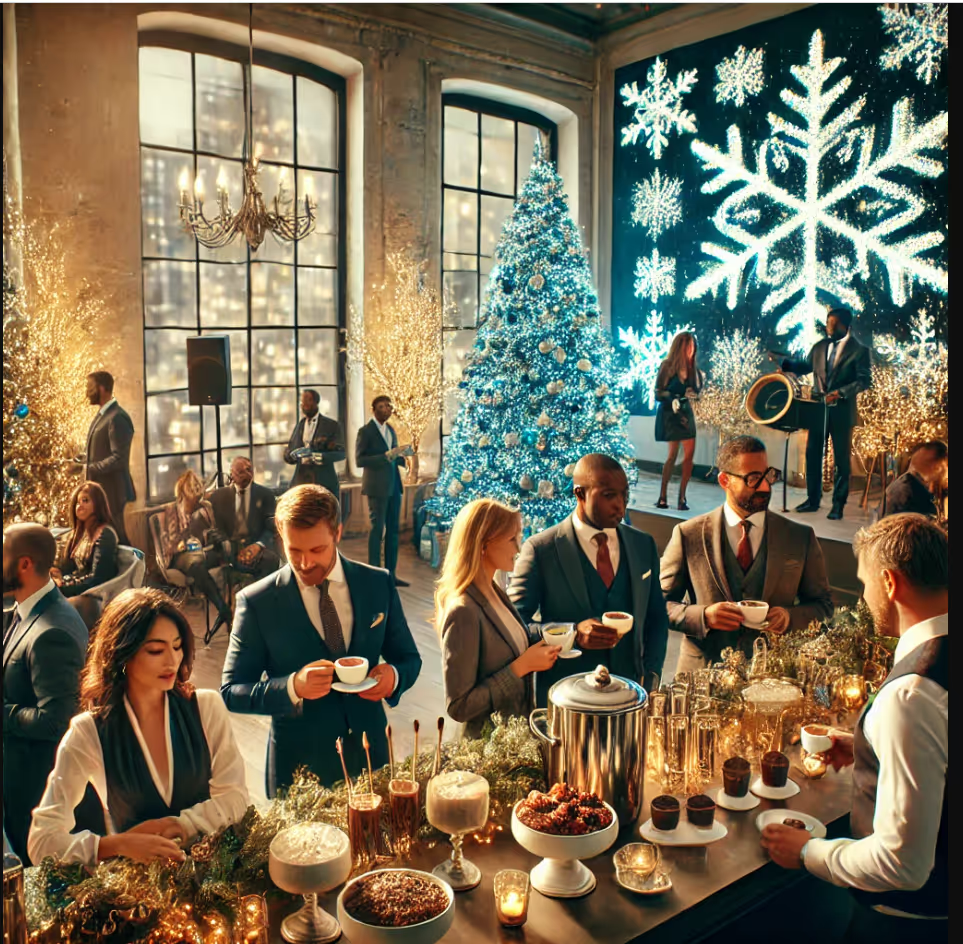
Today’s most memorable corporate events layer multiple forms of engagement. Live performance, interactive experiences, branded activations, and social moments that feel spontaneous even when they are expertly designed. The goal is not to keep people entertained. It is to keep them present.
The right entertainment choices depend on your audience, your event format, and the emotion you want to anchor the evening. Industry observers at Skift Meetings have flagged this shift toward layered, multi-format engagement throughout 2025 and 2026. For a leadership offsite, that might be a facilitated creative experience that builds connection without feeling forced. For a large-scale company celebration, live music, photo and video installations, and immersive art. For team building, anything that flattens hierarchy and creates shared memory.
Corporate event ideas that consistently land in 2026:
The common thread: every one of these creates a moment people talk about. That is the whole point.
A failed corporate event is not just awkward. It carries real business consequences.
Low engagement signals to your team that leadership does not invest in people. A disorganized production reflects on whoever planned it. A forgettable evening after months of planning means wasted budget and a missed opportunity to reinforce culture, celebrate achievement, or strengthen relationships.
Event management companies that have been in this industry long enough will tell you the same thing. The events that get remembered, really remembered, are the ones where someone thought carefully about why the event existed before they thought about what to serve at the reception.
Start with the outcome. Find a planner who starts there too.
We have spent more than two decades producing corporate events in Toronto and across Canada. We do not start with a venue shortlist or an entertainment roster. We start with your brief, your people, and the experience you want to create.
Whether you need a full-service corporate event planning partner or a specialist injection of corporate entertainment into an event you are already managing, we build the solution around your actual needs, not a template.
Our roster includes 600+ vetted performers. Our team handles creative direction, logistics, vendor management, decor, and on-site production under one contract. Our 97 percent client retention rate, well above the 70-80 percent industry benchmark, reflects the standard we hold ourselves to every time.
Ready to find the right fit for your next corporate event? Get in touch with The Idea Hunter to start the conversation. For worked examples of that process across multi-venue programmes, see our case studies for Insulate America and Schindler Elevator Ltd.
A corporate event planner manages the full production of business events: venue sourcing, vendor coordination, entertainment, decor, logistics, and on-site execution. Full-service event management companies act as the single point of contact, handling every element so the client can focus on guests and objectives.
Costs depend on event size, format, and scope. At The Idea Hunter, investments range from $3,500 for à la carte entertainment support up to $100,000+ for full-scale event management and production. Multi-category event packages typically fall between $30,000 and $75,000.
Full-service means the planner handles everything from concept to close. À la carte means you already have a plan and need specific elements added, such as entertainment, decor, or interactive activations.
Top options include live artist experiences, interactive game formats, DJ performances with branded production, culinary activations, and immersive digital environments using projection mapping and AR.
Use the Five Filters: track record, vendor network, creative range, day-of execution process, and contract clarity. A confident partner will answer questions about all five without hesitation.



The Idea Hunter stands as an award-winning, premier source for corporate entertainment, interactive experiences and event management.















![Feast Your Eyes: 10 Food Entertainment Ideas [2025 Edition]](https://cdn.prod.website-files.com/669532db0a7004d9853610a3/684c645bb66e8dfe014b7137_Screenshot%202025-06-13%20134253.avif)
![Top 20 Corporate Event Venues in Toronto [2025 Edition]](https://cdn.prod.website-files.com/669532db0a7004d9853610a3/67c9c1f60babbed9463c77cf_Trading%20floor%202.avif)

.avif)





.avif)
.avif)


.avif)