Who to Hire for a 100 to 500 Person Corporate Event in Canada, and What to Negotiate
Read More


To measure the ROI of a corporate event, set one business outcome before you book anything, record a baseline, count every cost, and read the same number again 30 to 90 days after the event. The formula is net benefit divided by total cost, times 100. The Idea Hunter, a Toronto corporate event planning and production company with more than 23 years in business, builds each event around that outcome from the first conversation.
Few teams find this easy. In Bizzabo's 2026 event benchmarks, 40% of organizers reported difficulty proving event ROI, down from 70% in 2025. Forrester's 2026 research found that about half of organizations say their events perform well, while only 38% of chief marketing officers agree. The pressure is rising too. The Amex GBT 2027 Global Meetings and Events Forecast expects total cost per attendee to rise for every meeting type.
ROI for a corporate event is the money the event returned compared with what it cost. It gives the budget holder a reason to fund the next one, and it shows which events to repeat, change or stop.
The ROI Methodology treats ROI as the last of five levels of evaluation. The levels below are the ROI Institute's. The examples are ours.
| Level | Question it answers | Corporate event example |
|---|---|---|
| 1. Reaction and planned action | Did guests value it? | Post-event survey |
| 2. Learning | Did they take in the message? | Recall of the three key points from a sales kickoff |
| 3. Application | Did they act on it? | New pitch in use by reps 30 days later |
| 4. Business impact | Did a business number move? | Renewals, pipeline, retention |
| 5. ROI | Was the gain worth the cost? | The formula below |
The ROI Institute calls level 1 the most commonly used. It tells you whether people enjoyed the event and nothing about the business. Some returns also never reach a dollar figure, such as trust, morale and relationships with clients. Report those beside the ROI number and leave them unconverted. A forced dollar value is the first thing a finance team will question.
"Corporate events are not logistics problems. They are strategic communication, and the moment a leader treats them as anything less, the room feels it."Hailey Dawood, Chief Huntress, The Idea Hunter
Subtract the total cost from the monetary benefit, divide by the total cost, and multiply by 100. The result is a percentage: ROI = (benefit minus cost) divided by cost, times 100.
Here is an illustrative example, not a client result. A client appreciation evening costs $60,000 all in. Over the next 90 days, the accounts that attended close $300,000 more than a comparable group of accounts that did not attend. At a 30% gross margin, that is $90,000 of benefit. ROI = ($90,000 minus $60,000) divided by $60,000, times 100, or 50%.
Three rules keep that number honest:
Measure the number the event was built to move, and choose it by event type. Attendance and satisfaction show whether the room was full. They do not show whether anything changed.
| Event type | Business goal | What to measure | When to measure |
|---|---|---|---|
| Client appreciation | Keep and grow accounts | Renewals and new opportunities from attendees, against accounts that did not attend | 30, 60 and 90 days |
| Conference or sales kickoff | Align and equip the team | Session attendance, message recall, sales activity | Same week, then 30 to 90 days |
| Holiday party or team event | Morale and retention | Participation rate, pulse survey, retention | Within 48 hours, then over 12 months |
| Product launch or brand activation | Awareness and leads | Leads captured, media and social reach, brand recall survey | Same week, then 30 days |
| Gala or awards night | Recognition and relationships | Attendance against invites, sponsor and stakeholder feedback | Within 2 weeks |
Record the number you plan to move before invitations go out. Without a starting point, any later result is an opinion.
"The companies getting the most from their event budgets in 2026 stopped asking what they could afford and started asking what the event needed to do. Spend follows the outcome. That one shift is the difference between an event people attend and one they remember."Fadi Dawood, President, The Idea Hunter
Compare attendees with a similar group that did not attend, or ask attendees how much of the change they credit to the event. The Event ROI Institute says impact claims need at least one method of isolating the event's effect, and it names both of these.
The comparison group is the stronger of the two, and it is the harder to build. A client event makes it practical, because some invited accounts will decline. For an internal event, use the estimate method. Ask people what share of a change came from the event, and discount that answer when you report it. A sales lift after a kickoff can also come from a new product, a price change or a good quarter, so say so in the report before someone else does.
Tag every attendee in your CRM, then read their opportunities at 30, 60 and 90 days against invited accounts that did not attend. Most mid-size events need nothing more than a clean registration list and a campaign tag.
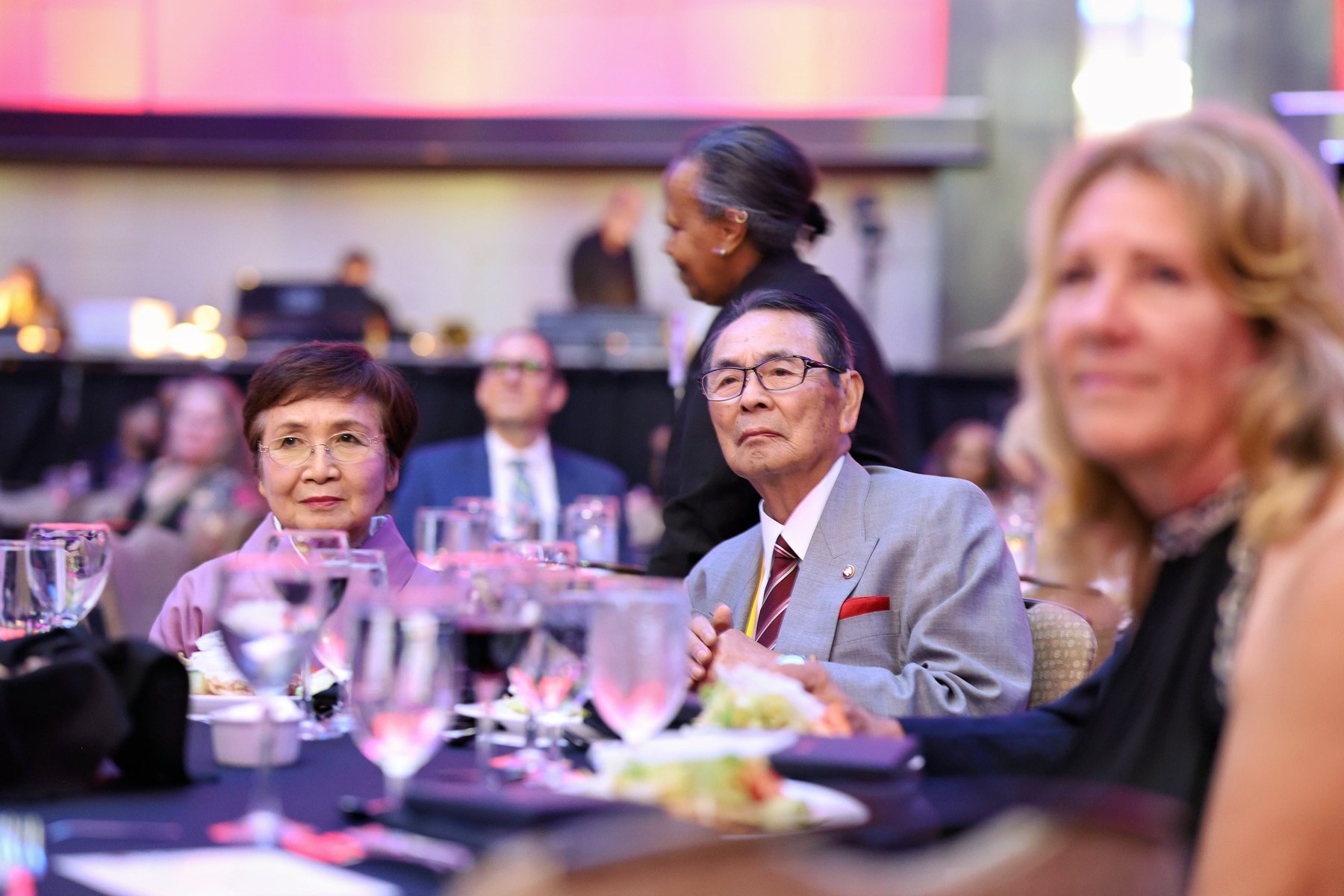
The work gets easier when systems connect. Forrester reports that two-thirds of organizations have integrated their main event platform with their sales and marketing stack. If yours has not, export the check-in list into the CRM within a day of the event, while the names are still fresh. Record guest feedback beside the numbers. Schindler hosted 300 clients, prospects and team members for its 150th anniversary evening in Toronto, and many guests described it as one of the best corporate events they had attended.
Track the participation rate, send a three-question pulse survey within 48 hours, and watch retention over the following year. Use the same three questions each time so you can compare events:
Retention is where the money sits. Gallup puts the cost of replacing an employee at one-half to two times annual salary. Statistics Canada reported average weekly earnings of $1,354.55 in August 2026, or about $70,400 a year. On our arithmetic, which applies a US ratio to Canadian pay, one departure costs roughly $35,000 to $141,000. Keep two or three people who were likely to leave and a staff event can pay for itself. Report that as an estimate, because no survey can prove why someone stayed. Early signals count too. F&P Mfg. set one goal for its 900-guest 40th anniversary gala: recognize the diversity of the company. In the post-event debrief, it reported positive guest feedback, and employees were already asking when the next event would be.

The same survey works for a retreat or team event. Our guide to planning a corporate retreat in Ontario covers the format, and our retreat team built Float's three-day camp for 120 employees around the company's six values.
There is no reliable universal benchmark for corporate event ROI. Ratios such as 3:1 circulate online with no published source behind them, so treat them with care.
A positive number is the first test. The more useful test is your own history. Measure the same way each year and compare like with like, such as this year's client evening against last year's. Four or five events measured the same way will tell you more than any industry average.
The first mistake is setting no goal before booking. Once the event has happened, nothing can be measured against it. The others follow from that one:
A measurable result needs an event large enough to be felt and a goal narrow enough to track. At The Idea Hunter, entertainment added to an event you are already hosting starts at $5,000, team building at $10,000, one production category at $15,000, and full-service planning and production at $35,000, all before HST.
Our Toronto corporate event cost guide breaks these down by event type. For a broader view of where companies are moving money, see how Canadian companies are spending their 2026 event budgets.
Set one outcome, then spend on the two or three moments guests will remember and keep everything else simple. Spreading a small budget evenly produces an event with no peak.
"A party fails on the brief, not on the budget. When a client tells me what they want people to feel walking out, I can build that at almost any scale. When they hand me a format list and a date, I am guessing."Fadi Dawood, President, The Idea Hunter
After an event, our operations team runs an internal debrief and our account team builds a recap deck and walks the client through it. Clients keep that deck as the reference for next year's planning and share it inside their own company. The ROI calculation stays with you, because only your team can see your margin, pipeline and retention numbers. Our part is to build the event around the outcome you set. Repeat business is the measure we watch ourselves. Float came back to us for a three-day retreat for 120 people after its 2024 holiday party.

We also report on delivery, because that part is ours to answer for. Tennis Canada's 2026 National Bank Open ran 15 stage engagements across 12 days with no cancellations. Bayshore HealthCare's three-day leadership conference and gala for 350 senior leaders ran without a single technical failure, scheduling incident or entertainment delay. Insulate America's five-day program for about 375 guests was delivered on budget and within scope. See more in our case studies.
Once the outcome is clear, the next question is who should own it. Our corporate event planning team can take it from there, and our buyer's guide sets out what to ask any planner before you sign. If you have a date and a rough guest count, tell us about your event and we will come back with initial ideas and a ballpark within three to five business days of a short discovery call.
Set one business outcome before you book, record a baseline, count every cost including staff time, and compare the same number 30 to 90 days after the event. Then divide net benefit by total cost and multiply by 100. Use margin rather than revenue, and compare attendees with a similar group that did not attend.
Set one outcome, choose one strong format, spend on the two or three moments guests will remember and keep the rest simple. Daytime dates usually cost less than evenings. At The Idea Hunter, entertainment added to an event you already host starts at $5,000 before HST.
There is no reliable universal benchmark. A positive ROI is the first test. The better test is your own history, measured the same way each year, so you can see whether this year's event beat last year's.
Send attendee surveys within 48 hours, then read business numbers at 30, 60 and 90 days. Sales cycles and renewals can take longer. Retention needs about a year, so report the early signals and update the figure later.
Use retention as the financial measure and report morale beside it. Gallup puts the cost of replacing an employee at one-half to two times annual salary, so a small change in retention can cover the cost of an event. Track participation and a short pulse survey as supporting evidence.
Staff time is the easiest to miss. Also check travel, gifts, overtime, delivery and on-site labour. Count anything you would not have spent if the event had not happened, including the hours your own team put in.



The Idea Hunter is an award-winning corporate event planning and production company, with the largest database of entertainment and activations in Canada.