What Types of Corporate Entertainment Work Best for Large Company Events
Read More


Corporate entertainment in Toronto in 2026 falls into four working categories: hands-on competitive formats, live art created in the room, facilitated sessions that build a skill, and production-led atmosphere. The right choice is decided by three inputs, not by taste: the size of the group, the moment in the evening it has to fill, and the outcome the event is being held to produce.
Toronto hosted 74 major meetings in 2025 drawing 378,000 delegates and $982 million in economic impact, a 51% year-over-year increase in delegates, according to Destination Toronto. Audiences here are experienced, and the bar is set accordingly.
The direction of travel is participation. Bizzabo's 2026 event marketing benchmarks report 95% of organizers say experiential learning is important to their events and 75% say immersive experiences matter, while 78% identify in-person events as their most impactful marketing channel. Passive entertainment is being replaced by formats where guests are part of what happens.
Below are 12 formats The Idea Hunter produces across Toronto, drawn from a roster of more than 550 vetted activations, with the group size each suits, the moment it fits, and what it actually requires from your venue.
Entertainment is the element most likely to be remembered and the element most often decided last. Venue sets the tone. Catering keeps people comfortable. Entertainment creates the memory people carry out of the room.
That hierarchy is the one most corporate event budgets get backwards. Companies over-invest in the backdrop and under-invest in the experience, then wonder why nothing sticks six months later.
"Entertainment is not a line item at the bottom of a proposal. It is a decision we make at the brief stage, alongside the objective and the audience, because it is the part of the evening people actually describe to someone else afterward."— Fadi Dawood, President, The Idea Hunter
The practical consequence is sequencing. A format chosen before the outcome is defined is the most common and most expensive mistake in corporate event planning in Toronto.
Group sizes reflect our production experience and are confirmed against your venue and headcount on the discovery call.
These are the formats where the room does the work. They suit groups that need energy, cross-team mixing, or a levelling effect between seniority levels.
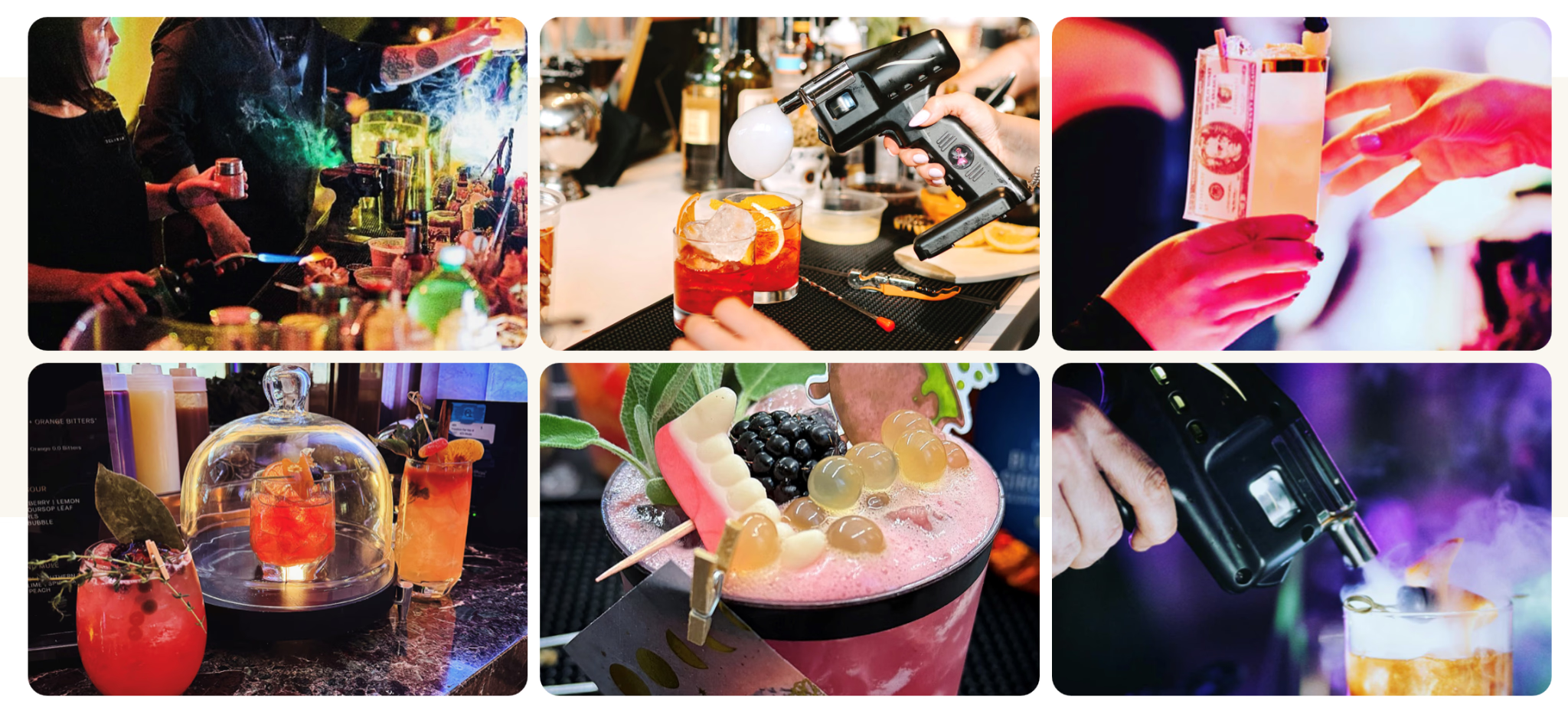
Teams design, name, and pitch a signature cocktail or mocktail, judged on taste, presentation, and story. It removes hierarchy instantly. Nobody in the room has an obvious advantage, which means the most senior person and the newest hire compete on identical footing.
We produce this in several formats. Frosted Mixology builds each drink around a frozen shot that changes both the taste and the colour of the beverage as it melts, and runs to around 300 servings. The Global Mixologist is a two-hour guided session led by a mixologist trained in Cognac and Paris. The Interactive Cocktail and Mocktail Class runs as rolling 15 or 30-minute sessions for about 20 guests at a time, which suits a room that needs to keep moving. Zero Dry Mocktail Class is the alcohol-free version and runs identically, which removes any inclusion question. For a higher-production look, the Ring for a Beverage Wall is a theatre-grade wall roughly 8 feet tall by 12 feet wide with customized vinyl and a selfie mirror built in.
Best placed pre-dinner, when guests have arrived but the room has not settled into seated conversation. It converts arrival awkwardness into a shared task.
Where it fails: rooms under about 20 people, where there are too few teams to create real competition.
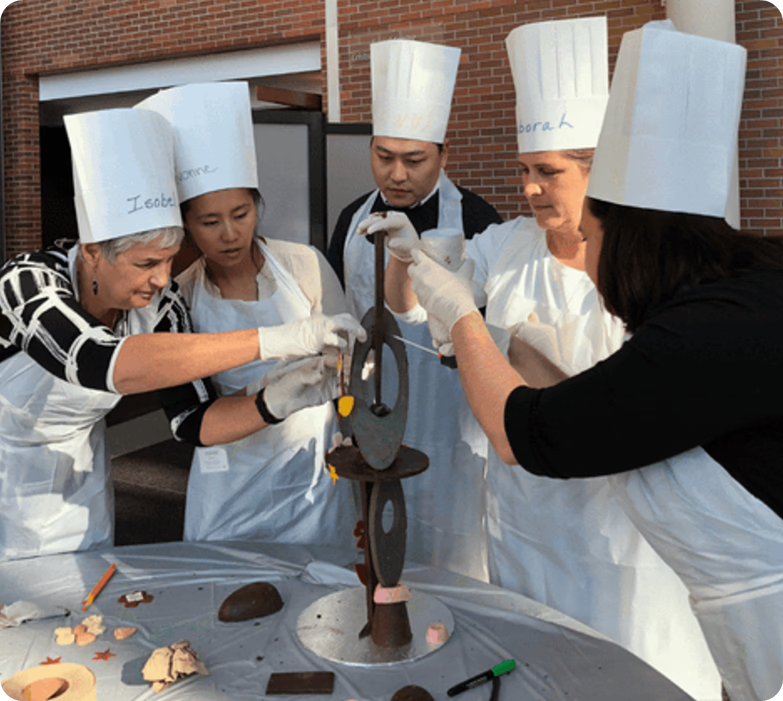
Teams compete to build the tallest freestanding sculpture using nothing but chocolate. After a hands-on demo covering tempering and structure, they get 30 minutes to build, inside a 60-minute total run. It is a genuine test of creativity, communication, and composure under time pressure.
The Chocolate Challenge needs tables, chairs, and power. Lighter versions of the same idea include an Interactive Candy Station built with themed actors and life-size props scaled to your guest count, a Candy Bar centrepiece, and Tea Blending, where guests craft a personalised blend from a selection of up to 25 teas, herbs and tisanes, and take it home.
The competitive version travels furthest across audience types. It works for a sales kickoff, a leadership offsite, and a mixed-seniority holiday event without changing much beyond the brief. A staple of Toronto team-building ideas that deliver on energy and outcome at the same time.
Best placed as the main programme rather than an add-on, because it needs the room's full attention.
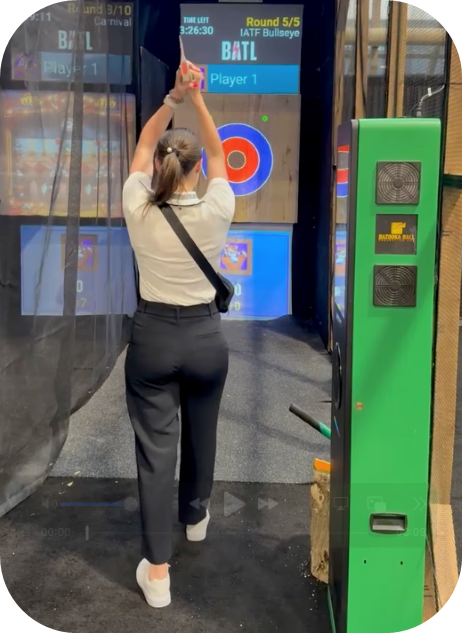
Physical competition with real skill acquisition, run by professional coaches. These are the formats to choose when the brief says team building rather than entertainment, and when the group needs to be out of a ballroom.
Axe Throwing is a mobile experience brought to your venue, combining axe throwing, knife throwing and digital archery across two portable targets, with all equipment, setup and coaching included. Sim Racing runs up to seven professional racing simulators over a four-hour window with attendants providing training, and has a track record with BMW and Formula 1. Dragon Boat Racing is a two-hour on-water teambuilder for up to 100 people, with one coach and one steerer per team of 15 to 20, and all paddles and life jackets provided.
Best suited to daytime or afternoon programming with a fixed regroup point.
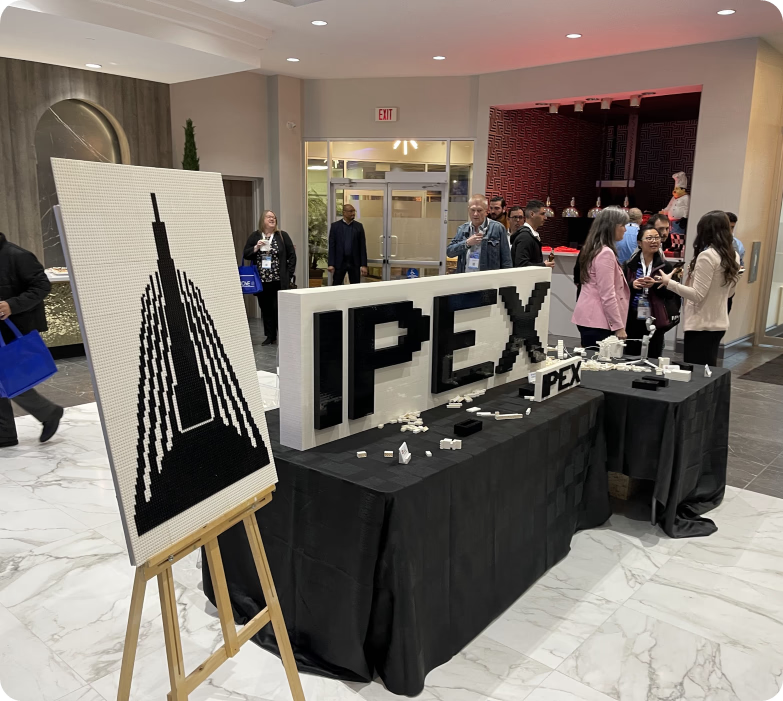
Guests make something, and the thing they make leaves with them or stays with the company. This is the category that produces the most durable proof that the event happened.
Custom Lego Builds puts a professional Lego artist in the room building a custom branded piece that guests can watch or join, with a team-builder add-on available. Tree of Hope is a charitable activation inspired by Yoko Ono's Wish Tree, where guests handwrite notes on seed paper and each note funds a tree planting, with donation management and post-event impact reporting included. A Sand Artist renders your logo live from a blank canvas. Typewriter Poems puts poets trained in improvisational theatre and creative writing in the room for a three-hour set, writing an original piece for each guest on the spot.
The range here is the widest on this list. A typewriter poet and a custom Lego build are the same idea at very different production levels.
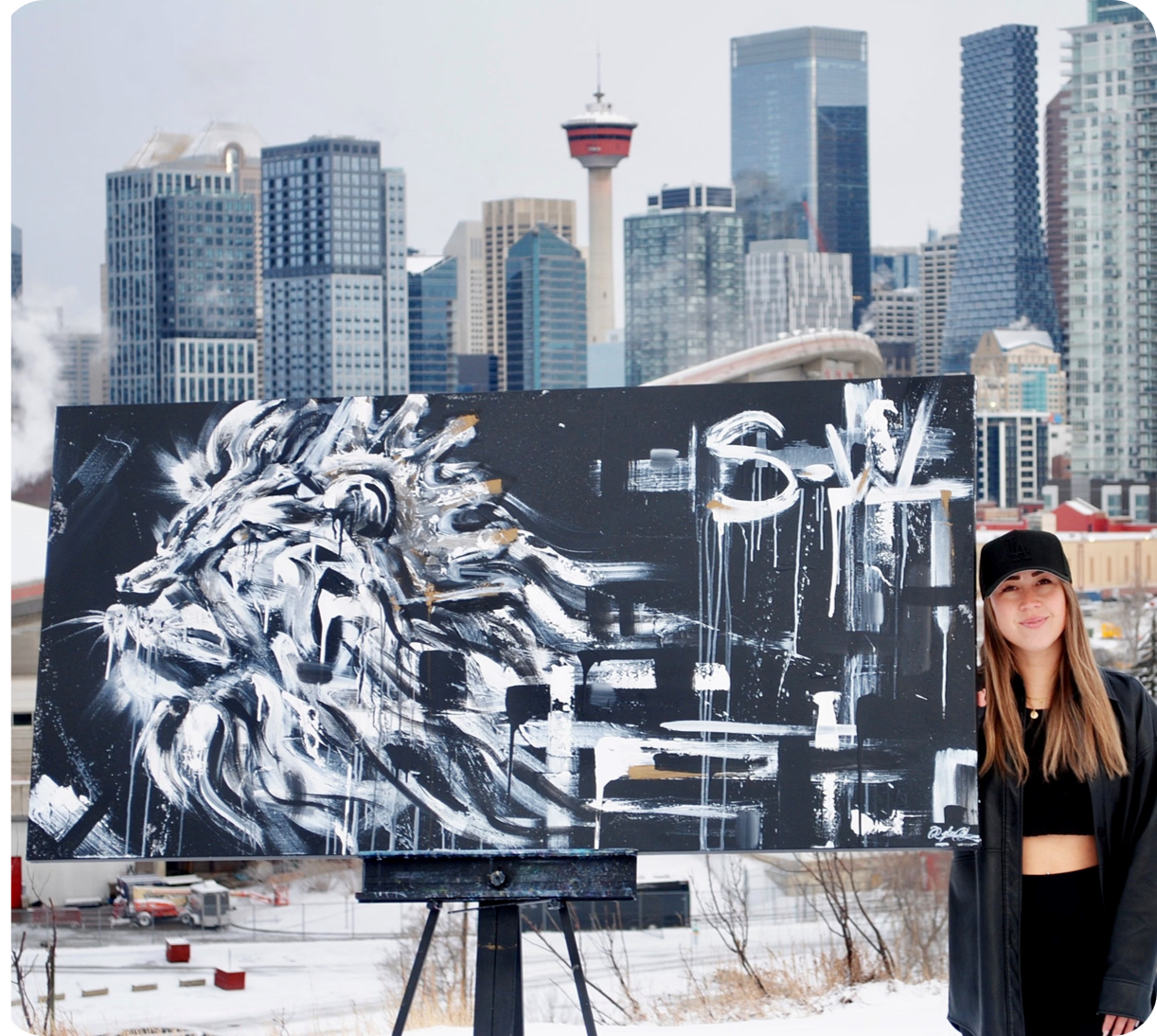
These formats slow a room down and give people something to stand around and talk about. They suit events where connection matters more than energy.
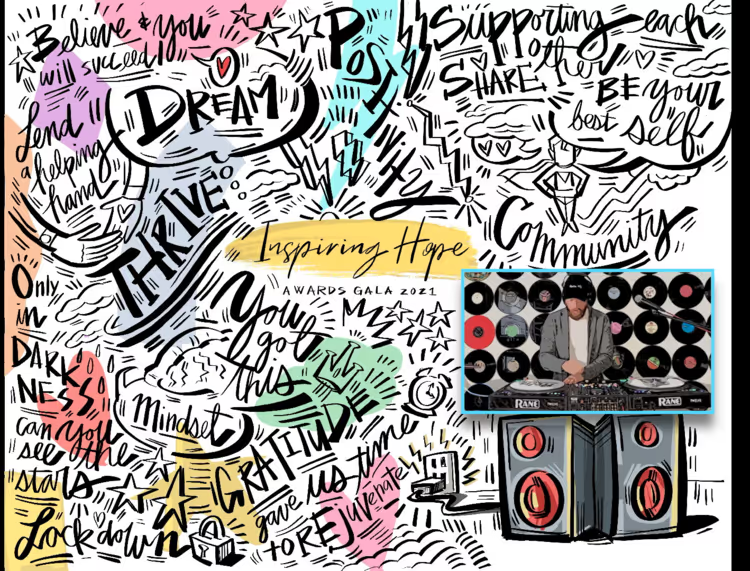
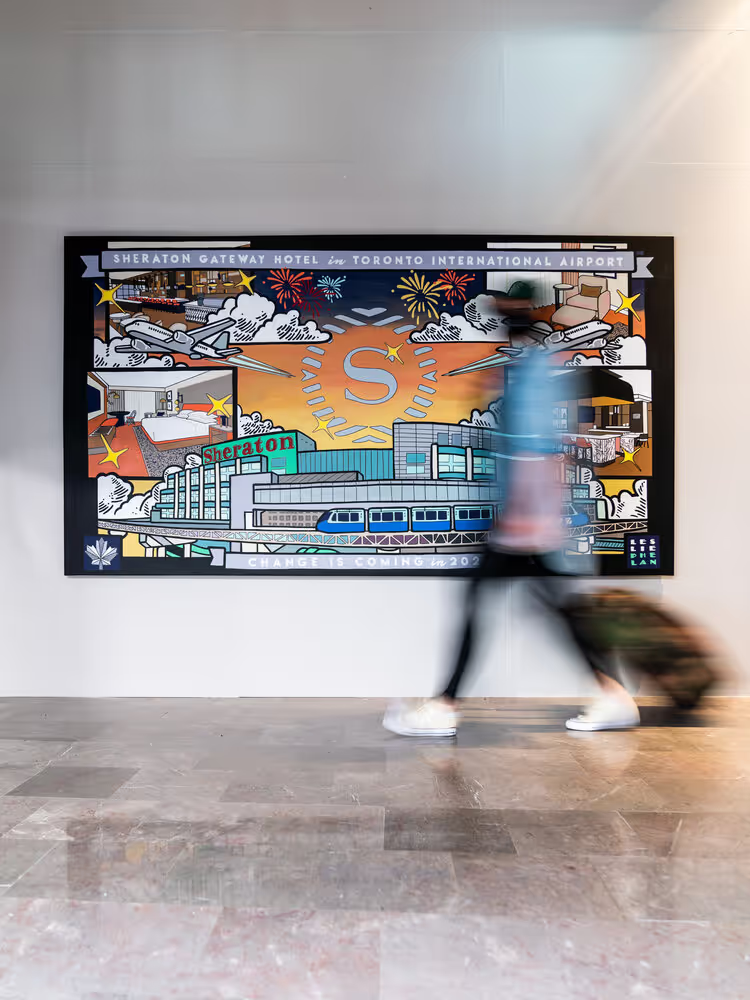
A professional artist creates a large-scale work live during your event, with your team contributing at points through the evening. The result stays in your office. The experience stays with your people.
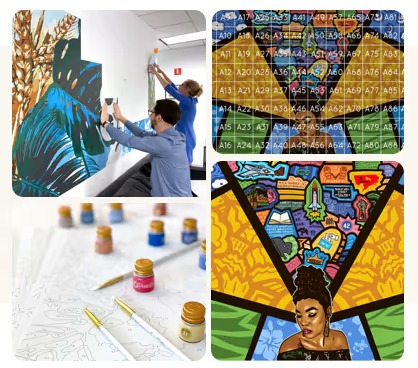
Our Toronto-based Muralist paints a live mural custom-designed to your theme, and offers canvases that break down afterward into mini take-home pieces for guests. Paint By Numbers is the highest-participation version, printed on adhesive-backed vinyl with a canvas surface, installed like wallpaper and removed with no damage to the wall, so a large group can fill it in together. Speed Painting is a performance piece rather than a participation one. Glow Mural looks like an unremarkable mural under normal light and transforms completely once black lights come up later in the evening. Interactive Spray Painting and Graffiti works on large-scale canvases that assemble into one mural, or directly onto wood, metal, brick or MDF.
Participation is optional and continuous, which is why this works across group sizes better than almost anything else on the list. Guests who want to paint can paint. Guests who want to watch can watch. Nobody is put on the spot.
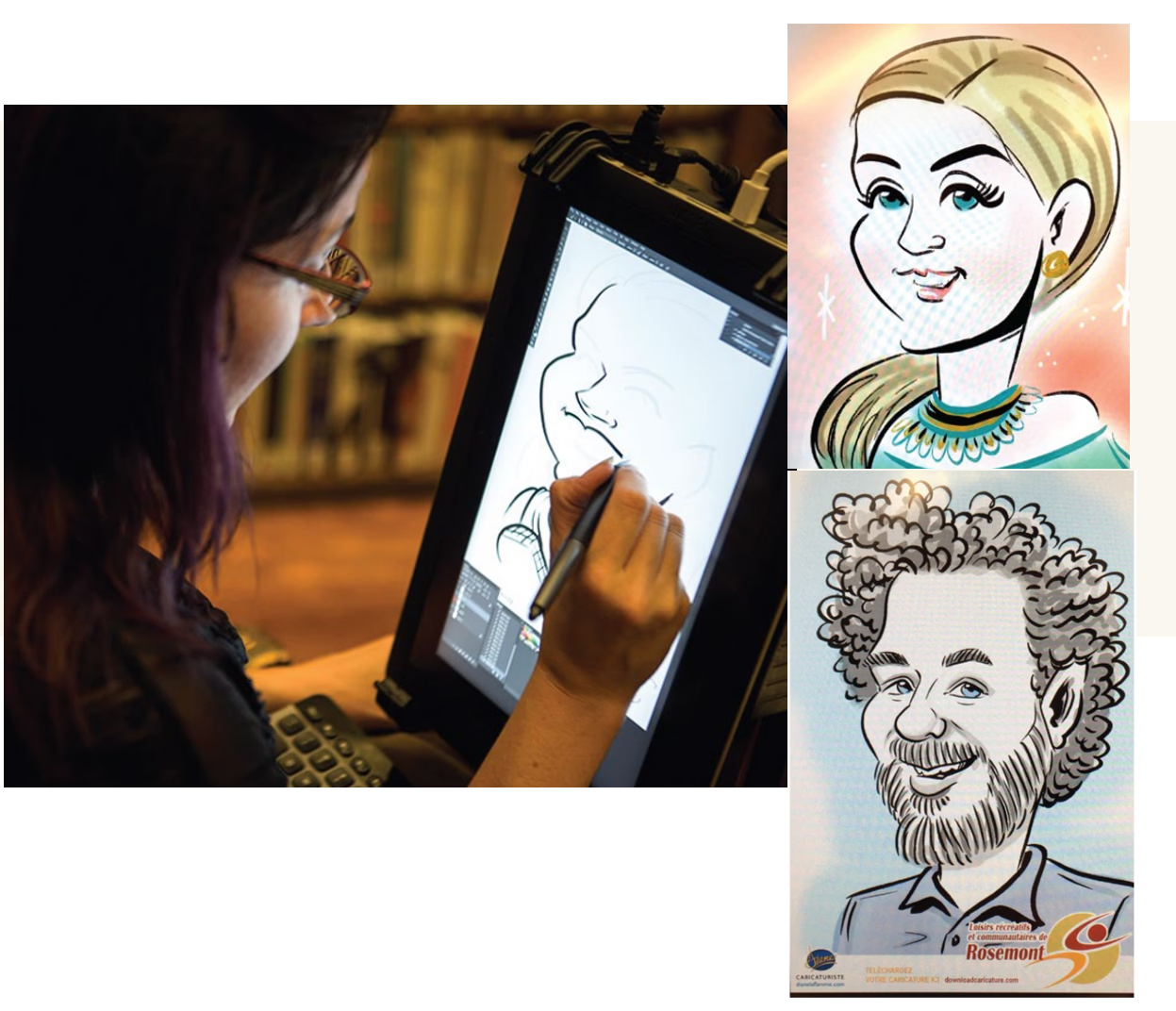
An artist creates something individual for each guest, which produces conversation clusters and slows the room down in the right way. The mechanism is the queue. People waiting talk to the people waiting beside them, which produces the mixing cocktail hours are supposed to produce and usually do not.
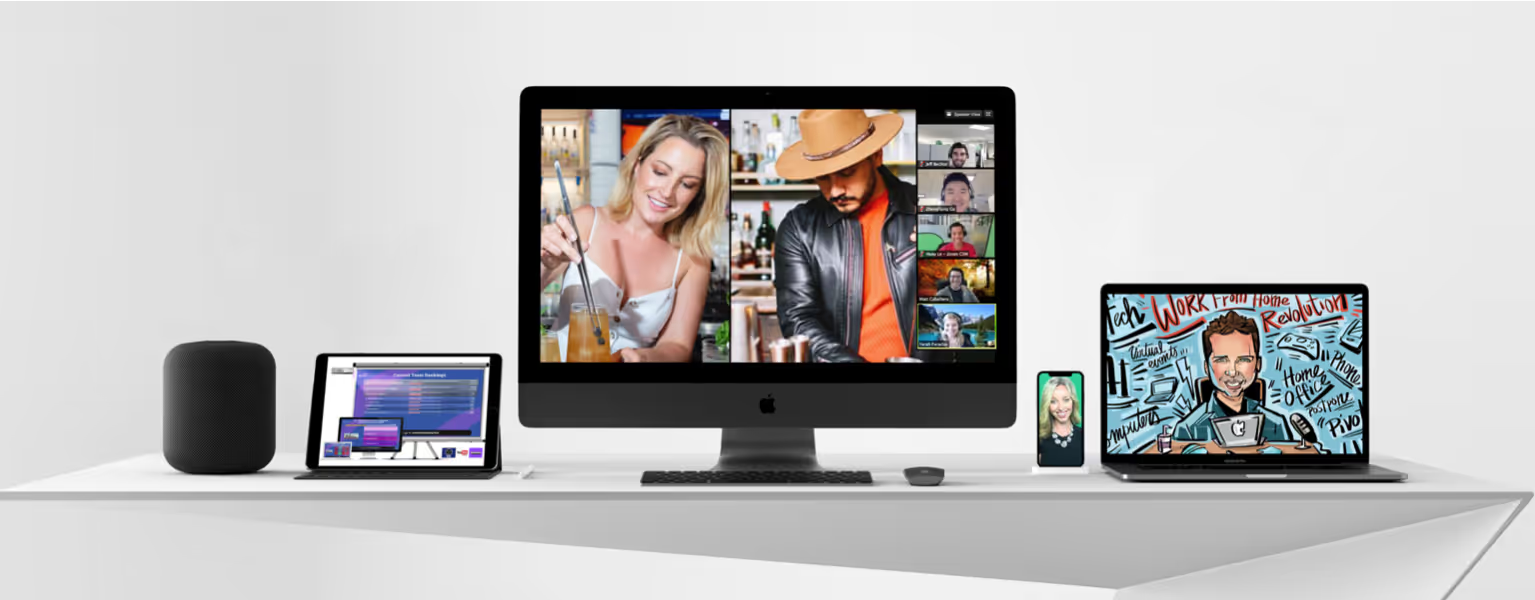
Digital Caricature Art takes 5 to 10 minutes per guest at roughly eight guests per hour per artist, and each drawing is emailed directly to the guest so it gets shared. Live Sketch Artist covers 8 to 10 guests per hour over a three-hour set. Robot Portraits uses two robotic art bots and an image capture kiosk over five hours, producing 75 to 100 branded sketch cards, and needs only a six-by-six-foot space and one standard outlet. Henna Art takes 5 to 10 minutes per design and lasts on the skin for 24 to 48 hours, so guests carry it past the event.
Throughput is the planning variable. Work backwards from your guest count and the length of your window, and add artists rather than hoping the queue moves faster.
A note before the second half of the list.
The format is rarely the variable that decides whether an event lands. The variable is whether the format was matched to the room, placed at the right point in the evening, and produced to a standard the audience already expects. The same mixology challenge is a highlight at 7pm and a distraction at 9:30pm. That matching is the work behind The Idea Hunter's live entertainment service. Read the next six with your specific room in mind, not in the abstract.
These produce a capability, not only a memory. They suit daytime programming and teams with a stated development objective.
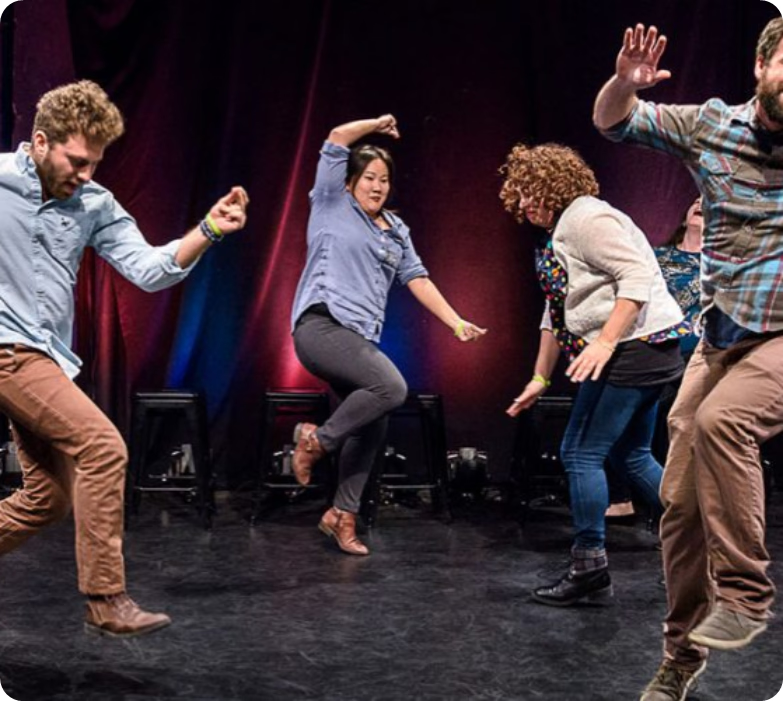
Facilitated by professional comedians, improv is not about being funny. It is about listening, reacting, and trusting the person next to you, and those skills transfer directly into meetings, client conversations, and leadership moments.
We run Custom Improv Workshops, built around the skills your team actually needs rather than a standard curriculum, and Custom Improv Theatre, which weaves your company's own information into a performed piece. Related facilitated formats include interactive cooking classes and cultural dance workshops.
Best placed in daytime or pre-dinner programming while people still have energy, and in rooms where leadership participates rather than observes. Leadership sitting out is the fastest way to kill it.
The right host holds a room together and the wrong one lets it drift. This is the least visible line on a run sheet and one of the most consequential.
Our roster spans professional event hosts and MCs, corporate hosts, spoken word artists who perform reverse poems written for the room, motivational and skills-based speakers, and Canadian athlete speakers with national and Olympic profiles.
Speaker and athlete talent needs the longest booking runway of anything in this article. Availability, not budget, is usually the constraint.
These set the energy of the room rather than occupying it. They suit larger events and evening programming.
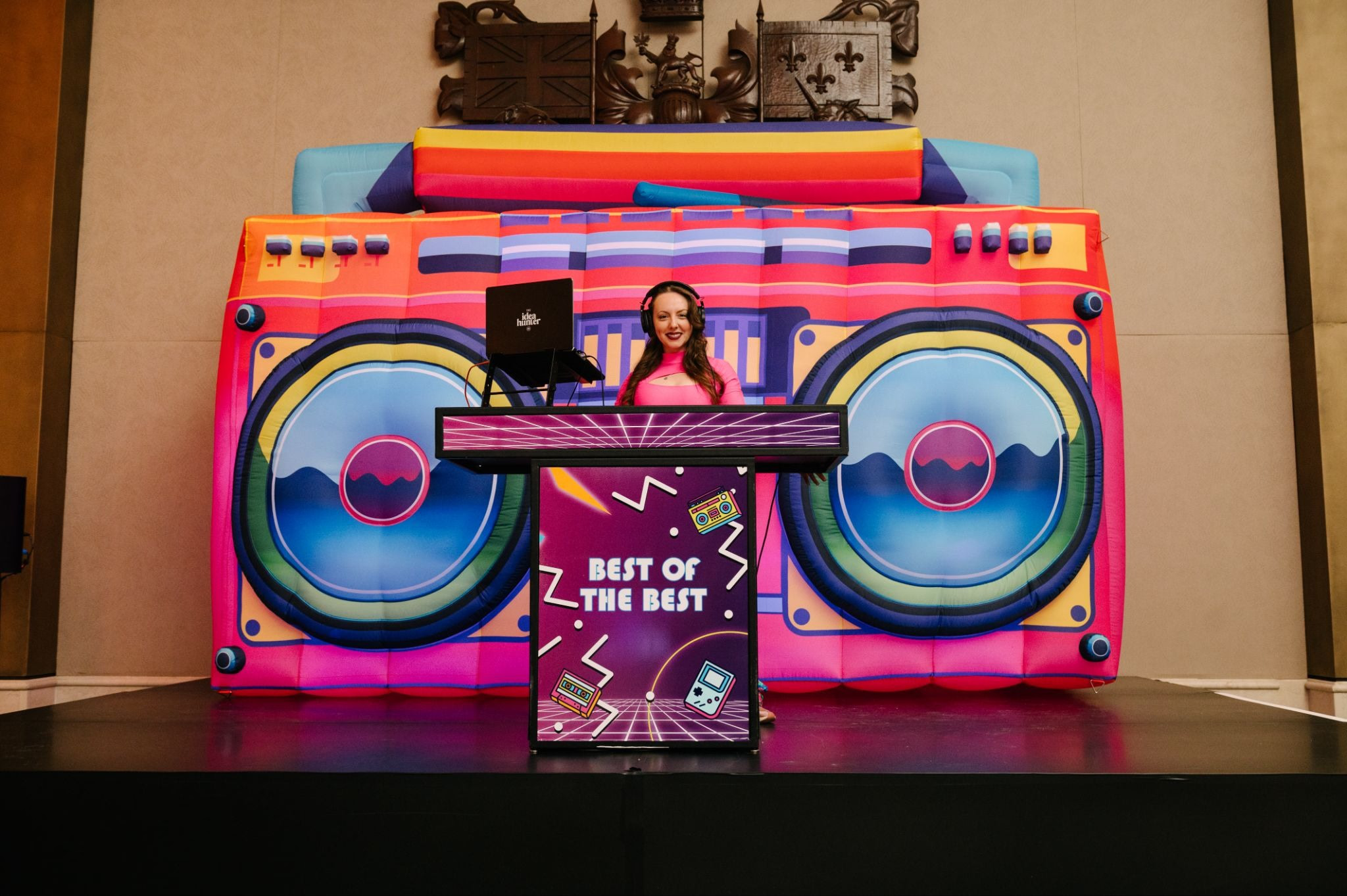
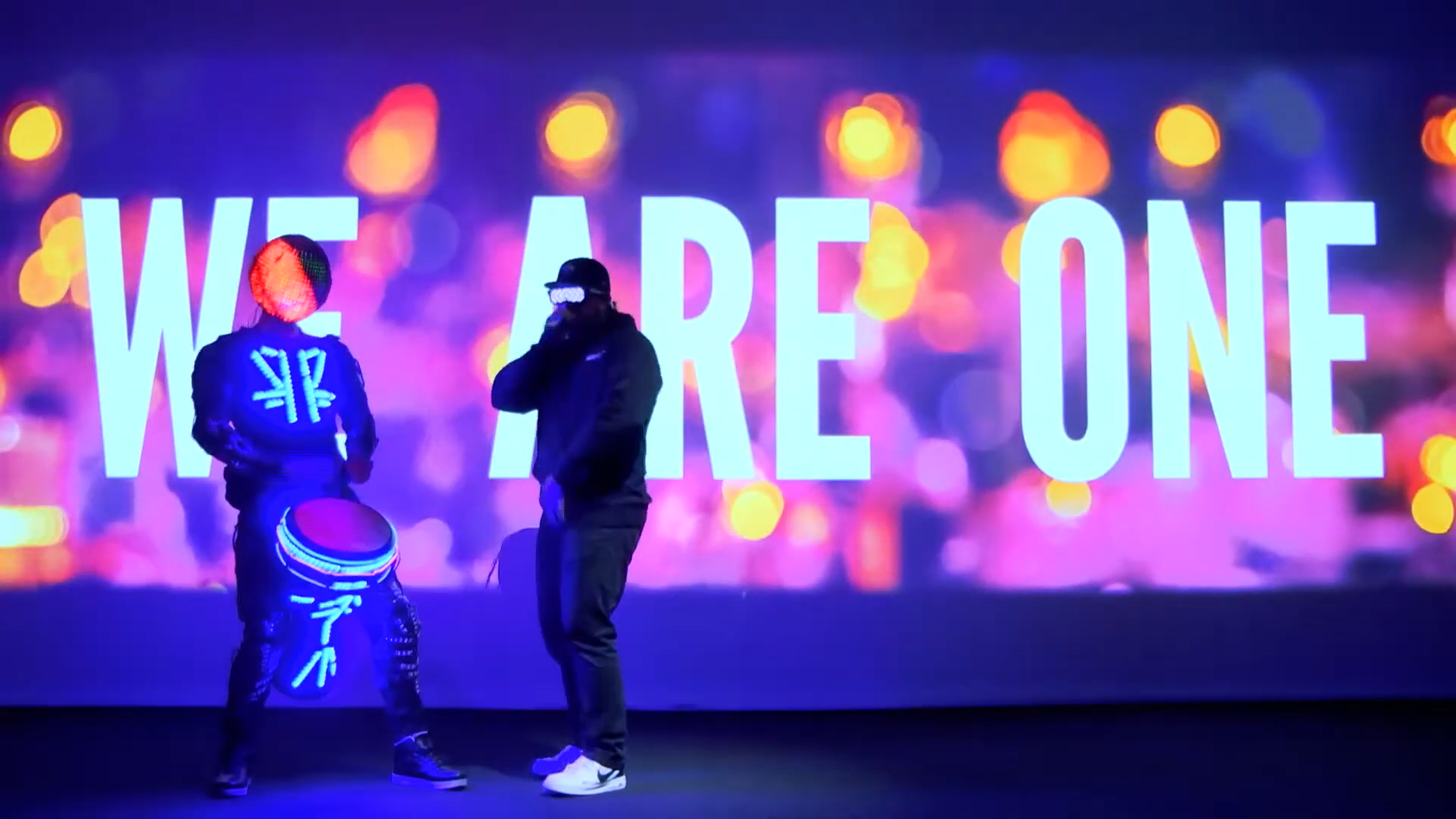
A professional DJ paired with custom lighting, branded visuals, and AV production designed around your event. Not background music. A full sensory environment that shifts the energy of the room at specific points in the evening.
Production layers on top of the set. A Laser Show runs custom programming synchronised to the music and carries a technical rider worth reviewing before you commit. The iStage Mobile Performance Stage arrives in a 24-foot cube truck with a 5-by-7-foot scaffold, DJ setup and AV included, and is not available in winter. Digital Canvas plus DJ pairs a live digital artist with the set so the visuals are generated in the room rather than looped, producing a finished piece every two to three minutes.
The difference between a DJ and a DJ experience is the production wrapped around it. Lighting states that change with the programme, visuals that carry your brand, and a set built for your run of show.
Best placed at the close of the evening, where it converts a seated dinner crowd into a room that stays an extra hour.
The highest-production category on this list and the one that most reliably becomes the thing guests photograph.
Draw the Future with AI has guests sketch in crayon, then converts each drawing through a custom AI system into a finished design shown on a large monitor. Minds in Motion uses a Muse headband to capture five brainwave types and turns them into live generative art. The Robot Arm hands guests swag, drinks and print materials, and the brandable Robot Dog roams the room or delivers a microphone to the stage. Drone Sports turns controllable drones into a playable game. Interactive Message from the Future delivers a personalised message on a card, on swag, or in front of the guest.
At a lower production level, the Augmented Photobooth turns guests into holograms using AR. The AI Photobooth covers up to 400 people across a three-hour window. The LED Tunnel is a 7.5-foot illuminated cube built to hold large groups for content. Glam Bot is a high-speed robotic camera arm that shoots and edits cinematic-quality clips in seconds.
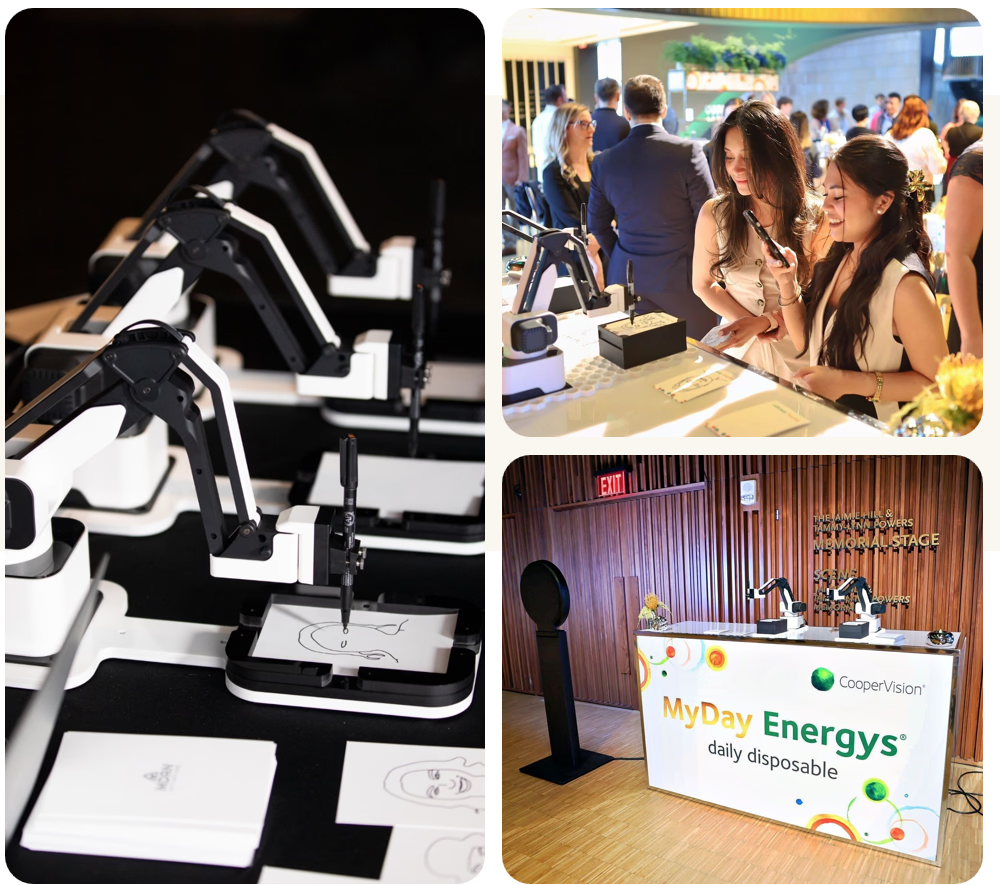
The Idea Hunter handles creative direction and on-site production so the technology performs when it counts. Unattended technology at a corporate event is a risk, not a feature. This category also carries the longest lead time on the list.
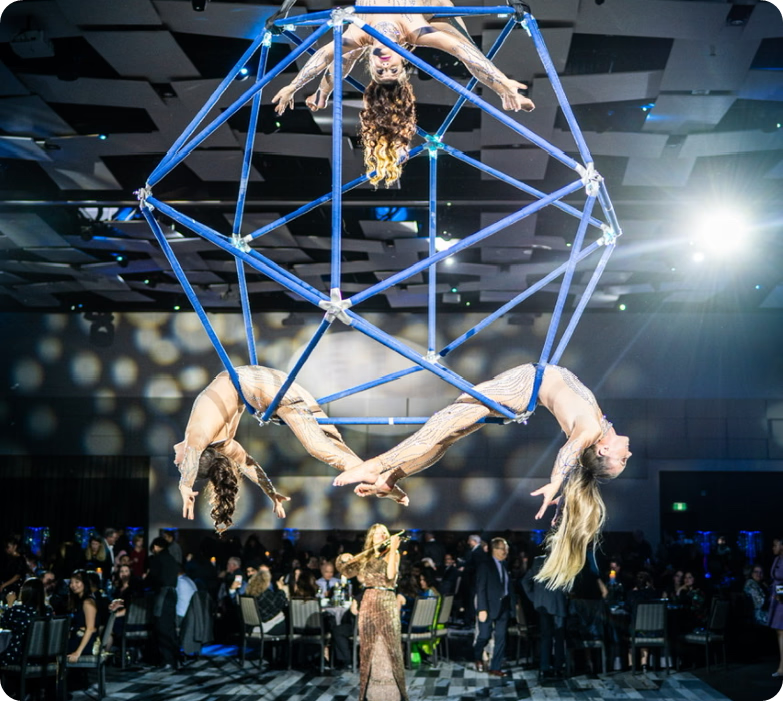
The format most likely to stop a room mid-conversation, and the one most often overlooked because planners assume it needs a big top. It does not. It needs ceiling height.
Acrobatic Show is a six-performer troupe from Nairobi with an international touring record, best suited to outdoor events or venues with high ceilings. Swaying Greeters uses Ontario's only sway pole apparatus to greet guests from above, booked either as two 15-minute animation sets or a single five to seven-minute featured show, and needs 23 feet of clearance. Aerial Duo performs a 30-minute set and needs 28 feet. Stunt Pogo features championship athletes clearing more than 10 feet. Synchronized Swimming works where there is water. The Elite LED Troupe combines LED technology with choreography for a closing spectacle.
Ceiling height and rigging are the gating questions. Ask them before you fall in love with an act.
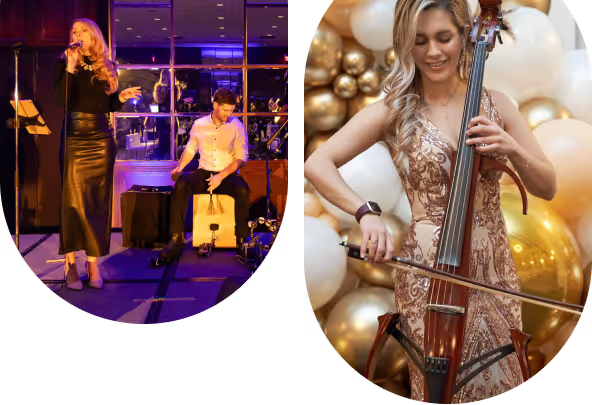
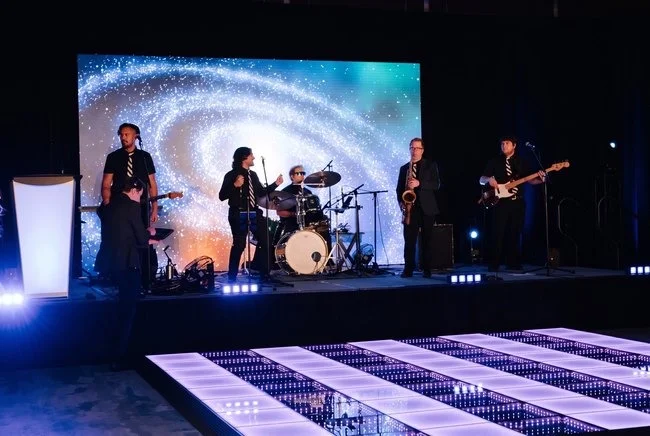
Not a generic band playing background covers. A curated performance with artist, set design, and timing built around the arc of your event.
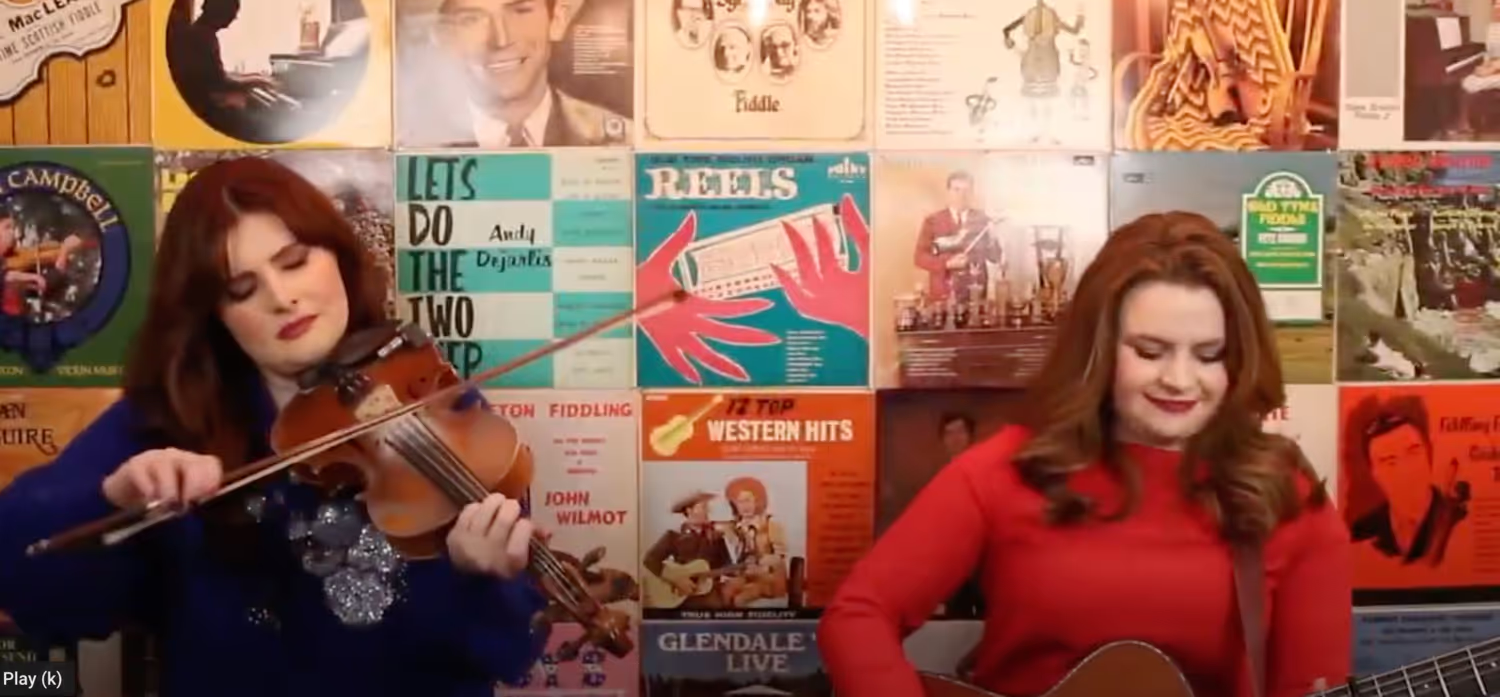
Our Toronto music roster is the deepest category we carry, spanning bands, vocalists, duos, trios, string ensembles and DJs across nearly every genre. For something that breaks the frame entirely, Singing and Dancing Waiters put performers on the floor disguised as service staff who burst into song mid-dinner, running 30 minutes to an hour.
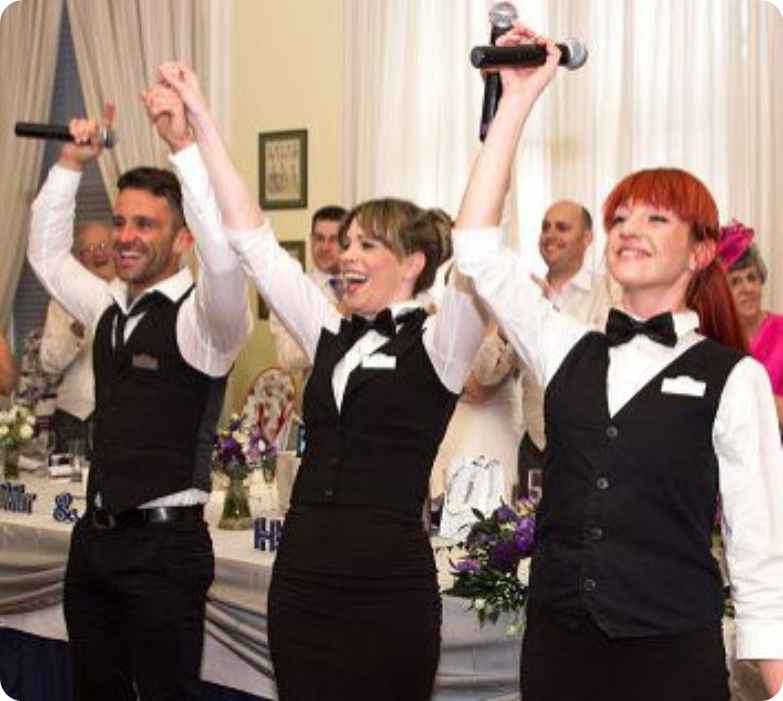
Arrival energy is different from dinner energy, which is different from closing energy. When live music is programmed intentionally rather than booked generically, it becomes the thread that ties the evening together rather than filling gaps in it.
Best treated as a spine running through the whole evening rather than a single slot on the run sheet.
The questions that kill an entertainment plan are almost never budget questions. They are physical ones, and they are answerable in a site visit.
Confirming these early is the difference between a shortlist you can actually book and a shortlist you have to redo.
Choose on four inputs, in this order: outcome, audience, moment, and layering.
Start with the outcome, not the activity. Decide what you want people to feel on the way out. Energised, connected, surprised, or recognised. Different outcomes point to different formats, and choosing the format first is the most common and most expensive mistake in corporate event planning in Toronto.
Match the format to the audience. Dragon boat racing works for a cross-functional team of 80. It falls flat for a 12-person executive dinner. The comparison table above sorts every format by group size for exactly this reason.
Think about the event arc. Entertainment at the opening serves a different purpose than entertainment mid-evening or at the close. Sequencing matters as much as selection.
Do not treat entertainment as a standalone. The most memorable live entertainment events layer formats. A live artist during drinks, a competitive activation over dinner, a DJ closing the evening. Each element builds on the last, and the result is one coherent experience rather than three bookings that share a date.
Choosing from this list is the easy part. The harder question starts once the format is selected.
Every format above depends on production decisions that sit outside the booking. Where it is placed in the run of show. How the room is set so the activity is visible from every table. Whether the ceiling clears 23 feet for the sway poles. Whether there is power where the candy station needs it. Who is on site to hold the schedule when the CEO's remarks run twelve minutes long and the entertainment window compresses. A well-chosen format produced badly reads to the room as a bad idea, and the format takes the blame.
That is the work The Idea Hunter is engaged for. One team, one contract, from concept to close, so the creative decision and the production that delivers it are made by the same people. Over 23 years and 10,000 events we have produced every format on this list across every industry, group size, and occasion.
If your next corporate event needs to be more than fine, start with a discovery call or see the full live entertainment service. For worked examples of that production standard, see our case studies for a large publicly traded financial institution and Schindler Elevator Ltd.
The strongest performing formats in 2026 are participatory rather than passive: competitive mixology, chocolate sculpture challenges, live mural creation, axe throwing and sim racing, and immersive technology installations. Bizzabo reports 95% of organizers now say experiential learning is important to their events. Choose on group size and the moment you need to fill, using the comparison table above.
Four variables, in order of impact. The production wrapped around the act, meaning lighting, staging, AV and technical crew, which is usually the largest single driver. The number of performers, artists or facilitators the format requires, and how that scales against your guest count. The duration and whether the act runs as continuous animation or a single featured set. And the degree of customisation, since a branded, company-specific build costs differently from a standard offering. We scope against your headcount and objective on the discovery call rather than quoting from a rate card, because the same format is a very different proposition at 60 guests and at 600.
Six to eight weeks is a comfortable lead time for most formats. Immersive technology installations, large-scale branded activations, and speaker or athlete talent need three to four months, because availability rather than budget is the constraint. Toronto's peak corporate season runs September through December, and the strongest talent commits earliest.
Portrait and caricature artists, chocolate sculpture challenges, improv workshops, typewriter poets, and mixology classes all work at that size. Rolling formats are particularly effective here, since a 20-guest cocktail session cycles the whole room in an hour. Small rooms reward depth of connection over scale of energy, and they rule out anything that needs multiple competing teams or a large production footprint.
Live mural creation, aerial and circus performance, immersive technology installations, DJ with branded production, and curated live music all scale past 500. The gating questions at that size are ceiling height, rigging, power and sightlines rather than headcount. For seated dinners, formats that surprise the room work better than formats that ask it to stand up and move.
Start with what you want people to feel, then work backwards to the format. Celebration and energy point to production formats such as DJ experiences, live music, and aerial. Connection and recognition point to live art and craft activations. Team capability points to competitive challenges, chocolate sculpture, and facilitated workshops. Experienced corporate event organizers will ask about the outcome before they suggest anything.
Team building has a stated development objective and is usually measured against it. Corporate entertainment is programmed to create an experience and a memory. Several formats do both, including the chocolate sculpture challenge, dragon boat racing, and improv workshops, which is why they appear on both lists. Our team building activities guide covers the development-focused half.
Range and accountability. We maintain a curated roster of more than 550 vetted activations across Toronto and Ontario, which is why we can shortlist against your brief on the first call rather than after a week of vendor chasing. One team and one contract from concept to close, so the people who design the creative are the people who deliver it on the night.



The Idea Hunter stands as an award-winning, premier source for corporate entertainment, interactive experiences and event management.






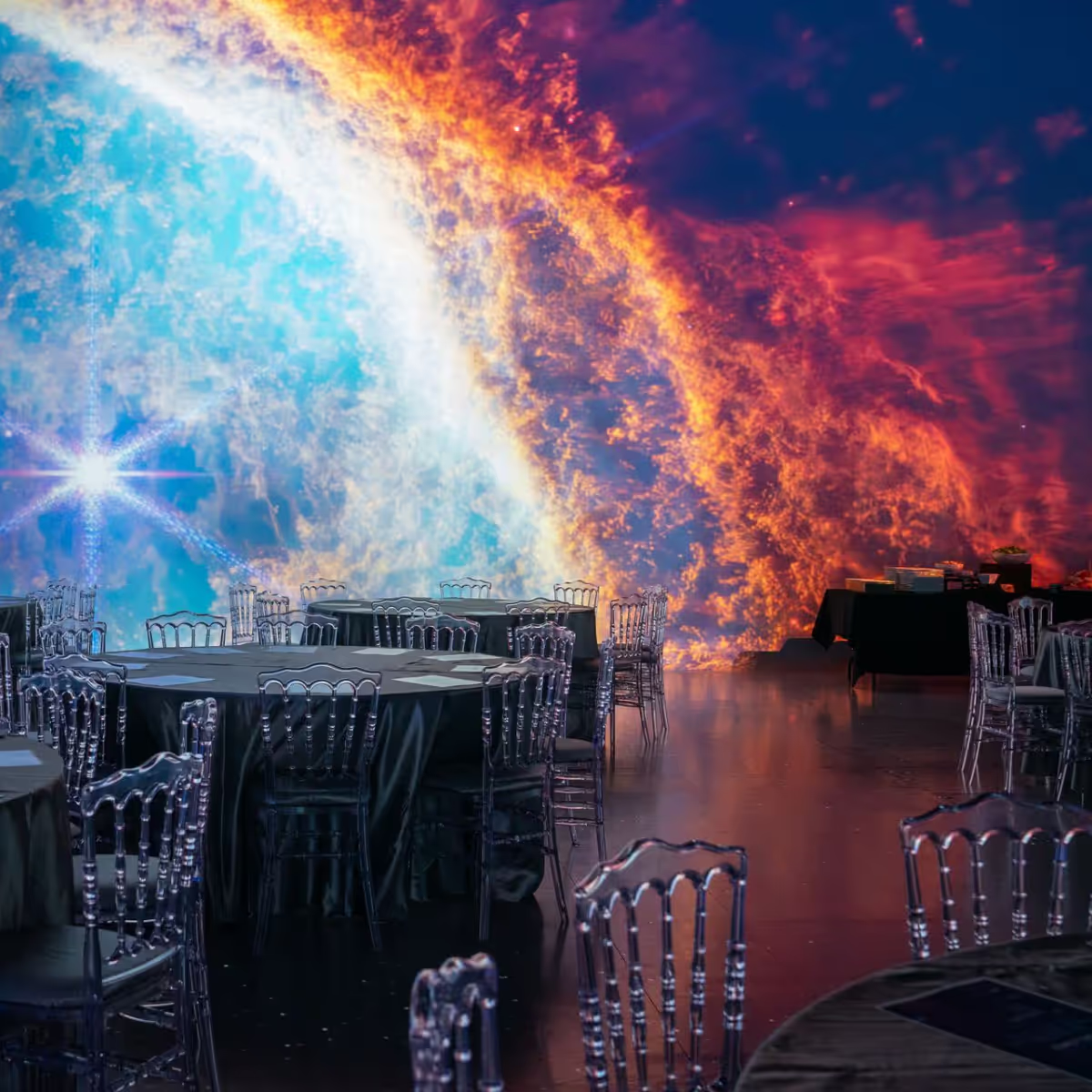
![Feast Your Eyes: 10 Food Entertainment Ideas [2025 Edition]](https://cdn.prod.website-files.com/669532db0a7004d9853610a3/684c645bb66e8dfe014b7137_Screenshot%202025-06-13%20134253.avif)
![Top 20 Corporate Event Venues in Toronto [2025 Edition]](https://cdn.prod.website-files.com/669532db0a7004d9853610a3/67c9c1f60babbed9463c77cf_Trading%20floor%202.avif)
.avif)

.avif)
.avif)

.avif)