Office Christmas Party in Toronto: The 2026 Planning Guide
Read More


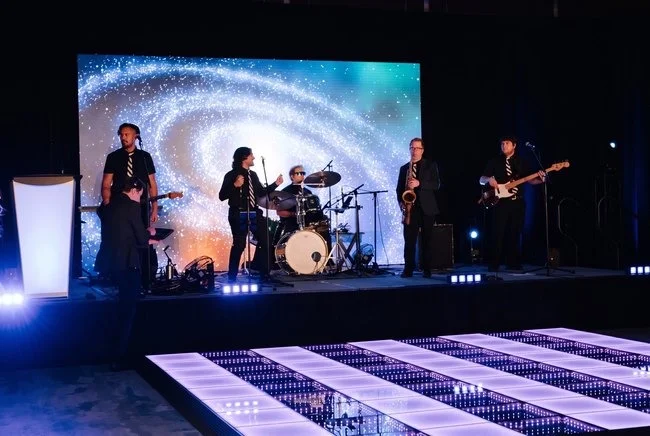
Entertainment works at a large company event when it is scalable, broadly appealing, and easy to place inside a run of show. Those three things matter more than the act itself. A 12-piece brass band and a single caricature artist can both succeed in front of 800 people, and both can fail, and the difference is almost never talent. It is whether the format matches the room, the schedule and the guest count.
The Idea Hunter is a Toronto corporate event entertainment agency. We have produced corporate entertainment for 24 years and deliver more than 220 events a year across Canada, most of them in the 200 to 1,500 guest range. This guide covers the formats that hold up at that size, what each one needs from your venue, and the throughput maths that decides how many performers you actually book.
If you are earlier in the process, our guides on how Canadian companies are setting 2026 event budgets and how to choose a corporate event planner cover the two decisions that usually come before this one.
The short answer: live music and a DJ with an MC carry the room, roaming and aerial performers solve the parts of the room a stage cannot reach, and interactive art formats are the only category where guest count changes the order quantity rather than the act.
The formats below are the ones that survive contact with a large guest count. They are drawn from the working roster our live entertainment team books against, and the fourth column is the part most guides leave out.
Work backwards from throughput, not from guest count. This is the calculation that decides most entertainment budgets at scale, and it is the one most often skipped.
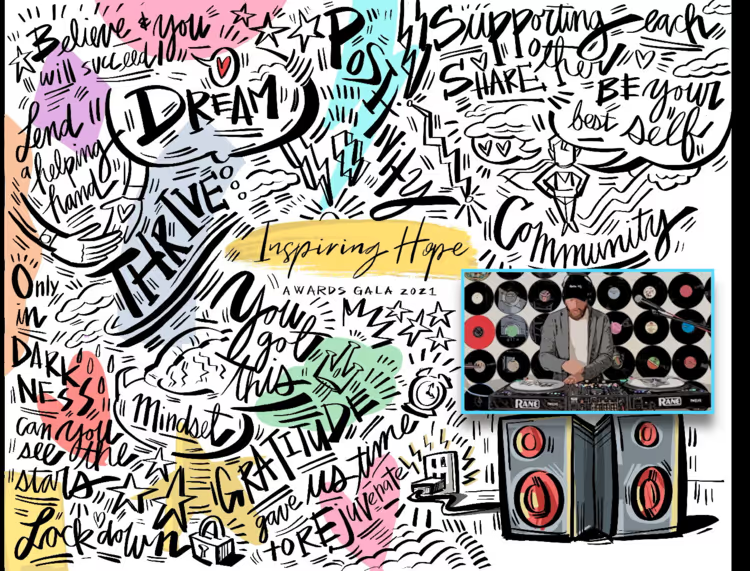
Our digital caricature artists complete a full-colour drawing in five to ten minutes, which is roughly eight guests per hour per artist. A standard engagement is one artist for three hours, so one artist serves about 24 guests.
At a 500-person reception, expect roughly a quarter to a third of guests to engage with a station format. That is 125 to 165 drawings. Divided by eight per hour, that is 16 to 21 artist-hours. Across a three-hour reception, that is five to seven artists, not one.
The same logic applies to every station format: photo activations, henna, live portrait work. Booking one of something at a 500-person event produces a queue, and a queue reads as a failure even when the act is excellent.
Performance formats behave differently. A band, an aerial act or a drumline serves the whole room at once, so guest count changes the sound and lighting requirement rather than the number of performers.
"The most common mistake we see on a large file is a client booking a beautiful act and one of it. At 800 guests, one artist is a lineup. Two is still a lineup. The number is set by throughput, and throughput is arithmetic, not taste."– Fadi Dawood, President, The Idea Hunter
Ask for the technical rider before you sign anything, because the venue constraint kills more entertainment bookings than budget does. Ceiling height, rigging permission, power and load-in are the four that matter most at scale.
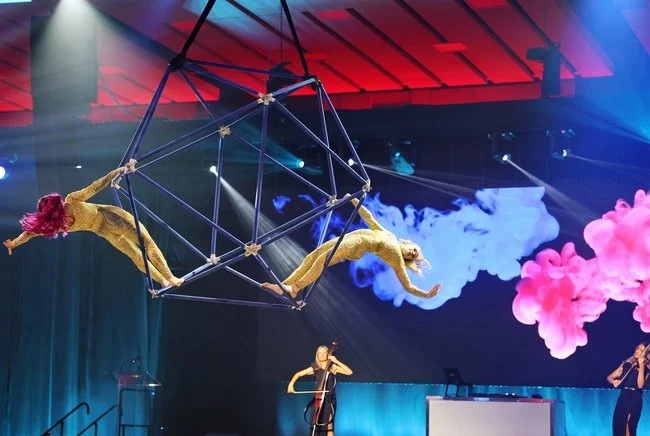
Aerial acts need clearance and a rigging point. Where a venue will not permit rigging, the format does not have to be abandoned. A floor-based aerial hoop performance delivers the same technique on a free-standing frame, which is the version that works in hotel ballrooms with fixed ceilings. A typical aerial feature runs about five minutes, and can be extended into a 45-minute interactive pour or programmed as three ten-minute sets across an evening.
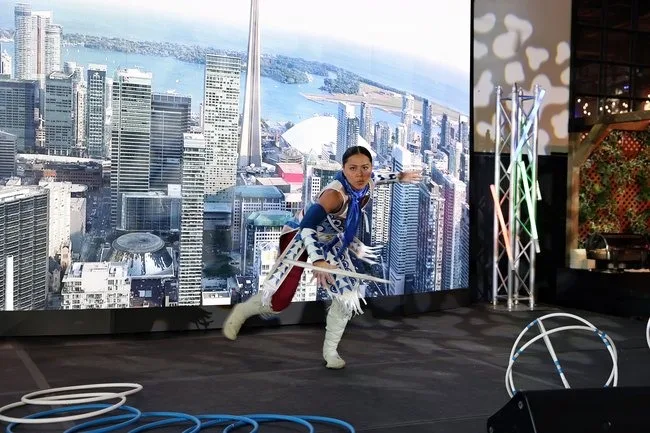
LED performance needs footprint, not height. An LED cube performance runs in a footprint of roughly 10 feet deep by 14 feet high, which fits most pre-function spaces.
Nearly every performance format needs three things that get left off budgets: parking, a green room, and meals where the call time runs long. On multi-performer bookings the green room needs mirrors.
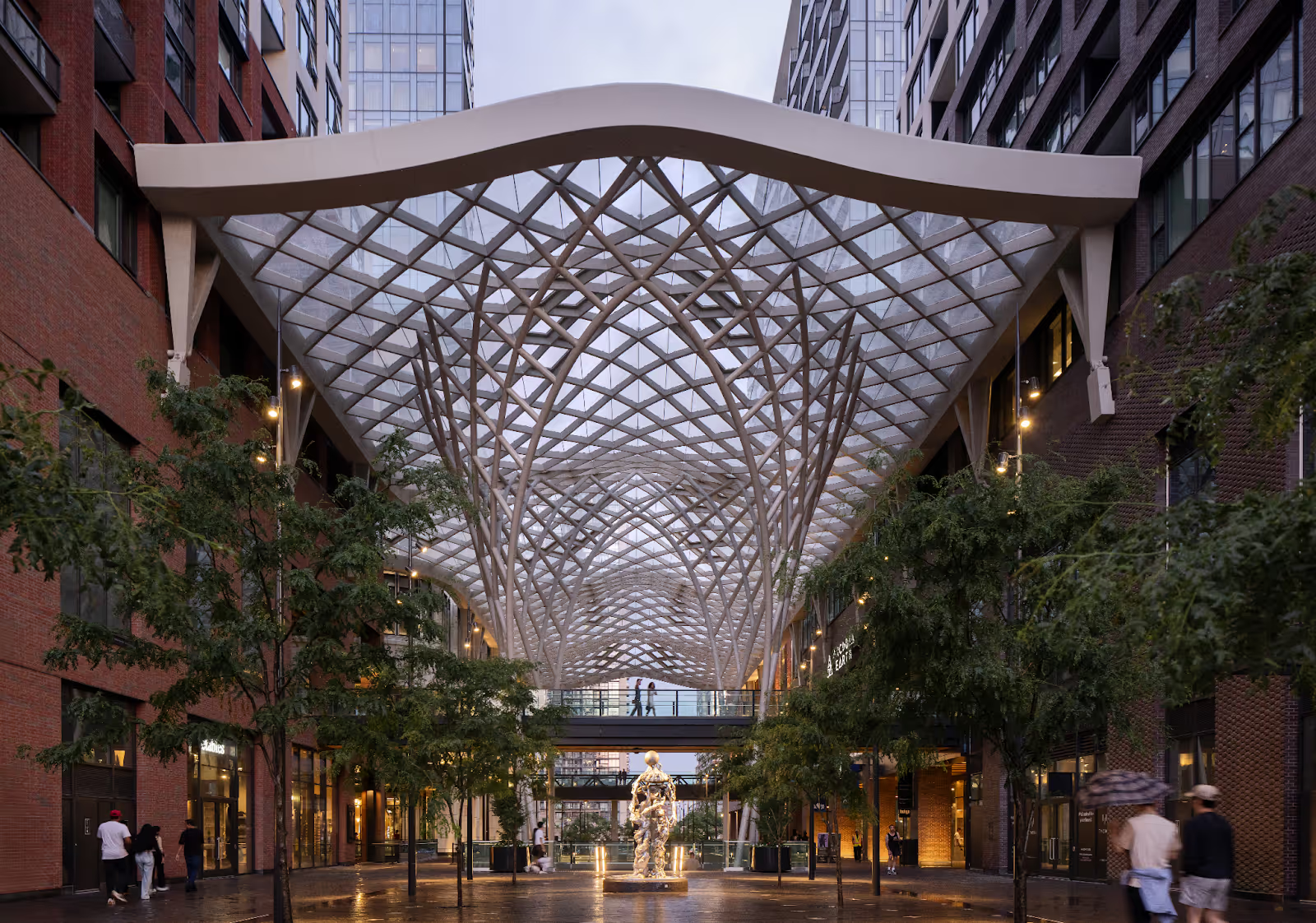
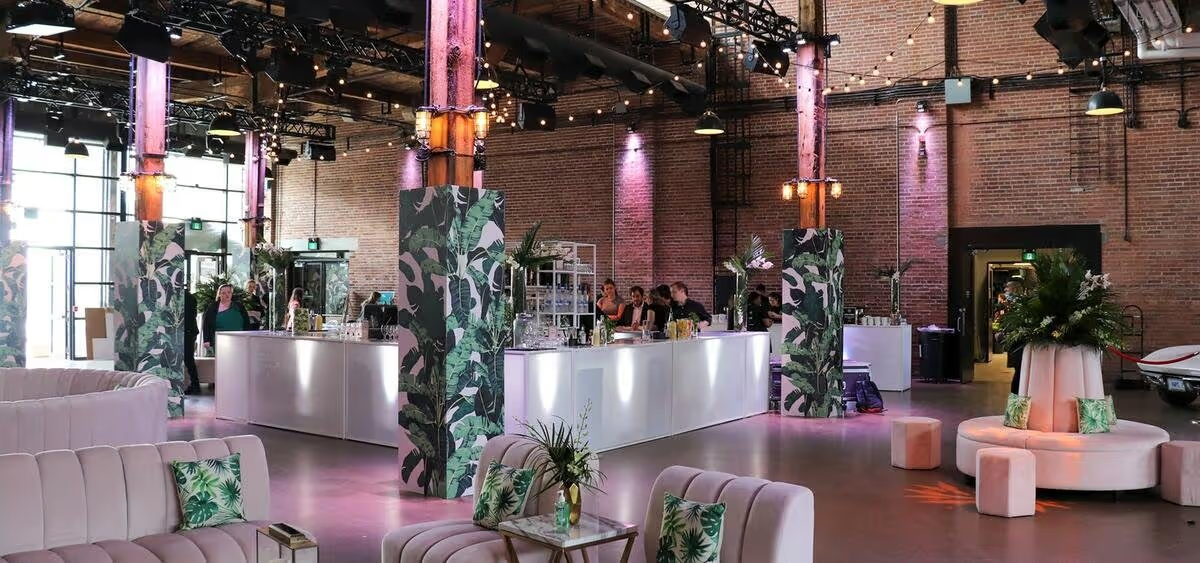
Venue choice and format choice are the same decision made twice. Our round-up of Toronto venues changing the shape of corporate events in 2026 is a useful cross-check if the room is not locked yet.
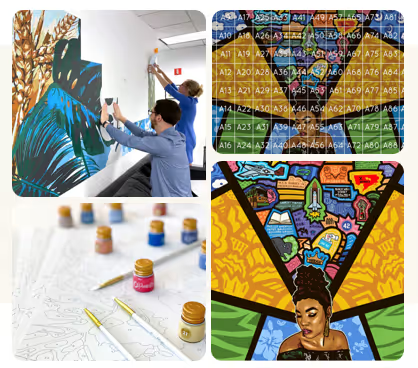
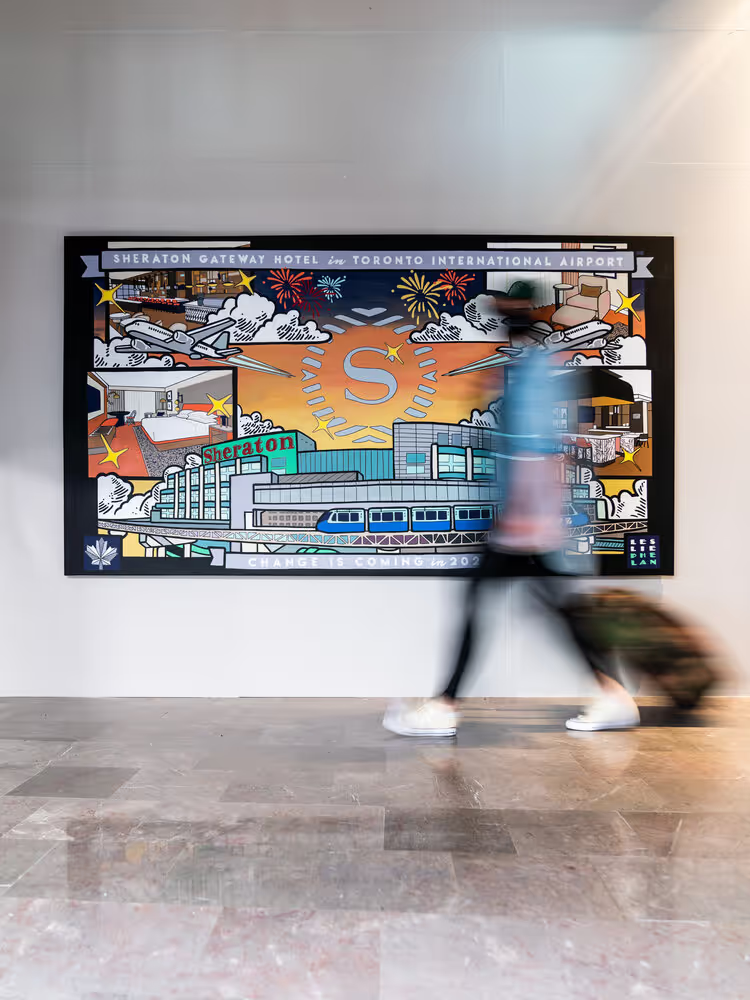
Large-format live art has a wall requirement. Our paint-by-number murals print on adhesive-backed vinyl with a canvas surface. They install like wallpaper and peel off with no damage to the wall, which is what makes them usable in venues that prohibit fixings. Where no wall is available, the format runs on a rented freestanding wall instead.
Anything that requires the room to be quiet and facing one direction for longer than about twelve minutes. At 500-plus guests, attention is a scarce resource and the room has its own noise floor.
Three specific cautions:
Stand-up comedy is the other format to think hard about. It is commonly recommended for large events, and it is high variance in a corporate room, particularly with a mixed international audience. We do not book it.
Picking a format is the easy half. The harder half is sequencing: what happens at 6:40 when guests are still arriving, what fills the gap between dinner and the awards, and who holds the room when the programme runs twelve minutes late. That sequencing is what our live entertainment team is actually hired for, and it is the reason we quote entertainment as a programme rather than as a list of acts.
Twelve to sixteen weeks for a headline act in peak season, six to eight weeks for station and roaming formats. Peak season in Canada runs September to December and again from March to May.
The constraint is not usually the performer. It is the venue technical review, the rigging approval and the production schedule that has to accommodate load-in. On a gala with an aerial component, rigging sign-off is the long pole, and it cannot start until the venue floor plan is fixed.
Staffed activation formats carry their own lead time. Our line attendants and event staff are requested three to four weeks in advance to secure consistent crews.
Entertainment at The Idea Hunter carries a $5,000 minimum booking, year round, rather than a per-act price. That minimum can be met by combining two or more formats, which at a large event is usually the better outcome anyway.
We do not publish per-act pricing. Entertainment cost is driven by performer count, set length, travel, technical requirements and season, and a number without those variables attached is not useful to you. A multi-format entertainment programme for a large event is normally scoped after a conversation about the room, the run of show and the guest count.
"Clients ask what a band costs. The honest answer is that the band is the smallest variable. Set length, travel, rider and what the venue will allow move the number far more than the act does."– Hailey Dawood, Chief Huntress, The Idea Hunter
Most entertainment problems at large events are not booking problems. They are timeline problems. The act was right and it was placed in the wrong ten minutes.
If you are building a programme for 300 guests or more, the useful next conversation is about the run of show, not the roster. Our live entertainment team will map formats against your timeline, flag the venue constraints early, and tell you plainly where a format you like will not work in the room you have booked.
Book a discovery call, or see the full range on our live entertainment page.
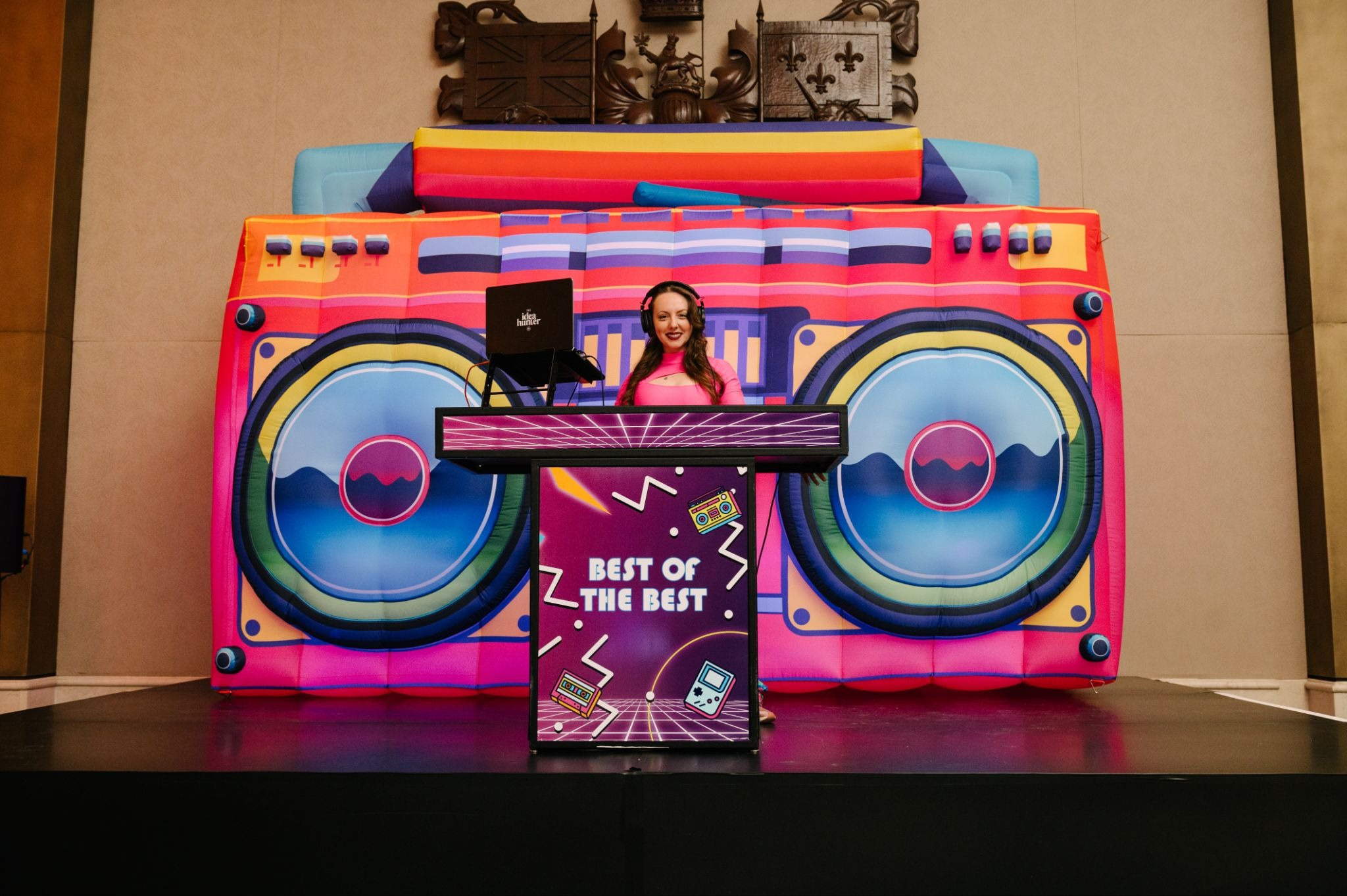
A live band or showband as the headline, with a DJ and MC carrying the transitions around it. That pairing covers the whole evening: the band creates the shared moment, and the MC prevents the dead air that a band alone cannot fill during awards or speeches.
No, but the programme does need at least one participatory element. Fully passive line-ups struggle across a three-hour-plus event. The common structure is one headline performance plus one or two station formats that guests can opt into on their own schedule. The wider shift toward participation is covered in our piece on how culture and media are reshaping live experiences.
Increasingly it is the entertainment rather than the catering line. Chef actions, interactive stations and hospitality-led moments now carry the participatory role that a performance used to, which we cover in how hospitality and food are becoming the main act. At a large event this matters because food formats scale on throughput exactly like art stations do.
The formats above apply anywhere, but availability and lead times differ by market. Our twelve Toronto corporate entertainment ideas covers the local view in more detail.
Most 300 to 800 guest events we produce carry three to four: one headline performance, one roaming or aerial element, one station or activation, and an MC. Fewer than three tends to leave gaps in the timeline.
Often yes, using a free-standing frame rather than a rigged point. Confirm ceiling height and whether the venue permits rigging before the format is promised to a stakeholder.
Direct booking works when you need one act and can manage the rider, the technical review and the on-site call yourself. At a large event with several formats running against a fixed run of show, the coordination between acts, venue and production is the actual work. Our corporate entertainment programmes are quoted and managed as one schedule rather than as separate bookings, which is what prevents two acts being scheduled against each other.
At 300 guests or more, yes. The DJ controls sound and the MC controls the room. Combining both into one person works at a smaller party and starts to break down once there is a formal programme, because announcements, award timing and energy management all compete for the same attention during the segments that matter most.
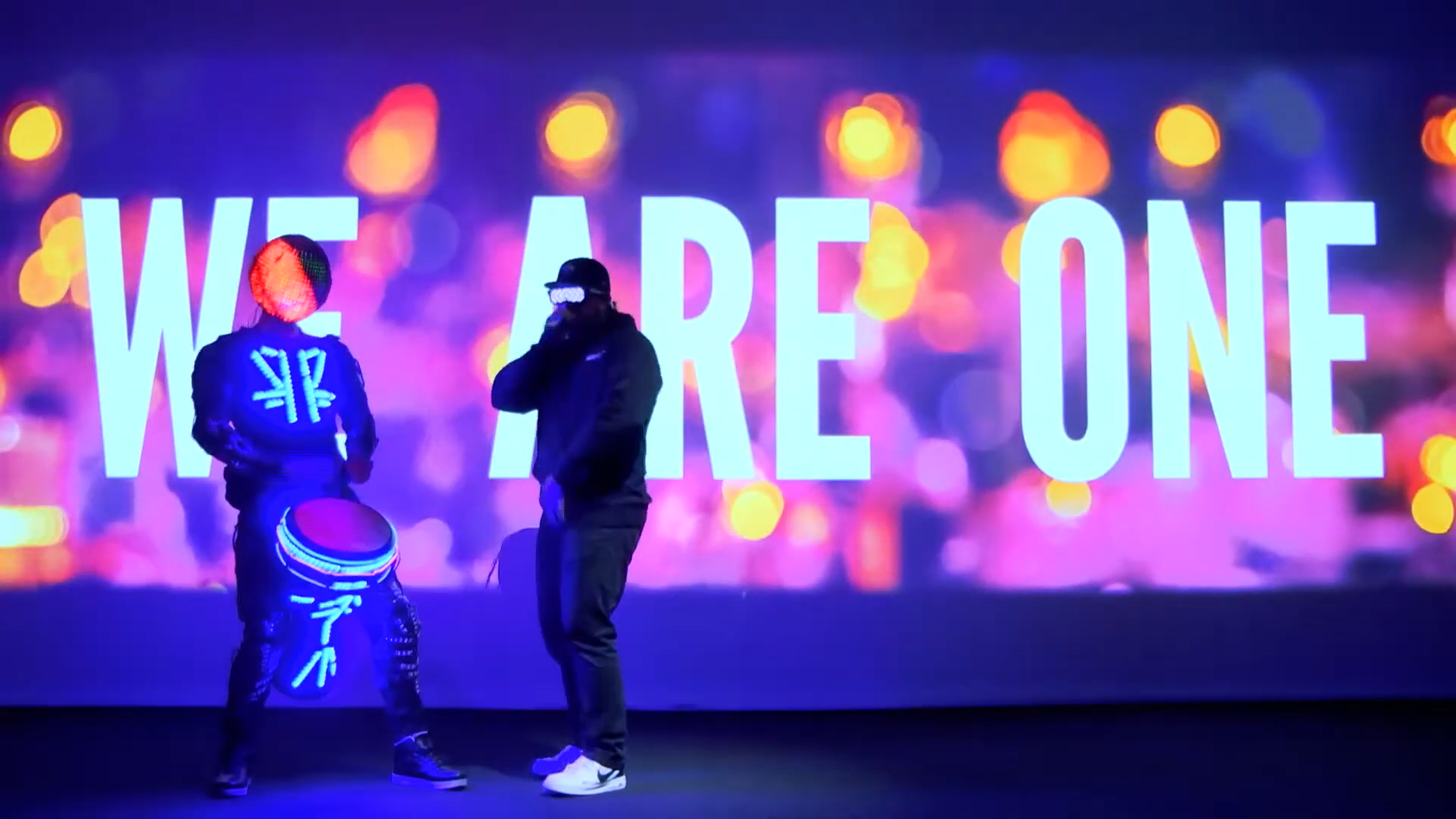
Performance formats that serve the whole room at once: bands, aerial, drumline and large-format projection-style visuals. Station formats still work at that size but the artist count rises steeply, so they are usually positioned as a feature in one zone rather than a service for every guest.



The Idea Hunter stands as an award-winning, premier source for corporate entertainment, interactive experiences and event management.








![Feast Your Eyes: 10 Food Entertainment Ideas [2025 Edition]](https://cdn.prod.website-files.com/669532db0a7004d9853610a3/684c645bb66e8dfe014b7137_Screenshot%202025-06-13%20134253.avif)
![Top 20 Corporate Event Venues in Toronto [2025 Edition]](https://cdn.prod.website-files.com/669532db0a7004d9853610a3/67c9c1f60babbed9463c77cf_Trading%20floor%202.avif)
.avif)

.avif)
.avif)

.avif)