
Office Christmas Party in Toronto: The 2026 Planning Guide
Read More


The best corporate retreats do more than change the scenery. They give a team the conditions to reconnect with each other, with the work, and with why any of it matters. Here is how Canadian companies, particularly in Toronto and across Ontario, are designing retreats in 2026 that produce measurable change.
The corporate retreats that improve team performance share one trait. They are designed around a specific outcome, not a destination. The five formats working best for Canadian teams in 2026 are the leadership offsite with a creative core, the culture-reset retreat, the high-performance accelerator, the wellness-integrated program, and the city-based immersive experience. Each one targets a defined team dynamic, communication gaps, post-restructure cohesion, or leadership alignment, rather than simply moving people somewhere nicer.
The stakes are higher than most leaders assume. Only 21% of employees worldwide were engaged at work in 2024, down from 23% the year before, according to Gallup's State of the Global Workplace: 2025 report. That single-year decline cost the global economy an estimated US$438 billion in lost productivity. Disengagement is rarely a skills problem. It is a connection problem, and a well-designed retreat is one of the few tools that addresses it directly.
If your team is based in Toronto, you have one of the strongest retreat ecosystems in the country at your door, both inside the city and within a few hours of it across Ontario. This guide is for Canadian companies ready to plan a corporate retreat that actually works.
Most company retreats underdeliver for one of three reasons: the agenda is too full, the programming is disconnected, or the outcome was never defined.
The agenda is too full. Back-to-back sessions with no breathing room produce the same disengagement as a bad week at the office, in a nicer location. People need unstructured time for the real conversations to happen.
The programming isn't connected. A morning keynote, an afternoon team-building activity, and an evening dinner do not automatically become a coherent experience. If the elements do not build on one another, nothing sticks.
The outcome was never defined. This is the most common failure. A retreat gets planned around logistics, venue, dates, and headcount, rather than around a single question: what does this team need to walk away with?
The data backs the outcome-first approach. When Amex Global Business Travel asked meeting professionals what makes an event memorable, content and programming ranked first at 38%, ahead of the venue at 27% and the destination at 25%, in the 2025 Global Meetings and Events Forecast. The best corporate retreat planners start from the outcome. Everything else comes second.

A retreat improves performance when it does three things consistently.
A clear reason for being there. Not "annual offsite." A real question the team is gathering to answer, or a real dynamic it is gathering to shift.
Programming that builds across the experience. The best retreats are designed with an arc. Morning sessions open something up. Afternoon activities put it into practice. Evening experiences consolidate the connection. Each element earns the next.
Entertainment woven into the structure, not bolted on. The companies producing the most effective corporate retreats in Ontario treat entertainment as a vehicle for connection, not a reward for sitting through the day.
The payoff is measurable. Gallup's Q12 meta-analysis, which studied more than 183,000 work units, found that teams in the top quartile for engagement show 23% higher profitability, 78% lower absenteeism, and up to 51% lower turnover than bottom-quartile teams. Connection is a financial outcome, not a soft one.
"A retreat is not a reward for getting through the year. It is a working tool. When we start with the outcome a leadership team needs and design every hour around it, people leave changed. When we start with a venue, they leave with photos."
— Fadi Dawood, President, The Idea Hunter
Each format below solves a different problem. The starting point is always the dynamic you need to shift, not the activity.
Designed for senior teams who spend most of their time in boardrooms. The format strips away hierarchy through creative experiences, live art, collaborative building challenges, and facilitated storytelling, then rebuilds connection through shared vulnerability. It works especially well at corporate retreat locations outside Toronto, where the distance from the office changes how people show up. This is one of the formats we return to most often with executive clients.
For teams navigating change, a restructure, a merger, or a leadership transition. The programming is built around honest conversation, shared values work, and experiences that remind people what they have in common. When it lands, the shift in team cohesion is visible within weeks. This is the brief we take most seriously, because the stakes are highest.
Built for teams that already function well but want to go further. Competitive formats. Cross-functional challenges. High-stakes business simulations. The goal is not fixing a problem, it is raising the ceiling. We design these as multi-act experiences, structured tension, release, and debrief, so the performance gains do not evaporate when the team returns to the office.
Recovery, creativity, and connection in one program. Morning movement sessions. Creative workshops. Unstructured time that is actually protected. For teams running at high output over long periods, corporate wellness retreats restore something purely work-focused programs miss. We treat wellness the way we treat entertainment, as a strategic tool, not a checkbox.
Not every retreat needs to leave the city. Toronto's neighbourhoods, venues, and cultural infrastructure can produce an experience that rivals anything outside it: curated venue progression, city-wide team challenges, private chef experiences, and evening entertainment that uses the city as the backdrop. It is one of the most efficient formats we produce.
For more retreat ideas in Ontario that improve team collaboration, read our guide to corporate retreat ideas in Ontario.
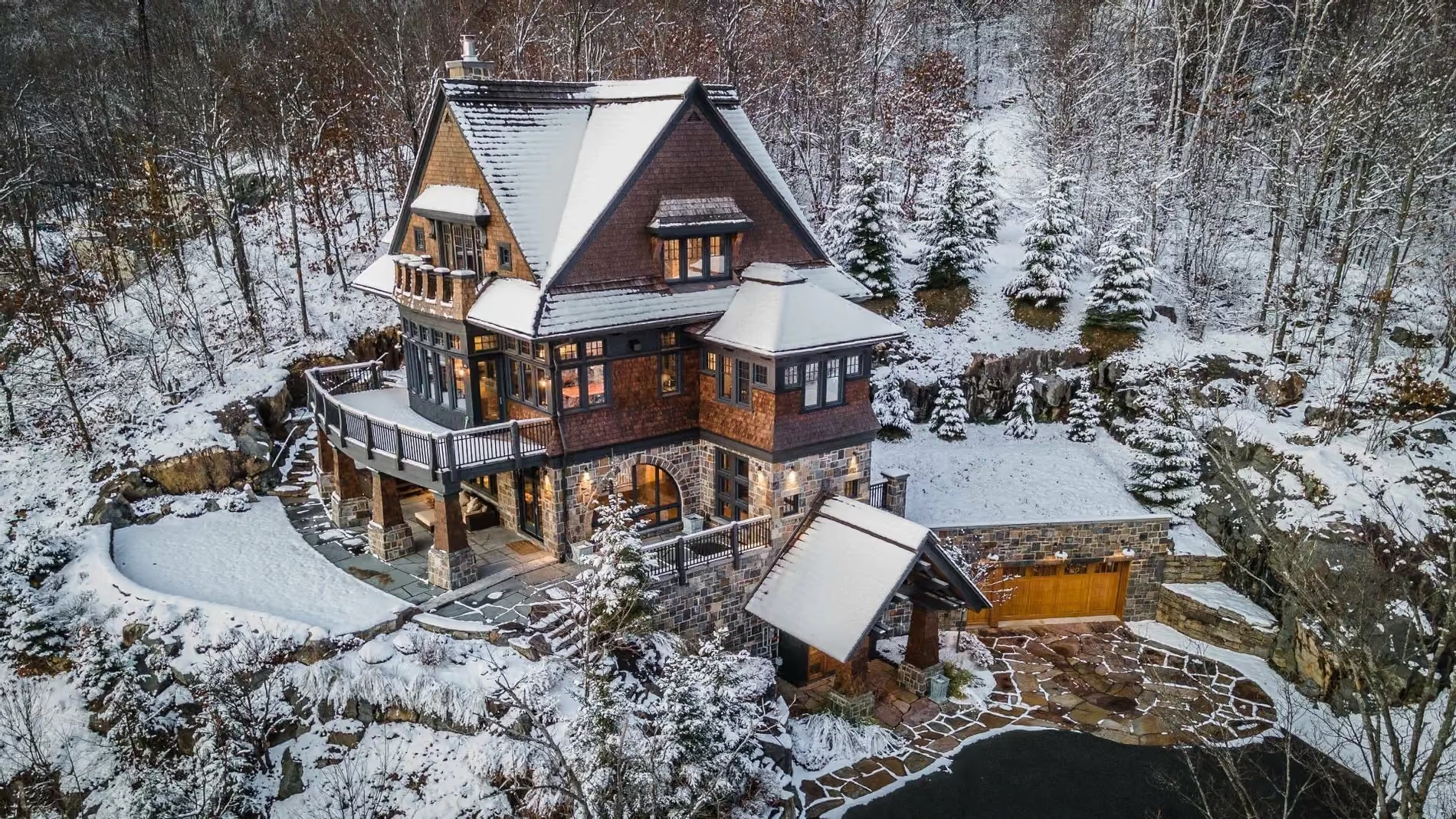
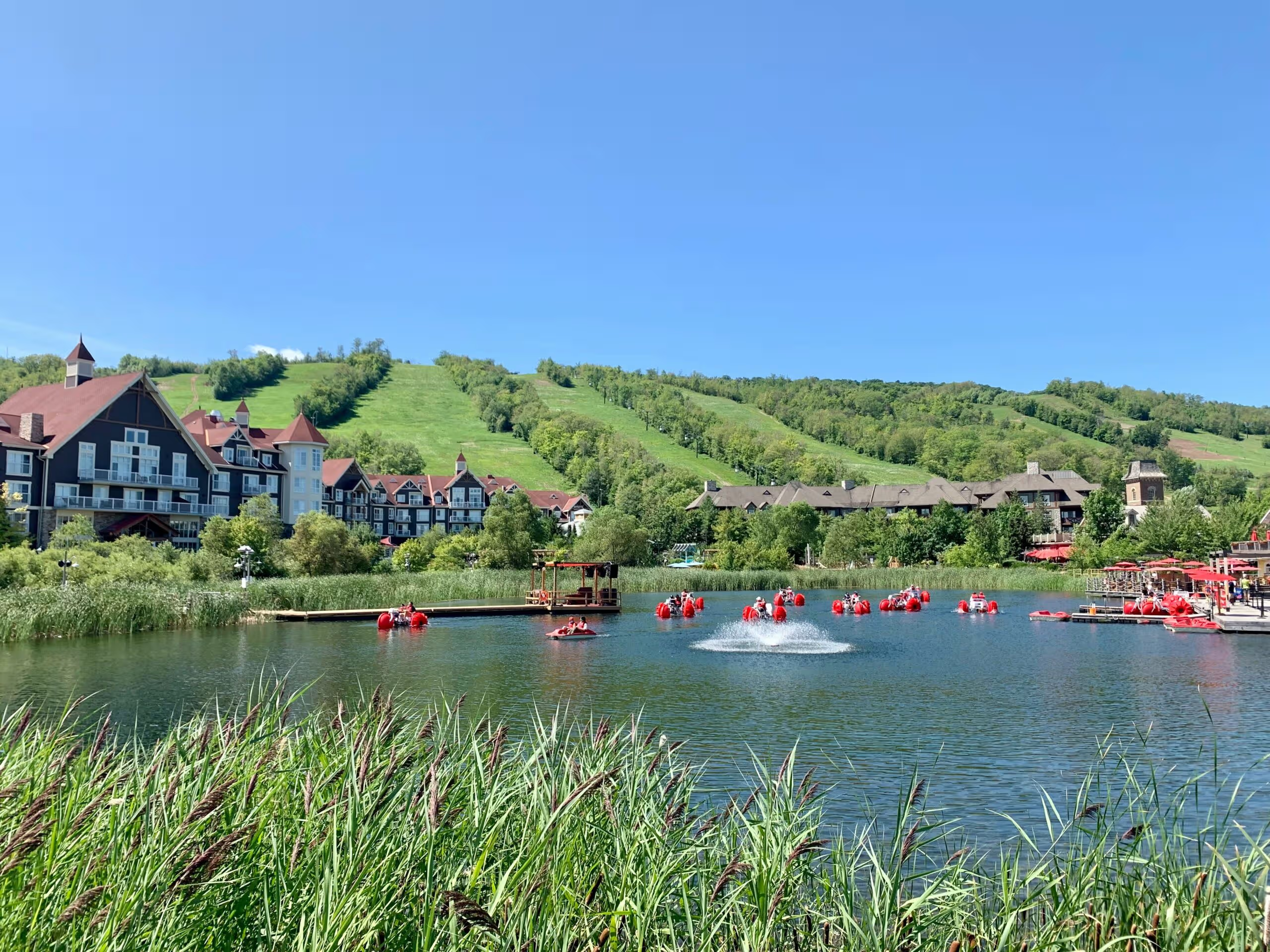
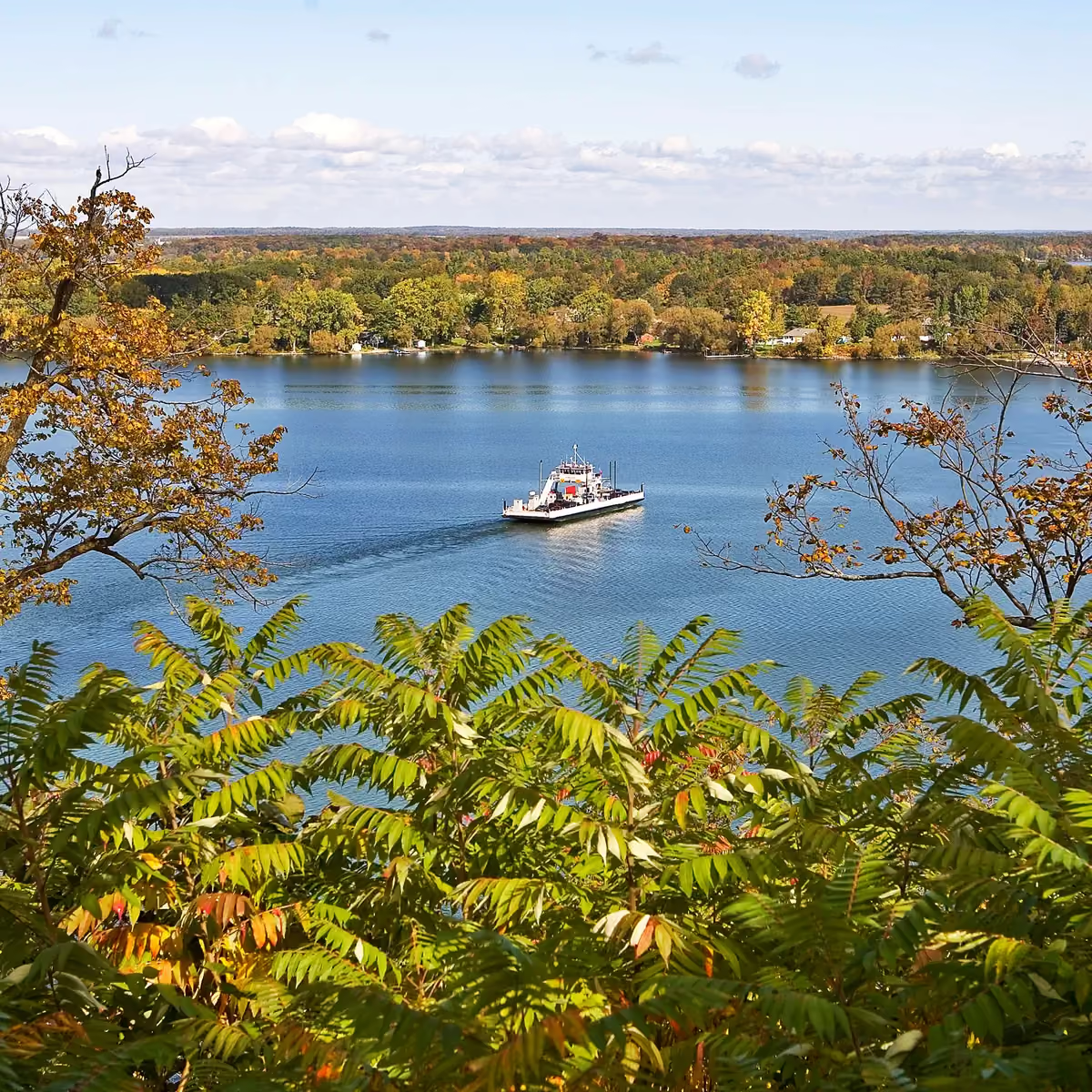
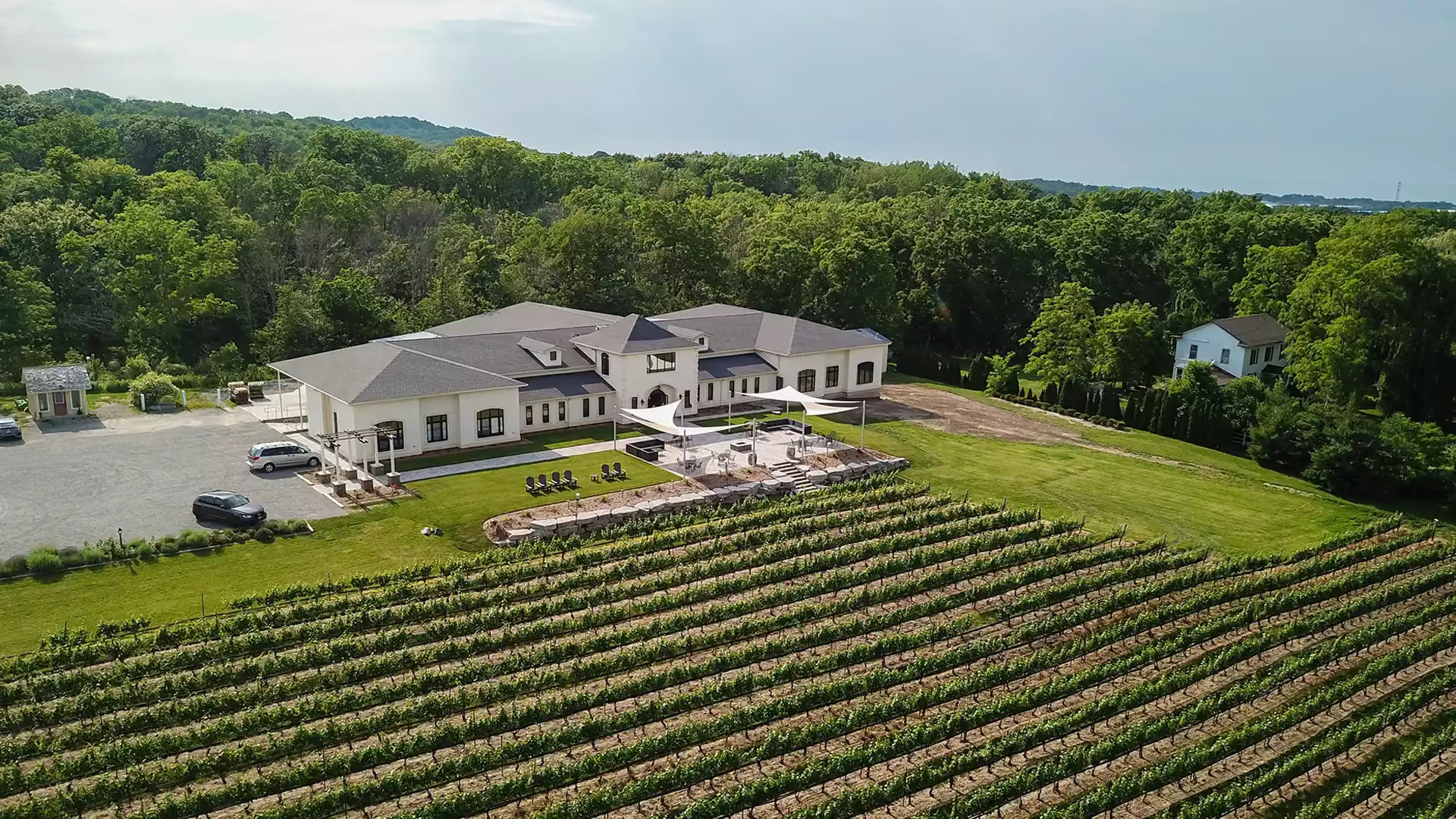
Canada's geography is one of its most underused retreat assets, and most of the strongest venues and facilities sit in Ontario, within a few hours of Toronto. Here are the locations showing up most in briefs right now, and the type of team each serves best.
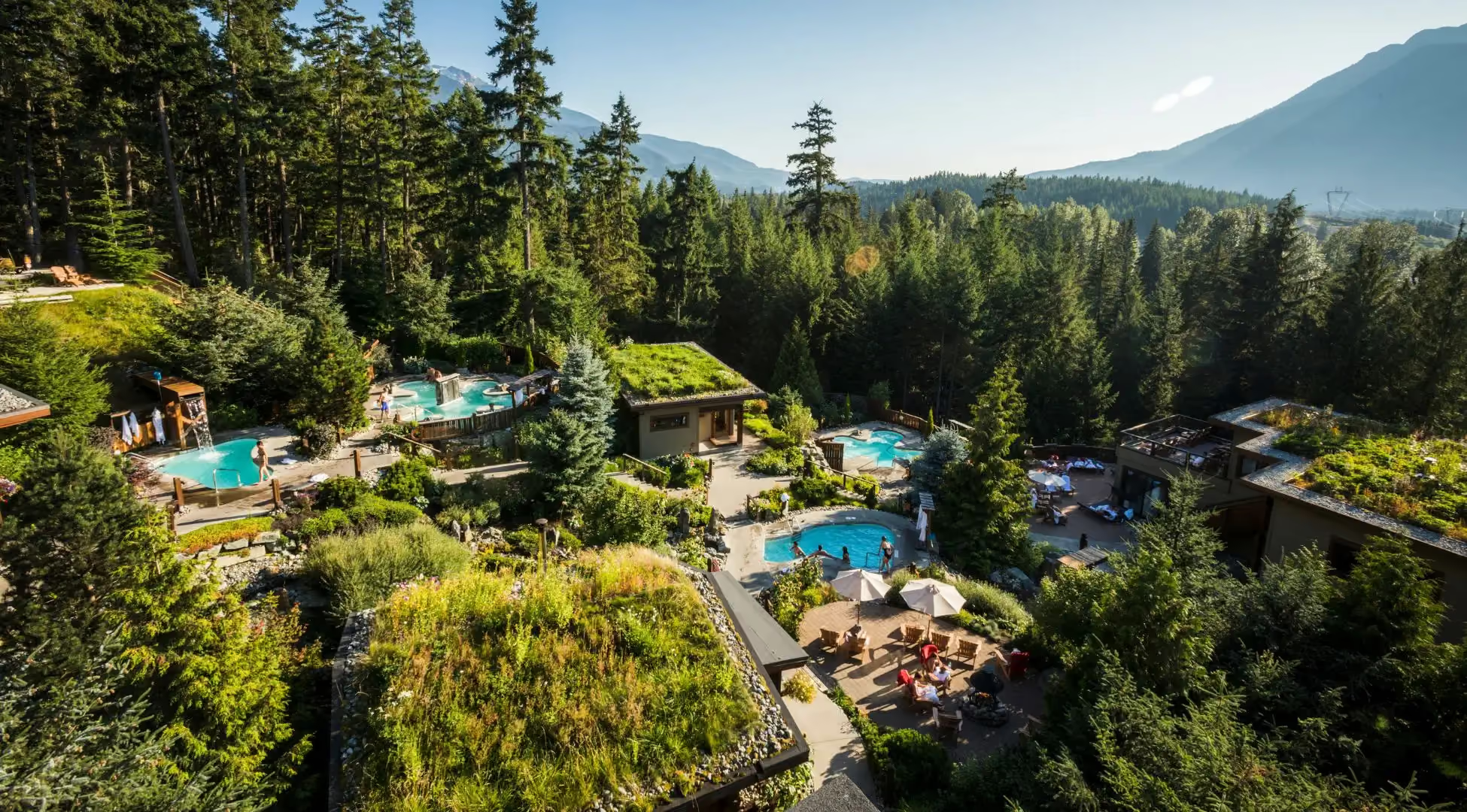
We have produced retreats across these locations and beyond. The venue recommendation always follows the brief, not the other way around.
A corporate retreat is only as good as the thinking behind it. The location does not save a poorly designed program. The entertainment does not fix an agenda built around convenience. A packed schedule never once built the trust that makes a team perform better.
What does? Starting with the right question: what do we need our people to walk away with, and what experience gets them there? That is where The Idea Hunter starts, every time. It is the same reason retention sits at the centre of why companies invest in in-person experiences at all. The Incentive Research Foundation found that retaining talented employees is the number one reason organizations run incentive travel, cited by 81% of respondents.
Whether you are planning a leadership offsite in Muskoka, a culture-reset retreat for a team navigating change, or a city-based immersive experience in Toronto, we build the entire experience around your outcome. Creative direction, team activities, entertainment, logistics, and on-site execution, under one contract, with one team accountable for all of it.
If you are ready to plan a corporate retreat that does more than check a box, let's start with your brief.
A corporate retreat is a planned off-site gathering that takes a team out of its normal environment to work on a specific outcome: leadership alignment, culture, communication, or connection. The strongest retreats are designed around that outcome first, with the venue and activities chosen to serve it.
It depends on what is holding the team back. Communication gaps call for different programming than low morale or post-restructure disconnection. The five formats that perform most reliably are the leadership offsite, the culture-reset retreat, the high-performance accelerator, the wellness-integrated retreat, and the city-based immersive experience.
Start with the outcome, not the venue. Define the one dynamic the team needs to shift, choose a format that serves it, then build the agenda backward. Allow three to four months for mid-size groups, six for premium locations in peak season.
Choose the venue after the outcome and the format, not before. Match it to the work: leadership resets need genuine separation from the office, team-building agendas need flexible indoor and outdoor space for activities, and wellness retreats need room to move and decompress. Then confirm the practical layer, group capacity, private meeting space, accommodation, travel time, and season. The venue should serve the program, never define it.
A strong agenda balances three things across each day: focused work that advances a real objective, shared experiences that build connection, and protected recovery time. Open the morning with a session that surfaces something honest, move into an afternoon activity that puts it into practice, and close with an evening experience that consolidates the connection. The biggest mistake is overpacking the schedule, which produces the same fatigue as a hard week at the office.
For mid-size groups, three to four months is comfortable. For larger groups at premium locations, six months is safer, particularly for peak seasons in Muskoka, Blue Mountain, and Whistler.
Yes, when they are designed around an outcome. Gallup links top-quartile team engagement to 23% higher profitability and up to 51% lower turnover. With only 21% of employees engaged worldwide in 2024, a well-run retreat is one of the few tools that rebuilds the connection disengagement erodes. Measure it on team behaviour in the weeks after, not on satisfaction scores on the last day.
Budgets vary with location, group size, and programming depth. Retreats with à la carte entertainment support can start around $5,000. Full-production, multi-day retreats with creative direction and on-site management typically range from $25,000 to $150,000 and up. Demand is climbing: the global incentive travel market is projected to reach US$216.8 billion by 2031, a 12.1% compound annual growth rate, per Allied Market Research.
Yes, and they are often more impactful because in-person time is rarer. 91% of professionals describe a group incentive travel experience as very or extremely motivating, per the Incentive Research Foundation. Plan for the fact that some people may be meeting face to face for the first time.
Because we have done this 10,000+ times across every format, location, and industry. Our 97% client retention rate exists because we treat every retreat as a performance outcome, not a booking.



The Idea Hunter stands as an award-winning, premier source for corporate entertainment, interactive experiences and event management.
















![Feast Your Eyes: 10 Food Entertainment Ideas [2025 Edition]](https://cdn.prod.website-files.com/669532db0a7004d9853610a3/684c645bb66e8dfe014b7137_Screenshot%202025-06-13%20134253.avif)
![Top 20 Corporate Event Venues in Toronto [2025 Edition]](https://cdn.prod.website-files.com/669532db0a7004d9853610a3/67c9c1f60babbed9463c77cf_Trading%20floor%202.avif)



.avif)







.avif)
.avif)

.avif)