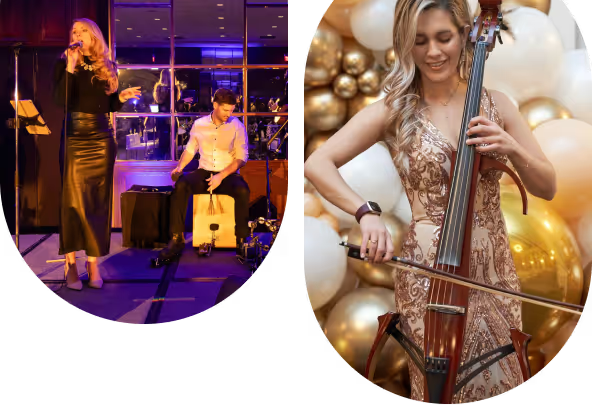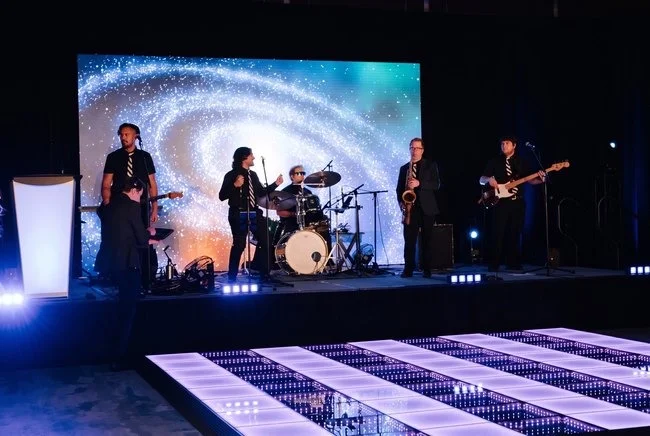
What Types of Corporate Entertainment Work Best for Large Company Events
Read More


Fashion, beauty, lifestyle, wellness, and identity are the third major force influencing corporate event ideas in 2026, and this category is driving the biggest shift in how guests want to show up. Dress codes are loosening, activations are becoming more personalized, and the demand for experiential events that feel "uniquely mine" rather than "generically corporate" has reached a tipping point. According to Skift Meetings' 2025 State of Business Events report, 71% of event attendees under 40 say they want corporate events that allow them to express their personal style, and 54% of corporate event planners report that dress code guidance is the number one question they receive from attendees. Self-expression is not a nice-to-have in 2026. It is the expectation.

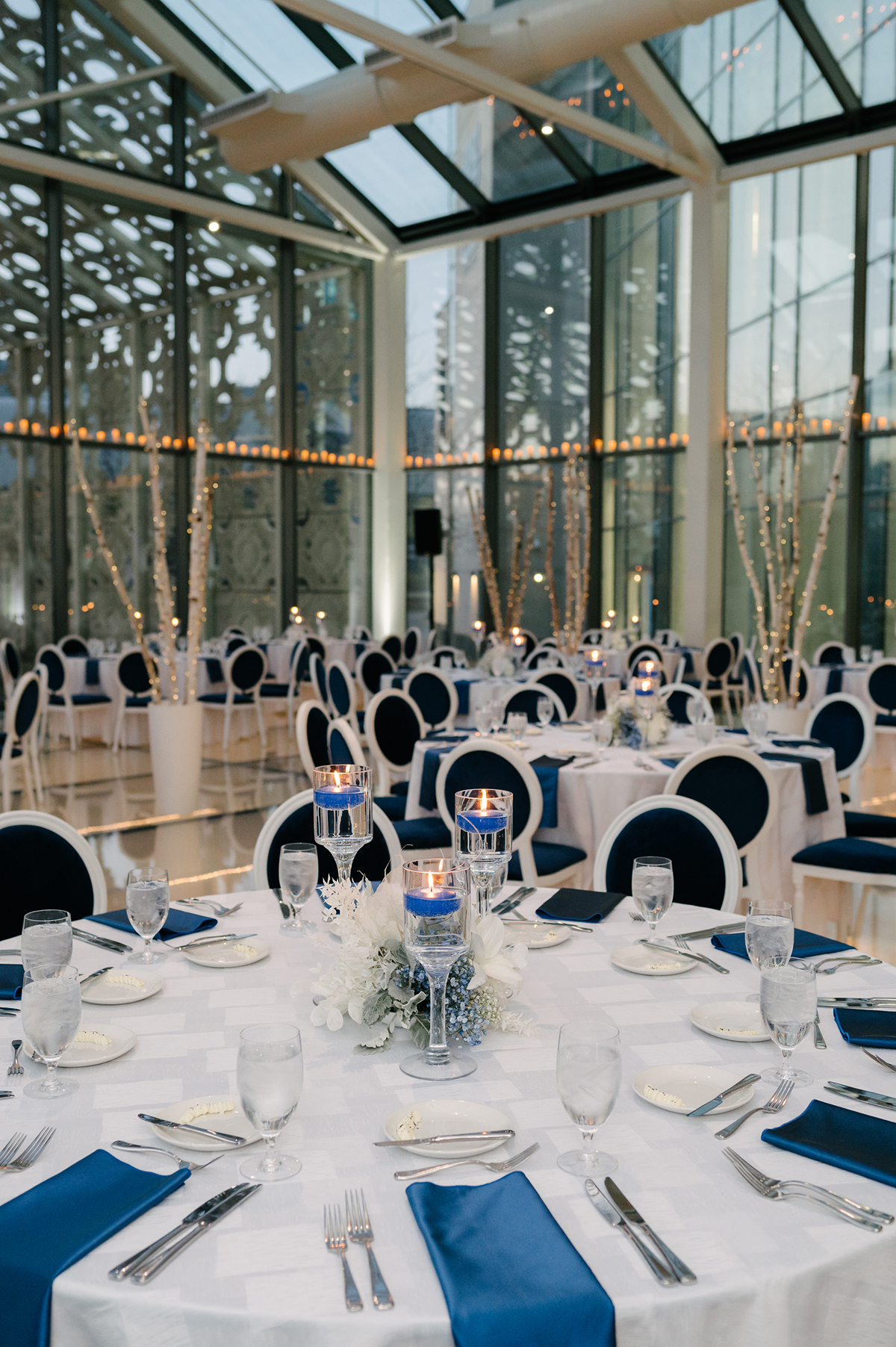
Vintage is not retro. That distinction matters for corporate event planners in 2026. The vintage trend is not about recreating a specific decade. It is about mixing eras, materials, and references to create environments that feel collected, layered, and intentional. Think Art Deco arches paired with mid-century furniture, Victorian-inspired floral arrangements on modern acrylic tables, or 1970s colour palettes combined with contemporary minimalist signage.
This vintage-modern mix is a direct influence from fashion and interior design. Resale platform ThredUp reported that the secondhand fashion market grew to $43 billion in 2023 and is projected to reach $70 billion by 2027. That cultural shift toward valuing the old alongside the new is now visible in event design: mixed vintage glassware on dinner tables, statement antique furniture pieces as photo moments, and curated environments that look found rather than fabricated.
For corporate events, the vintage-modern mix signals sophistication and taste. It tells guests that this event was designed with intention, not pulled from a catalogue. Statement pieces are key: a single oversized vintage mirror as a seating chart display, a collection of mismatched vintage vases as centrepieces, or a curated gallery wall of vintage prints that tie into the event theme.
The all-white, all-neutral, "clean and minimal" event aesthetic that dominated 2020 through 2024 is giving way to bold patterns, confident colour, and deliberate visual personality. This shift mirrors what is happening in fashion and interior design, where maximalism, pattern mixing, and colour confidence have overtaken the quiet luxury aesthetic for event applications.
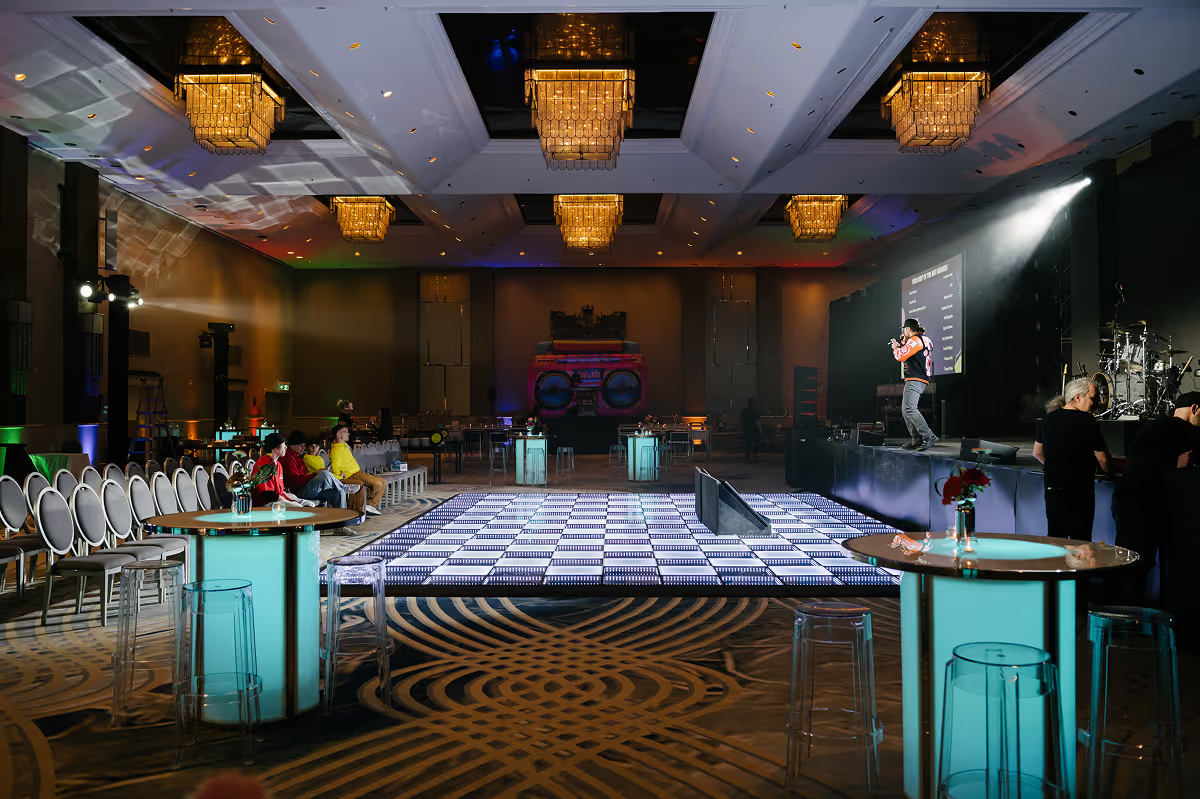
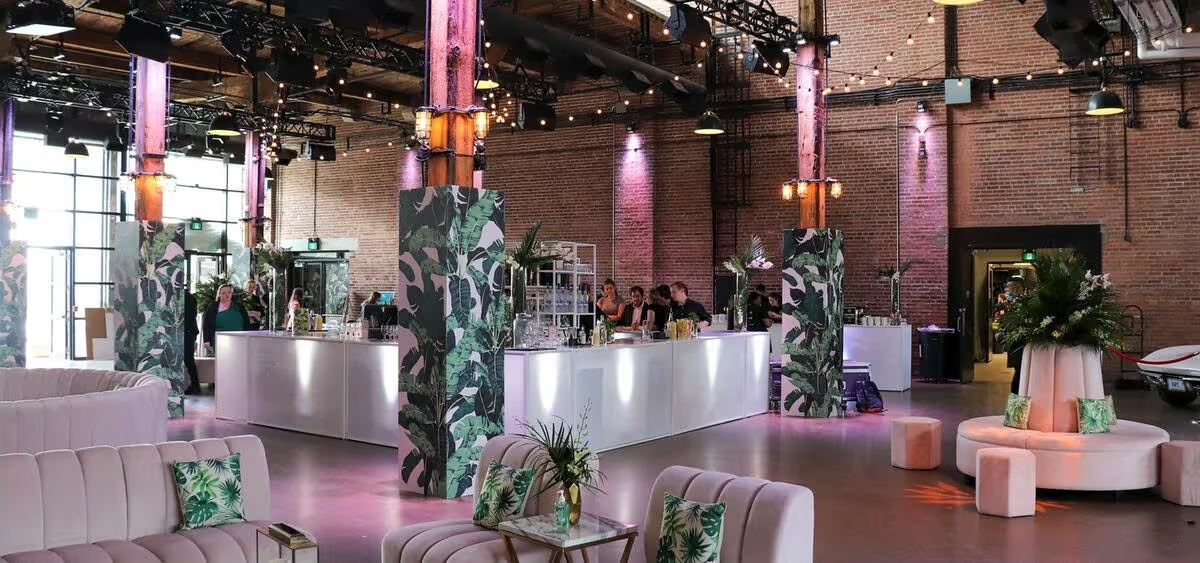
Bold patterns in 2026 events take several forms: geometric floor wraps that define zones within open spaces, patterned linens that replace solid tablecloths, and custom wallpaper installations that create immersive branded environments. The key is curation. Bold does not mean chaotic. The most effective pattern use in corporate events selects one strong pattern (a geometric, a floral, or a graphic motif) and repeats it across 2 to 3 touchpoints while keeping everything else restrained.
“There has never been a better time to have fun with your events. The safe, neutral corporate event is not what impresses people anymore. Confidence, personality, and a willingness to take creative risks is what makes events memorable in 2026.”- Hailey Dawood, Chief Huntress, The Idea Hunter
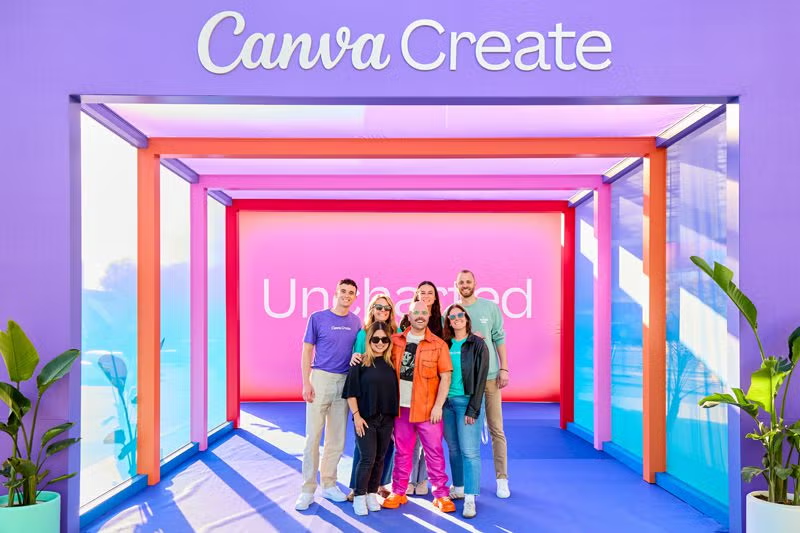
The biggest activation trend in 2026 is personalization at scale: giving every guest the opportunity to create, customize, or walk away with something that feels uniquely theirs. Custom fragrance blending stations, live portrait artists, bespoke jewellery engraving, personalized cocktail menus based on a quick taste quiz, and AI-generated art based on guest input are all examples of this trend in action.
According to EventMB's 2025 Event Technology Report, events that include at least one personalization activation see 38% higher social media engagement and 22% higher post-event satisfaction scores compared to events without personalization elements. The data supports what we see on the ground: guests want to be seen as individuals, even within a large corporate gathering.
Wellness activations are a growing subset of the self-expression trend. On-site massage stations, sound bath experiences, guided meditation corners, and breathwork sessions are moving from "nice add-on" to expected programming at premium corporate events. This is not just a wellness trend. It is an identity signal. Companies that include wellness activations are communicating that they value the whole person, not just the professional.
The traditional "cocktail attire" or "business formal" dress code is creating more confusion than clarity for attendees in 2026. Guests want to know what will make them feel comfortable, confident, and like they belong. The best-performing dress code guidance we have seen at The Idea Hunter this year includes a visual mood board alongside the text description: 3 to 4 reference images that show the vibe and style range expected.
For corporate event planners, the recommendation is to be specific and visual. Instead of "smart casual," try "modern and polished: think elevated street style, statement accessories welcome, sneakers encouraged." Instead of "black tie," try "glamour-forward: floor-length or cocktail, vintage-inspired welcome, bold colour encouraged." The more permission you give guests to express themselves, the more energy and enthusiasm they bring to the event.
Personal style only lands when the room is built to support it. The palette has to hold up under evening lighting, the activations have to be placed where guests will actually reach them, and the production has to be designed alongside the creative rather than bolted on afterward. That translation is the work behind The Idea Hunter's event decor service.
For worked examples, see our case study for a large publicly traded financial institution. The companion pieces in this series cover 2026 decor and aesthetics and how classic event themes are being reworked.
Create a strong environmental brand presence (signage, lighting, colour palette) and let the activations be the self-expression layer. When the room is clearly branded, guests can personalize their experience without the event losing its corporate identity. The brand is the container. The expression happens inside it.
Most personalization activations run between $2,500 and $8,000 for a 3 to 4 hour event with 150 to 300 guests. Custom fragrance stations and live portrait artists are on the higher end. Personalized cocktail experiences and photo-based activations are more cost-effective. The ROI shows up in social media impressions and attendee satisfaction scores.


The Idea Hunter stands as an award-winning, premier source for corporate entertainment, interactive experiences and event management.






![Feast Your Eyes: 10 Food Entertainment Ideas [2025 Edition]](https://cdn.prod.website-files.com/669532db0a7004d9853610a3/684c645bb66e8dfe014b7137_Screenshot%202025-06-13%20134253.avif)
![Top 20 Corporate Event Venues in Toronto [2025 Edition]](https://cdn.prod.website-files.com/669532db0a7004d9853610a3/67c9c1f60babbed9463c77cf_Trading%20floor%202.avif)
.avif)
.avif)
.avif)

.avif)